Newborn wake windows can be useful when you are trying to understand why your baby suddenly looks tired, fussy or hard to settle. But they are best treated as flexible observation guides—not a schedule your baby must follow. During the first 12 weeks, feeding, diapering, cuddling and a few quiet minutes of looking around may fill most of an awake period.
Your baby’s pattern will change quickly and may look different from one day to the next. Growth, cluster feeding, illness, temperament and being born early can all affect alert time. The practical goal is not to hit an exact number. It is to notice your baby’s early cues, offer sleep before distress builds and keep every sleep safe.
What a wake window means in the newborn stage
A wake window is the time between waking and falling asleep again. It begins when your baby wakes, not after a feed. Nursing or bottle-feeding, burping, a diaper change and settling all count as awake time.
That detail matters because a newborn may spend much of a short wake window eating. There may be no need to add a separate “play session.” Looking at your face, hearing your voice, stretching on a safe floor space for a few minutes or having a brief cuddle can be enough stimulation.
Wake windows are not a medical standard and there is no single official chart that fits every newborn. They are one clue alongside feeding, growth, diaper output, behavior and your clinician’s guidance. If the clock and your baby disagree, respond to the baby in front of you.
Typical newborn wake windows from birth to 12 weeks
The ranges below are broad starting points, not targets. Some healthy babies fall asleep sooner; others stay calmly alert longer. Short naps can also create shorter, less predictable awake periods later in the day.
Birth to 4 weeks: often about 30–60 minutes
In the earliest weeks, many babies wake mainly to feed and receive care. A full feed and diaper change may use most of the awake period. Some babies drift back to sleep immediately, while others have a few calm minutes of alertness. Day and night are not yet organized, so expect irregular timing.
5 to 8 weeks: often about 45–75 minutes
Your baby may begin to spend a little longer looking at faces, tracking movement or listening to voices. This does not mean every wake period needs entertainment. Quiet interaction followed by a gradual wind-down is often enough. Evening fussiness and frequent feeding can still shorten or disrupt the pattern; our guide to newborn cluster feeding explains why those evenings can feel so different.
9 to 12 weeks: often about 60–90 minutes
Some babies can comfortably manage a longer awake stretch by this point, especially after a solid nap. Others remain ready for sleep much sooner. Watch whether your baby is calm and engaged rather than stretching time to reach a number. As your baby moves beyond the newborn stage, sleep may slowly become more patterned; this safe, flexible baby sleep routine for 4–12 months covers the next stage without promising a rigid schedule.
For babies born early: development and alert time may align more closely with corrected age, calculated from the original due date. Ask your pediatric professional how to interpret sleep, feeding and milestones for your baby.
Early sleepy cues versus overtired cues
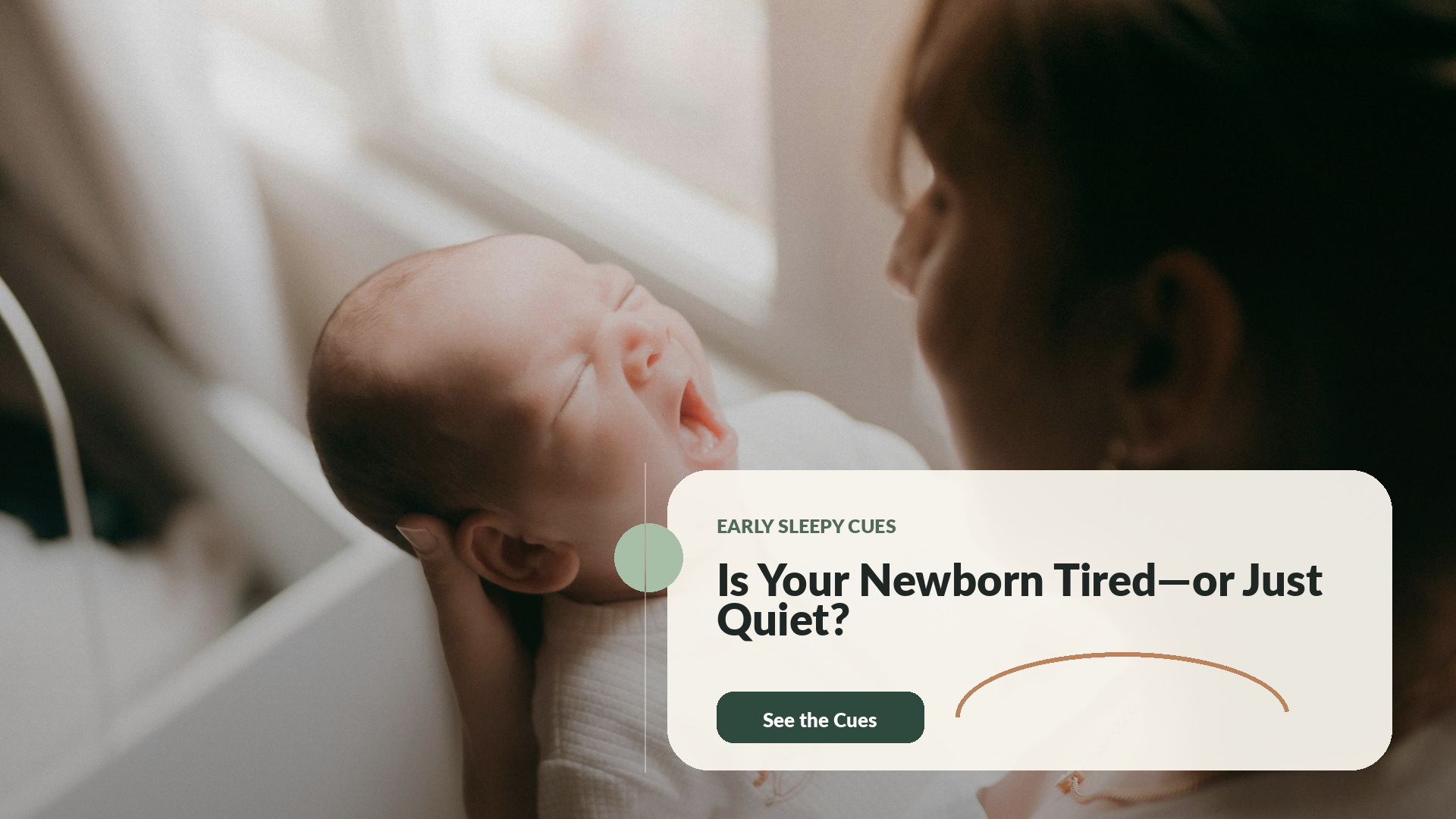
The easiest time to offer sleep is often when the first quiet cues appear. Early cues can be subtle, and no single sign always means the same thing.
Early cues that may mean “I need a break”
- looking away or losing interest in faces
- slower or less coordinated movement
- a still, glazed or distant expression
- yawning, brief eye rubbing or heavier blinking
- less ability to hold a calm gaze
- mild fussing that improves when stimulation decreases
Later cues that can appear when settling is harder
- crying that escalates quickly
- frantic arm and leg movements
- arching, stiffening or turning red
- repeatedly latching and pulling away
- seeming unable to get comfortable despite being fed and changed
These behaviors can also have other causes, including hunger, gas, discomfort, illness or a need for closeness. Run through basic needs instead of assuming every cry is overtiredness.
A flexible feed–connect–sleep rhythm
Think in sequences rather than clock times. A simple newborn rhythm might look like this:
- Wake and feed. Follow hunger cues and allow enough time for the kind of feed your baby needs.
- Provide care. Burp if needed, change the diaper and give prescribed medicines or care exactly as directed.
- Connect briefly. Talk, cuddle or offer a few supervised minutes of floor time if your baby is calm and alert.
- Reduce stimulation. Dim bright light, lower voices and move to a quieter space when early sleepy cues appear.
- Offer safe sleep. Use a familiar short settling routine, then place your baby in a safe sleep space.
You do not need to force this order. A baby may need another feed before sleep, especially during a growth spurt. Contact naps are also common, but the adult must remain awake and alert. If you might fall asleep, move the baby to an appropriate sleep space rather than staying on a sofa or armchair.
Safe sleep matters more than the wake-window clock
For every nap and nighttime sleep, follow current American Academy of Pediatrics safe-sleep guidance. Place your baby on their back on a firm, flat, level sleep surface in their own sleep space. Keep pillows, loose blankets, bumpers, toys and other soft items out. Room-sharing without bed-sharing is recommended, and weighted sleep products should not be used.
If your baby falls asleep in a car seat, stroller, swing, carrier or sling, move them to a firm, flat sleep surface on their back as soon as practical. Do not use inclined products or positioners to try to improve sleep. Ask your clinician for individualized advice if a medical condition affects sleep positioning; do not change the safe-sleep setup based on general internet advice.
What to do when the day goes off pattern
A short nap does not mean you caused a problem. Try shortening the next awake period, offering a calmer environment and returning to the same simple wind-down. If your baby remains content, you do not need to spend the day repeatedly trying to make sleep happen.
Also protect the caregiver’s wellbeing. Trade settling duties when possible, prepare water and food before the evening fussy period, and ask trusted support people for specific help. If frustration is rising, place the baby safely in the crib and step away briefly to regulate yourself. Never shake a baby.
When to call a pediatric professional
Wake-window variation is usually less important than a meaningful change in your baby’s feeding, alertness, breathing or behavior. Contact a pediatric professional promptly if your newborn is unusually difficult to wake, feeds poorly, has fewer wet diapers than expected, repeatedly vomits, seems weak or has a sudden change from their normal pattern.
Seek urgent medical help for breathing difficulty, blue or gray lips or skin, a seizure, severe limpness or unresponsiveness. A rectal temperature of 100.4°F (38°C) or higher in a baby younger than 3 months requires immediate contact with a pediatric clinician. The AAP’s fever guidance for babies explains why prompt assessment matters. Follow local emergency guidance if you cannot reach your baby’s clinician.
Frequently asked questions
Can a newborn stay awake too long?
Yes, a long period of stimulation can make some newborns harder to settle. However, an occasional long wake window is not proof of harm. Lower stimulation, check basic needs and offer sleep. Repeated unusual alertness combined with poor feeding, distress or other symptoms deserves clinical advice.
Should I wake my newborn from naps?
Sometimes. Clinicians may recommend waking a newborn to feed until birth weight is regained or when growth, jaundice or another medical issue needs monitoring. Once feeding and growth are established, advice can differ by baby. Follow the plan from your maternity or pediatric team rather than a general wake-window chart.
Why does my baby fight sleep even when tired?
Hunger, gas, temperature, noise, light, a wet diaper, reflux symptoms or simply needing more support can all affect settling. Some babies also need time to shift from alert to drowsy. Keep the routine brief and calm. Ask for help if crying is persistent, severe or accompanied by feeding or health concerns.
Do wake windows include feeding time?
Yes. Count from the time your baby wakes until they fall asleep again. Feeding, burping and diaper changes are part of the window.
The practical takeaway
Use newborn wake windows as a loose map: roughly 30–60 minutes in the earliest weeks, often 45–75 minutes around weeks 5–8 and commonly 60–90 minutes by weeks 9–12. Then let your baby’s cues, feeding needs, corrected age and health guide the actual day. A responsive rhythm and a safe sleep space matter far more than making every nap begin on time.
Sources
- American Academy of Pediatrics / HealthyChildren.org: A Parent’s Guide to Safe Sleep
- American Academy of Pediatrics / HealthyChildren.org: Fever and Your Baby
- NHS: Helping Your Baby to Sleep
This article provides general education and is not a substitute for individualized medical advice. Contact your baby’s pediatric professional when you are concerned about feeding, alertness, breathing, fever, growth or sleep safety.