When a 5 year old can’t open lunchbox at school, the problem is rarely a lack of effort. A new room, a short lunch period, unfamiliar packaging, and the wish not to hold up friends can make a small task feel big. The most useful response is not to tell a child to “try harder.” It is to make the lunch setup easier and give them a short chance to practice the exact steps at home.
This guide is general school-readiness information. Every classroom has its own routines and staffing. If your child has a disability, swallowing concern, food allergy plan, or needs help that affects safety, speak with the school and relevant clinician so the plan fits their needs.
Start by finding the stuck step
“I can’t open it” can mean several different things. Watch one calm practice lunch at home without jumping in. Is the hard part opening the lunchbox latch, finding the right container, twisting a lid, peeling a yogurt top, tearing a packet, or getting a straw into a drink? One specific obstacle is easier to solve than a general worry about lunch.
Use the same items your child will take to school. A container that opens easily at the kitchen table can be harder when it is cold, tightly packed, or sitting inside another bag. If possible, have your child try while seated, with only the time and space they would usually have at lunch.
A 10-minute lunchbox-opening practice
Minutes 1–2: set up the real lunchbox
Pack one ordinary lunch or snack exactly as you would for school. Put the lunchbox on a table. Let your child identify what they want first. This gives you a clear picture of the order they naturally use.
Minutes 3–5: practice one opening move
Choose just one task: lifting a latch, pressing a release, turning a lid, or peeling a corner. Show the motion once, then place your hand lightly over your child’s hand only if they want help. Use simple words: “Press, then lift,” or “Hold the bottom, then turn.” Too many instructions can make a familiar movement harder to remember.
Minutes 6–8: let your child do the sequence
Close the item and invite a second try. Wait a few seconds before helping; young children often need time to position their hands. Praise the process rather than speed: “You kept the box steady,” or “You tried the tab again.” If it still will not open after a reasonable try, change the setup instead of turning practice into a struggle.
Minutes 9–10: rehearse the backup words
Teach one short sentence your child can use at school: “Could you help me open this, please?” Practice saying it in a normal voice. Needing help is not failure; it is an important school skill. The goal is for your child to know what to try first and how to ask clearly when an adult’s help is needed.
Make the lunch easier before asking for more independence
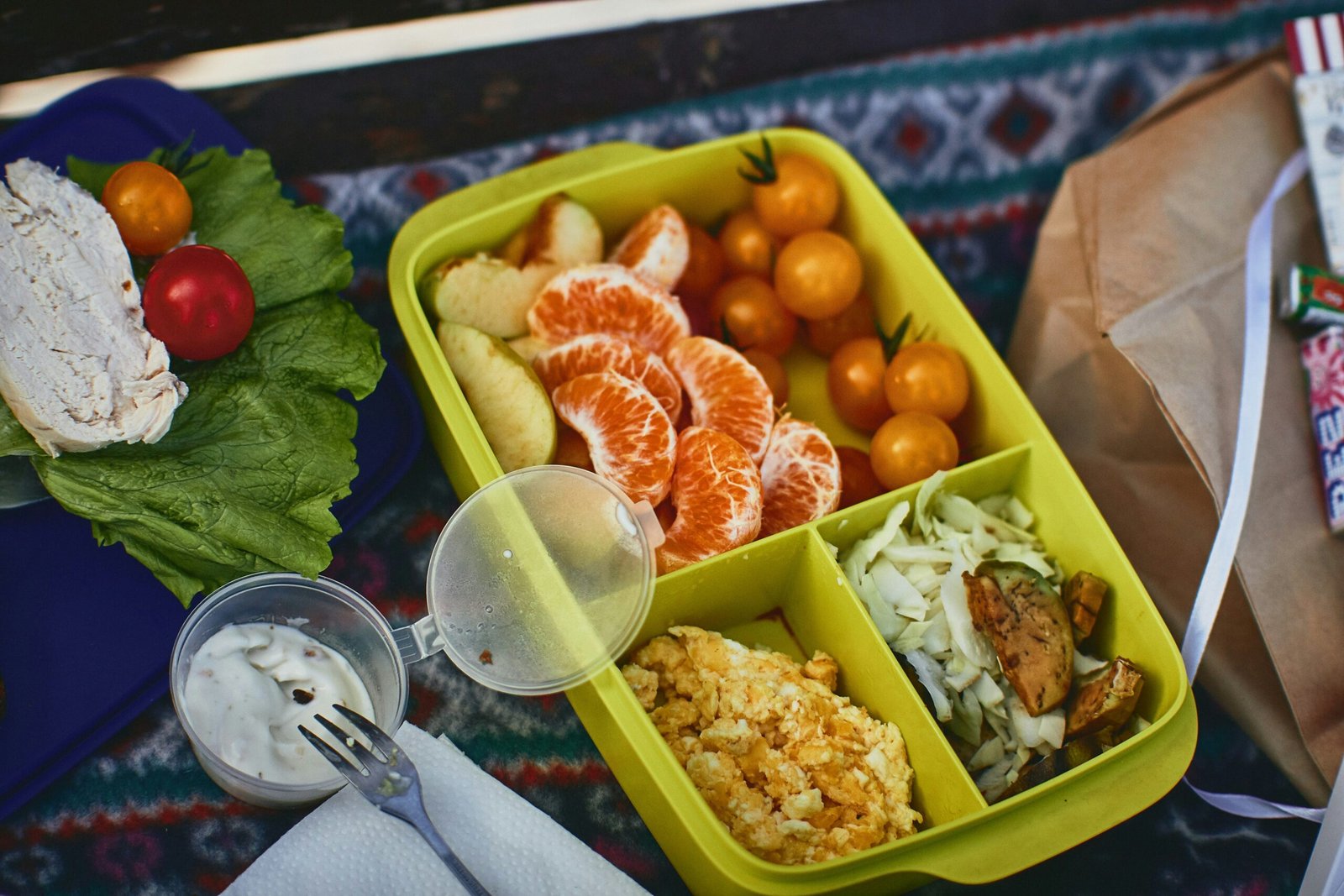
- Test every closure: Open and close the lunchbox, containers, drink, and snack packaging with your child before the school day.
- Choose easy-open pieces: A simple latch, loose-but-secure lid, pre-cut fruit, and a familiar drink can remove unnecessary barriers.
- Skip surprise packaging: Do not send a new pouch, wrapped treat, or tightly sealed container on a day when the child is practicing independence.
- Leave enough room: Overpacking can make a lunchbox hard to open or close. Arrange items so the child can see and grasp each one.
- Use one consistent place: Put napkins, utensils, and a small opening aid in the same spot if your school permits it.
Food safety still matters. Follow your school’s rules and use the appropriate cold sources for perishable foods. Changing to an easier container should not mean sending food that cannot be kept safely or ignoring an allergy plan.
Talk with the teacher before lunch becomes stressful
A brief, practical message is usually enough: “We are practicing opening the lunchbox and containers at home. Could you please let us know if there is one item that is consistently hard, or if there is a preferred way to ask for help?” This gives the teacher useful information without putting the child on the spot.
Ask what lunch support looks like in that classroom. Some children eat in a busy cafeteria; others stay in the classroom. Some teachers or aides open items at the start of lunch, while others encourage children to ask as needed. Knowing the routine helps you choose a realistic practice plan.
What not to do
- Do not send a difficult item as a “test” on a busy school day.
- Do not shame a child for asking an adult to open food.
- Do not assume a child has eaten everything simply because an item came home unopened.
- Do not keep changing containers every day; consistency gives a child a chance to learn the movement.
- Do not turn lunch independence into a reason to rush. A calm backup plan protects eating time.
A simple two-week plan
For the first few school days, send only items your child can open easily or can ask for help with. Practice one difficult closure at home for a few minutes each evening. When that step is easy on several tries, introduce it in the lunchbox alongside familiar foods. Check in with your child using a neutral question: “What was easy to open? What do you want us to practice?”
If a problem persists, take a photo of the packed lunch or bring the item to a teacher conference if appropriate. Often the solution is as small as using a different container, loosening a lid slightly before packing, or moving an item where small hands can grasp it.
When to ask for more support
Talk with the school and your child’s clinician or occupational therapist when opening or eating tasks are consistently difficult across settings, your child is regularly missing food because they cannot manage it, they show pain or unusual weakness, or they have an existing plan that affects lunch support. A child may need an individualized accommodation rather than more practice alone.
The bottom line
A 5 year old can’t open lunchbox at school problem is usually solvable with a small, kind plan: identify the exact stuck step, practice it briefly with the real item, simplify the packing, and make asking for help normal. Independence grows best when a child has tools that fit their hands and adults who treat practice as learning rather than a test.