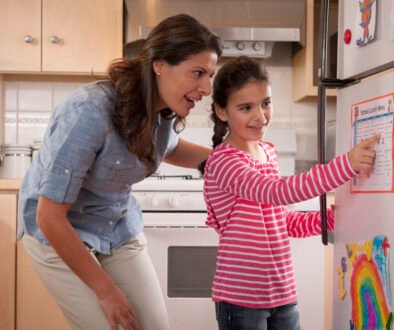
When your tween is embarrassed to be seen with you, it can sting. They may walk a few steps ahead, ask you not to talk loudly near friends, or act as if a normal family moment is deeply uncool. That reaction does not automatically mean your relationship is failing. At this age, belonging with peers and trying out independence can matter intensely.
The goal is not to win a public argument or make your child prove affection on demand. It is to protect connection while keeping family expectations respectful. This guide offers a practical response for ordinary awkward moments. It is not a reason to ignore cruelty, persistent withdrawal, bullying, or a sudden major change in mood; those deserve a calm private conversation and, when needed, support from a pediatrician or school professional.
Why tweens may pull away in public
Between roughly ages 9 and 12, many children become more aware of how they appear to friends. They are learning preferences, privacy, social rules, and a more independent identity. A request such as “Please do not call me that at pickup” can be an attempt to manage that new social world, not a rejection of you.
That does not make rudeness acceptable. It does mean the most useful response is usually brief in public and thoughtful later. The American Academy of Pediatrics notes that pre-teens often want more privacy and independence while parents remain an important source of support. You can honor both realities at once.
In the moment: keep it short and steady
If your child rolls their eyes, ignores a greeting, or says “Do not stand near me,” resist the urge to tease them back in front of friends. Public correction can turn a small awkward moment into a power struggle.
- Pause before replying. A neutral “Okay, we can talk later” gives everyone room to reset.
- Keep the boundary simple. If they are rude, say quietly: “You can ask for space without speaking to me that way.”
- Handle logistics without a lecture. Confirm the pickup plan, safety rule, or time you need, then leave the bigger conversation for privacy.
- Do not recruit the audience. Avoid jokes, nicknames, photos, or stories that make your tween feel exposed in front of peers.
This approach is not “letting it go.” It is choosing a time when your child can hear you rather than defend themself.
Have the follow-up conversation when nobody is performing
Later that day, choose a calm moment: a car ride, a walk, folding laundry, or a quiet snack. Start with observation instead of accusation. Try: “At pickup, you seemed uncomfortable when I said hello. I want to understand what would feel better next time.”
Then listen long enough to learn whether the issue is a nickname, a hug, a public question, a photo, a friend dynamic, or simply a wish for more independence. You do not have to agree with every preference to show that you heard it.
A useful three-part script
- Name the feeling: “It makes sense that you want to fit in with your friends.”
- Name your limit: “I will not embarrass you on purpose, and I also expect you to speak respectfully.”
- Make a specific plan: “At pickup I will wait by the gate and give you a wave. You can come to me when you are ready.”
Specific agreements work better than vague promises to “stop being embarrassing.” They give your tween a small piece of control while making the family rule clear.
Replace teasing with connection that fits this age
Some families use teasing as affection, but a child who is already self-conscious may experience it as pressure. Notice when a joke lands badly and repair it plainly: “I thought that was funny, but I can see it did not feel good. I will not repeat it.” A repair shows that respect is real, not conditional on your child having the perfect response.
Connection does not need to be intense or public. Try low-pressure routines: a weekly choice of snack or music for a drive, a shared show, ten minutes of help with something they care about, or a regular check-in that does not require eye contact. Keep asking about interests without turning every answer into advice.
Give independence in small, safe steps
Tweens often cope better with growing freedom when expectations are predictable. Look for a manageable next step: walking from the school gate to the car, checking in after an activity, choosing clothes, planning a friend visit, or taking responsibility for a simple task. Pair each new freedom with the safety information you need.
Say what is non-negotiable: where they will be, how to reach you, and what to do if they feel unsafe. Then avoid adding unnecessary commentary. When you show that you can separate safety from control, your tween has more reason to come to you with problems.
What to avoid
- Do not make them apologize for needing privacy or wanting to fit in.
- Do not post or share a story about the incident without permission.
- Do not force affection in public to prove that the relationship is fine.
- Do not use silence, guilt, or “after all I do for you” to demand closeness.
- Do not dismiss a sudden, intense change as normal tween behavior if it comes with fear, isolation, school refusal, or signs of bullying.
When to look more closely
Ordinary embarrassment comes and goes. Check in more carefully if your child suddenly avoids friends, stops activities they once enjoyed, seems persistently sad or anxious, has changes in sleep or eating, or hints that someone is humiliating or threatening them. Ask direct, calm questions: “Has anyone been making you feel unsafe or ashamed?” Let them know they will not be in trouble for telling you. If concerns persist, contact their pediatrician, school counselor, or another qualified professional.
A one-week connection plan
- Ask your tween for one public preference you can respect at school, activities, or around friends.
- Agree on one respectful phrase they can use when they want space: “Can we talk later?”
- Choose one low-pressure shared activity this week, with no forced heart-to-heart.
- Practice one safety check-in rule that gives them independence and keeps you informed.
- At the end of the week, ask what worked and adjust one detail together.
The bottom line
A tween embarrassed by parents usually needs room to grow, not a lesson in being grateful. Keep public moments calm, discuss respect in private, and make small agreements that protect both dignity and safety. Your steady availability matters even when your child is not ready to show it in front of friends.