A hotel room can feel simple until you arrive with a baby and see cords, furniture, an unfamiliar sleep space, and bags full of small items. The useful goal is not to make the room perfect. It is to do a focused hotel room safety with baby check before your baby has time to explore or settle for sleep.
Start with the sleep space, then work outward at your baby’s level. A calm ten-minute check can help you spot a damaged portable crib, an open balcony door, loose medication, or a cord within reach. This guide is general education, not a substitute for product instructions or advice from your child’s clinician.
Begin with the portable crib and sleep space
Ask for the crib before you unpack
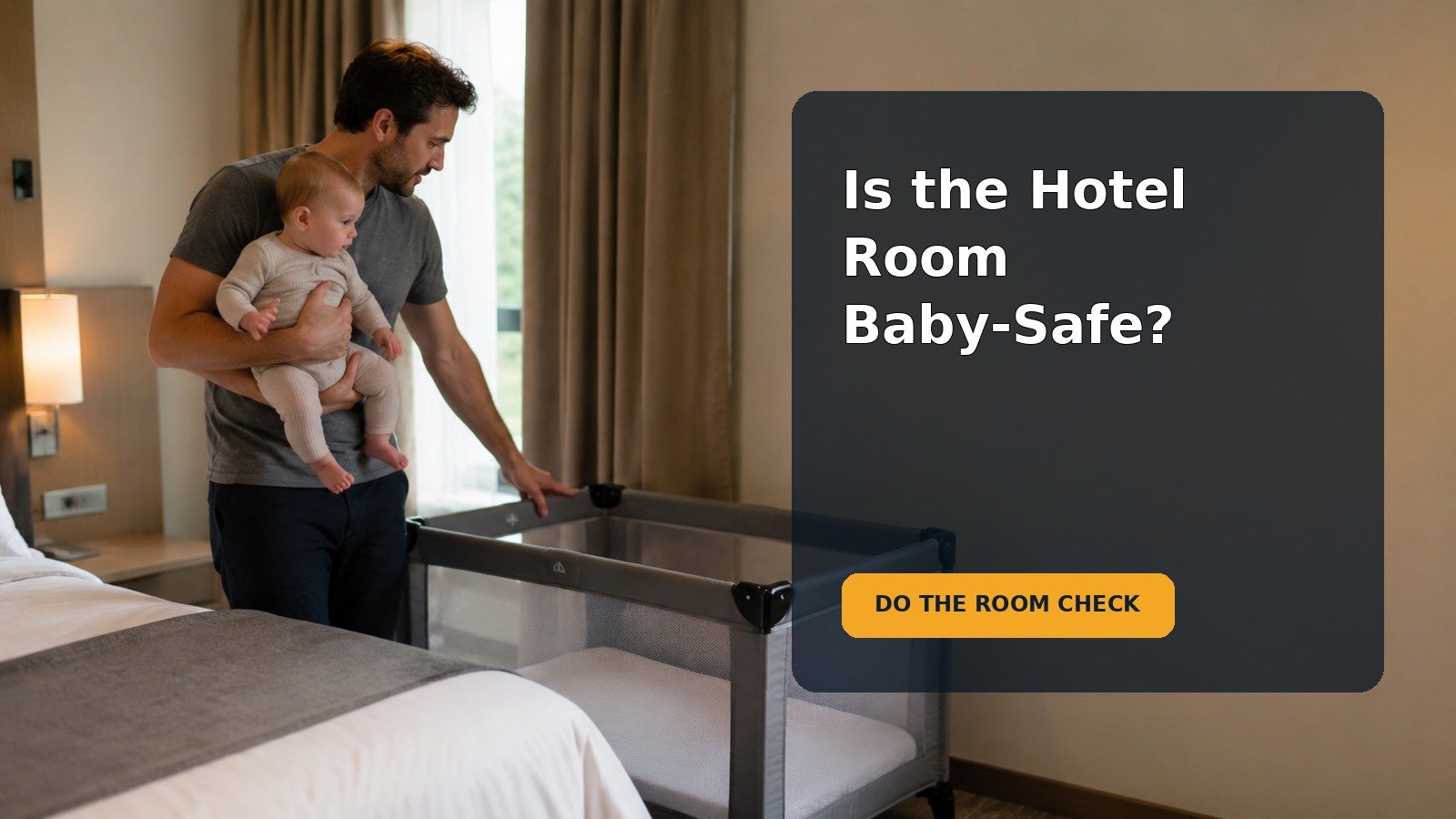
If the hotel supplies a portable crib or play yard, inspect it before using it. The American Academy of Pediatrics advises families to check that it meets current safety standards, is in good repair, and has no broken or missing parts, loose hardware, or extra padding. If anything looks damaged, missing, unstable, or improvised, ask for a replacement rather than trying to repair it yourself.
Use the manufacturer’s original mattress or pad and a fitted sheet made for that model. Do not add a folded towel, an extra mattress, pillow, blanket, bumper, positioner, or stuffed toy to make an unfamiliar sleep space feel more comfortable. The CPSC and NICHD Safe to Sleep program describe the safer infant sleep surface as firm, flat, level, and covered only by a fitted sheet.
Choose the crib location carefully
Place the sleep space away from window coverings, cords, lamps, TVs, furniture that could fall, and anything that could land in the crib. Keep it clear of the adult bed and do not use the bed, couch, or armchair as a regular infant sleep space. Room sharing can make feeding and checking easier; it does not require bed sharing.
Do a baby-level room sweep
Before your baby is on the floor, take a slow look from floor height. Hotels are cleaned, but small objects can roll under beds and furniture. The AAP specifically recommends checking for items such as pills, pens, and other choking or poisoning hazards.
- Floor and low furniture: look under the bed, beside nightstands, in low drawers, and behind curtains for loose items, batteries, coins, medication, and broken pieces.
- Cords and outlets: move charging cables, phone cords, lamp cords, and window-blind cords out of reach. Bring outlet covers and use them only as directed; never rely on a cover instead of close supervision.
- Furniture and televisions: push a reachable television farther back on its stand when possible. Keep drawers closed so they are less tempting to pull or climb.
- Windows, doors, and balconies: check latches and keep balcony access secured. Use the deadbolt or high latch to reduce the chance of a mobile child leaving the room.
- Bathroom: close the door, keep toiletries and medications up high, and treat tubs, toilets, and buckets as water hazards. Empty water containers promptly.
A simple arrival plan
Step 1: Park the risky bags
Put medication, razors, nicotine products, cosmetics, batteries, chargers, and small travel items in a zipped bag placed high or locked away first. This is often faster than trying to childproof every surface while luggage is open.
Step 2: Set up sleep before bedtime
Build and inspect the portable crib in daylight if possible. Read its labels and instructions, use its original mattress, and keep the sleep space empty except for the fitted sheet. If your baby falls asleep in a stroller, car seat, or other sitting device during travel, move them to their regular safe sleep space as soon as practical.
Step 3: Recheck when the room changes
Repeat the quick scan after housekeeping, a delivery, a move to another room, or a change in your baby’s mobility. A baby who was not yet rolling or crawling on the last trip may reach a cord or drawer on this one.
Common shortcuts that are not worth the risk
“The adult bed is easier for one night.” An adult bed, couch, or armchair is not a safe routine sleep surface for an infant. Plan the portable crib before the trip whenever possible.
“I will pad the supplied mattress.” Extra padding can create gaps or soft surfaces. Use the manufacturer’s original components and ask the hotel for another unit if the supplied one is not usable.
“The monitor means I can leave the room.” A monitor is not a substitute for an adult being present. Do not leave a baby alone in a hotel room, even if the restaurant or pool is nearby.
“I only need to inspect once.” A room changes as bags open and adults move around. Keep high-risk items contained and do a second sweep before floor play or sleep.
When to pause the plan and get help
Do not use a sleep product that is damaged, missing parts, recalled, or difficult to assemble correctly. Contact the hotel for a replacement, use a safe travel sleep option you brought, or adjust the trip plan. For a product question, follow the manufacturer’s instructions and recall information. For a health concern, breathing problem, injury, or possible poisoning, seek urgent local medical help or contact the appropriate poison service right away.
Your ten-minute hotel room safety with baby checklist
| Check | What “ready” looks like |
|---|---|
| Portable crib | Original mattress, fitted sheet, no missing or loose parts, no extra bedding. |
| Sleep location | Away from cords, windows, lamps, TVs, and furniture that could fall. |
| Floor sweep | No pills, coins, batteries, sharp items, or small objects within reach. |
| Water and exits | Bathroom closed; balcony, windows, and room exit secured as appropriate. |
| Adult bags | Medication, chargers, and small items zipped and placed high or locked away. |
Frequently asked questions
Can my baby sleep in a hotel-provided crib?
It can be appropriate when the product is in good repair, assembled correctly, used with its original mattress and fitted sheet, and kept empty of extra bedding and soft items. If you cannot verify those basics, ask for a replacement or use another safe option.
Should I bring my own portable crib?
Some families prefer a familiar travel crib because they know its condition and instructions. Whether you bring one or use the hotel’s, inspect it at arrival and follow its manufacturer instructions.
What is the first thing to do in the room?
Secure risky bags and check the sleep space before unpacking. Then do a floor-level sweep for small objects, cords, drawers, water hazards, and access to windows or balconies.