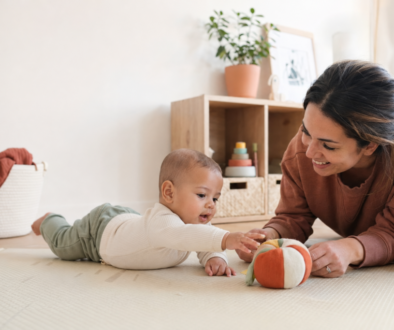
The best indoor activities for toddlers are usually simple: talking, moving, sorting, pretending, making marks and copying rhythms. You do not need an expensive learning kit or a packed schedule. A few safe household objects, close supervision and an adult who follows the child’s interest can support language, coordination, creativity and problem-solving.
Quick answer: choose one open-ended activity, prepare a small safe space, and let your toddler explore for as long as they remain interested. Five focused minutes can be worthwhile. Adapt each setup for your child’s age and skills, especially if they still mouth objects, are unsteady on their feet or become overwhelmed by noise and texture.
7 indoor activities for toddlers: the play menu
A balanced play menu includes conversation, whole-body movement, hand practice, sensory discovery, pretend play, music and art. It does not need to include every type each day. Toddlers learn through repetition, so repeating the same posting game or song is productive rather than boring.
Responsive interaction matters more than a perfect activity. When your toddler points, looks, babbles or offers an object, notice and respond. Harvard’s Center on the Developing Child calls these back-and-forth exchanges “serve and return.” They help build the relationships in which early learning happens.
Safety and supervision checklist
- Stay close enough to intervene; supervision should match the activity and your child’s abilities.
- Remove choking hazards. If an item can fit through a small-parts tester or toilet-paper tube, do not offer it to a child who mouths objects.
- Avoid button batteries, water beads, magnets, burst balloons, plastic bags, long cords and containers that held chemicals or medicine.
- Use only stable cushions on the floor, away from stairs, sharp furniture, windows and hot surfaces.
- Choose washable, non-toxic art materials labelled for your child’s age.
- Inspect recycled containers for sharp edges, loose pieces and breakage before every use.
The US Consumer Product Safety Commission recommends following age guidance and keeping toys intended for older children away from younger children. An activity described online is not automatically safe for every toddler; adapt or skip any setup that you cannot supervise confidently.
1. Picture hunt and naming game
Choose a sturdy picture book, family photo or room in your home. Ask your toddler to find one familiar object: “Where is the dog?” Then name what they notice: “Yes, a brown dog. It is running.” Follow their gaze instead of turning the game into a quiz.
For 12–18 months, use single words and gestures. From 18–24 months, add a describing word or action. Ages 2–3 may enjoy simple clues such as “Find something we wear on our feet.” If your child gives an unexpected answer, stay curious; conversation is the goal.
2. Posting, stacking and transferring
Cut a wide opening in a clean cardboard box and offer large blocks, fabric squares or chunky lids that cannot be swallowed. Your toddler can post items, empty the box and begin again. Stack large cups, nest containers or move big soft objects between two bowls using hands.
These actions practise grasping, releasing, aiming and judging space. Use position words naturally: “The block went in,” “The cup is on top,” and “The scarf is under the bowl.” Avoid dried beans, coins, pompoms and other small loose pieces for children who may put them in their mouth.
3. Cushions, tunnels and movement
Make a short floor route with a mat to cross, one firm cushion to step over and a cardboard tunnel to crawl through. Keep everything low and stable. Demonstrate slowly, then let your child choose whether to crawl, walk around or repeat one part.
You can add action words—up, down, through, stop and go—or move like animals. Young toddlers need a very simple route and an adult within reach. Older toddlers may help plan the order. Active indoor play can be especially useful on wet days, but it should not involve jumping from furniture or climbing unstable stacks.
4. Low-mess sensory play
Sensory play can be as simple as a sealed texture bag taped securely to the floor, a damp sponge and empty bowl, or several safe fabrics to touch and match. Describe temperature, texture and sound without insisting that your toddler touch anything: “This cloth feels smooth. That one feels bumpy.”
Skip a material if your child has an allergy, tries to eat it or dislikes the sensation. Sensory play is optional, not a treatment or developmental requirement. Water activities require continuous, hands-on adult supervision, even when the amount seems shallow.
5. Pretend play for social and emotional learning
Offer a doll, toy animal, cup, spoon and small cloth. Your toddler can feed the bear, tuck in the doll or pretend to wash a toy. Join with one short idea—“The bear looks tired”—and wait. Let the child change the story.
Pretend scenes can introduce feeling words and everyday sequences without forcing a lesson. A toy can wait for a turn, say “stop,” receive comfort or help clean a spill. For more age-specific ideas, see Nappot’s guide to supporting toddler emotional development.
6. Music, rhythm and action games
Clap a short pattern and pause for your toddler to answer. Tap a wooden spoon on an upside-down plastic bowl, march to a familiar song or play freeze-and-go. Keep the volume comfortable and put away anything your child swings toward people or breakable objects.
For younger toddlers, copy one sound or movement. Older toddlers may enjoy choosing “fast” or “slow,” leading a movement or adding a verse. Repetition builds participation; there is no need to correct rhythm or singing.
7. Simple art for ages 1–3
Tape a large sheet of paper to a table or washable floor and provide one or two chunky, non-toxic crayons. Scribbling is the activity. Resist turning the marks into a required picture. You might say, “You made a long blue line,” rather than asking what it is.
Ages 2–3 may also enjoy painting with water on cardboard, making marks with a washable paint stick or pressing large shapes into child-safe dough when closely supervised. Stop if materials go into the mouth, and follow the manufacturer’s age and safety instructions.
How to follow your toddler’s lead
Set out a small invitation, then watch. If your child stacks the cups instead of sorting them, that is still useful exploration. Comment more than you question, imitate an action and allow pauses. The American Academy of Pediatrics highlights play as an important way children explore, practise skills and strengthen relationships.
End before frustration becomes overwhelming. A toddler who walks away, throws materials repeatedly or says “no” may be finished. You can calmly say, “You are all done. We will put it away.” Helping with one simple cleanup step can build independence; Nappot’s article on building independence in toddlers offers more practical examples.
Rotate activities without overstimulation
Keep most toys out of sight and offer a few choices. Rotate when interest fades, not according to a complicated calendar. Familiar materials can return in a slightly different way: cups move from stacking to pretend cooking; scarves move from peekaboo to a colour hunt.
- Offer less: one activity plus one familiar alternative is often enough.
- Reduce noise: turn off background television and competing toys.
- Use a predictable ending: sing one cleanup song or place items in a labelled basket.
- Watch the child: repeated engagement matters more than how the setup looks.
A five-day indoor play plan
- Monday—words: take a picture hunt through one room.
- Tuesday—hands: post large fabric squares into a box.
- Wednesday—movement: crawl through a box and step over one cushion.
- Thursday—pretend: feed and tuck in a toy animal.
- Friday—music and art: clap a pattern, then make large crayon marks.
Repeat favourites and skip activities that do not fit the day. Ten relaxed minutes alongside a caregiver can be more valuable than an elaborate setup that creates stress. Keep the plan flexible around meals, naps and outdoor time. If your toddler asks to repeat Monday’s game on Friday, repetition is a useful choice, not a schedule failure.
Frequently asked questions
What activities are good for a 2-year-old indoors?
Try large-block building, simple pretend play, picture hunts, chunky crayons, action songs and a low movement route. Choose activities without choking hazards, keep expectations flexible and remain nearby.
How long should toddler activities last?
There is no required duration. Some toddlers engage for three minutes and return later; others repeat an activity much longer. Follow interest, end when safety or regulation becomes difficult, and avoid using attention span as a test.
What household items are safe for toddler play?
Large, clean, unbreakable objects without sharp edges, cords, loose parts or toxic residue may be suitable with supervision. Age, mouthing and individual abilities matter. When unsure, use a purpose-made, age-rated toy instead.
How can play support language development?
Talk about what your child notices, copy sounds, expand a word into a short phrase, sing and pause for a response. Seek advice from your child’s healthcare professional if you have concerns about hearing, communication, lost skills or development rather than relying on activities alone.
Sources
- Harvard Center on the Developing Child: Serve and return interaction
- American Academy of Pediatrics / HealthyChildren.org: The power of play
- US Consumer Product Safety Commission: Toy safety
- US Centers for Disease Control and Prevention: Developmental milestones and acting early
This article provides general parenting and developmental education, not medical or therapeutic advice. Adapt activities to your child’s abilities and follow product safety instructions. Contact a qualified healthcare professional if you have concerns about development, hearing, movement, behaviour or safety.