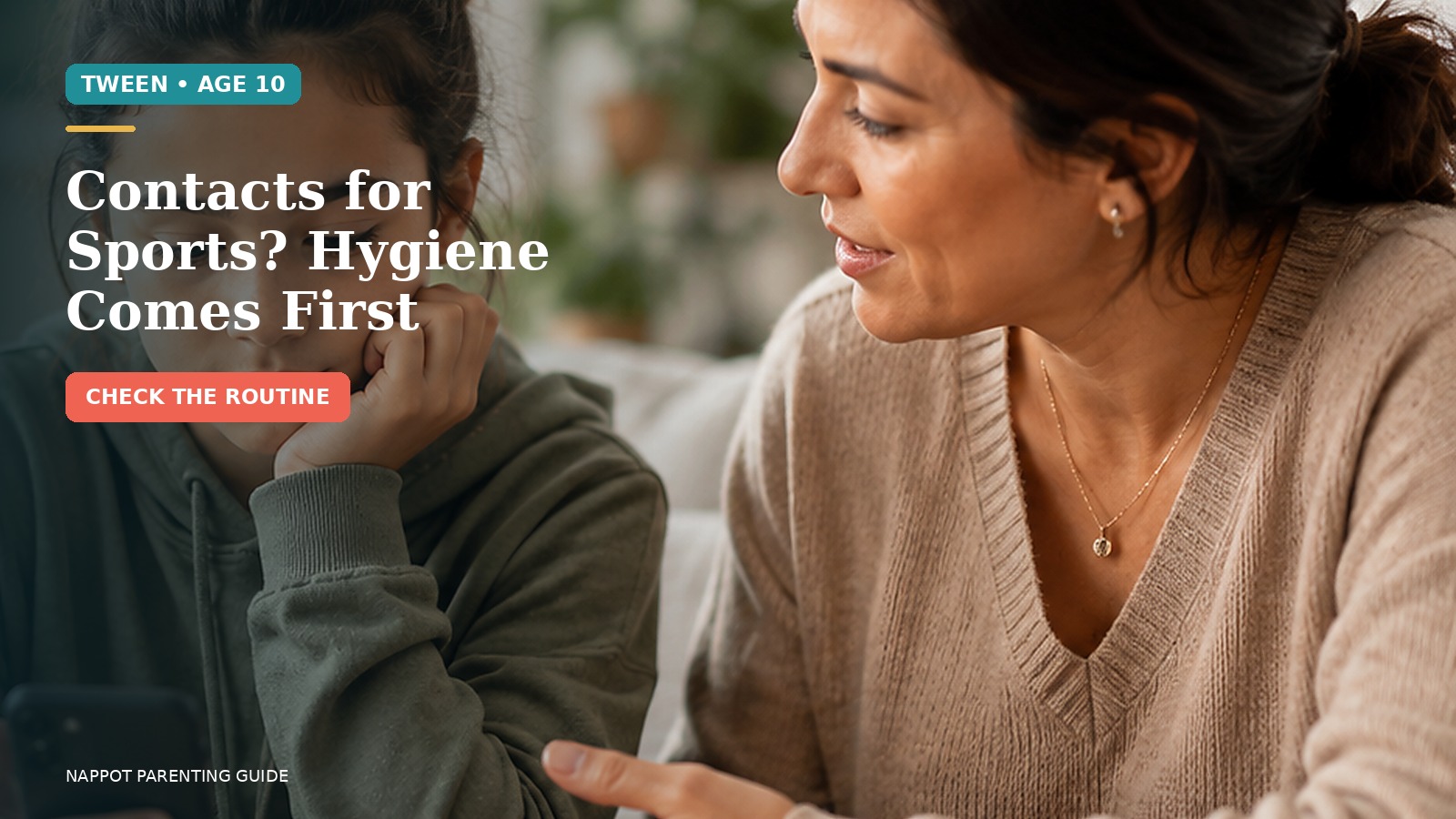
Contact lenses can be appealing to a young athlete. They do not slip down a sweaty nose, interfere with some helmets, or limit peripheral vision the way certain frames can. But the key question is not simply whether contacts help during a game. It is whether your child can handle a medical device safely every day.
When deciding is a 10 year old ready for contact lenses, focus less on age and more on habits. A child who reliably washes and dries their hands, follows multi-step instructions, reports discomfort promptly, and accepts adult supervision may be ready to discuss lenses with an eye-care professional. A child who regularly cuts hygiene corners may need more practice first.
Start with an eye examination, not an online order
Contact lenses are regulated medical devices. A prescription is based on more than the power printed on a glasses prescription; the eye-care professional also evaluates the eyes and determines an appropriate lens fit and care plan. Do not let a child share lenses, try a teammate’s lenses, or use decorative lenses bought without a valid prescription.
Book an appointment with an optometrist or ophthalmologist who fits children or young athletes. Explain which sport your child plays, how often they practice, whether equipment presses against glasses, and whether the child has allergies, dry-eye symptoms, previous eye problems, or difficulty following treatment routines. The clinician can decide whether contact lenses are appropriate and provide instructions for the specific lenses prescribed.
The appointment is also a chance to clarify expectations. Ask who will teach insertion and removal, how competency will be checked, what wearing schedule applies, which products are approved, and what symptoms require lenses to come out. Do not substitute generic online advice for the instructions supplied with your child’s prescription.
The hygiene readiness check
Use the following check for a week or two before the fitting. Observe what your child actually does without repeated reminders. Readiness is demonstrated through consistent behavior, not a promise made because they want contacts.
1. Hands are washed and fully dried
Your child should wash with soap and water before touching lenses or the eye area, then dry with a clean, lint-free towel. Damp hands matter because water should not contact lenses. Fingernails should be clean and kept at a practical length for safe handling.
Practice the routine at the real times it will be needed: before school, after a rushed practice, and during travel. If handwashing disappears whenever the family is late, build a more reliable routine before adding lenses.
2. Instructions are followed exactly
Your child needs to accept that “almost the same” is not good enough for lens care. They should use only the products and schedule their eye-care professional recommends. They should not top off old solution, stretch a replacement schedule, sleep in lenses unless explicitly prescribed for overnight wear, or use saliva to wet a lens.
If reusable lenses are prescribed, the cleaning and storage method must be followed exactly. The case also needs care and regular replacement according to professional and product instructions. If daily disposable lenses are prescribed, each pair is discarded after use rather than saved for another day.
3. The child can insert and remove lenses calmly
Safe handling takes patience. Your child should be able to pause when frustrated rather than poke repeatedly at a painful or irritated eye. They also need enough time in the morning and evening to complete the routine without rushing.
A parent may supervise, but the child should be an active participant. Ask the fitting professional what level of independent skill they expect before lenses go home. If removal remains unreliable, the child is not yet ready to wear lenses away from a trained adult.
4. Problems are reported instead of hidden
An athlete who fears missing a game may be tempted to minimize pain or redness. Agree in advance that reporting symptoms will not lead to blame. Eye pain, unusual redness, discharge, light sensitivity, swelling, or sudden blurred vision are reasons to remove lenses and seek prompt advice from the eye-care professional. Do not “push through” symptoms for practice or competition.
The water rule: contacts and water do not mix
The CDC advises keeping contact lenses away from water, including tap water, swimming pools, hot tubs, lakes, and the shower. Water can carry microorganisms, and lenses can trap them against the eye. Water can also change the shape or behavior of some soft lenses and make them stick to the eye.
- Remove lenses before swimming, showering, or using a hot tub unless the prescribing clinician has given a specific plan.
- Never rinse or store lenses in tap, bottled, or distilled water.
- Use only the lens-care products approved for the prescribed lens.
- If water contacts the lenses, follow the eye-care professional’s instructions; disposable lenses may need to be removed and discarded.
Swimming goggles do not turn ordinary contact-lens wear into a risk-free activity. Ask the eye-care professional about the safest vision option for swimming. Depending on the child and sport, prescription goggles may be a better solution.
Build a sports-day backup plan
Contacts should not be the only way your child can see. Pack current glasses in a protective case and make sure coaches or another responsible adult know the child may need to switch. For outdoor sports, use appropriate protective eyewear and sun protection recommended for the activity; contacts do not replace sports goggles or eye protection.
A small sports kit can include:
- current backup glasses in a labeled hard case;
- clean supplies approved by the prescribing clinician;
- spare lenses only if the prescription and care plan allow them;
- a clean lint-free towel or another approved hand-drying option;
- the parent’s and eye-care office’s contact information.
If a lens falls onto a bench, locker-room floor, grass, or court, your child should not put it straight back in. The correct next step depends on the lens type and care instructions. A fresh daily disposable lens may be an option if prescribed and clean hands and supplies are available; otherwise, switch to glasses.
If a lens tears, feels wrong, or cannot be found, stop and remove it rather than rubbing the eye. Seek advice if discomfort, redness, or blurred vision persists. A coach should never pressure a child to keep wearing an uncomfortable lens to finish a game.
A one-week responsibility trial
Before the fitting, run a simple seven-day trial using a harmless stand-in routine. Ask your child to complete three linked tasks at the same times each day: wash and dry hands properly, clean and store a designated nonmedical item according to written directions, and mark completion on a checklist. Add one busy sports day to see whether the routine survives real-life pressure.
At the end of the week, review the pattern together:
- Were the steps completed without repeated reminders?
- Did your child tell you honestly when a step was missed?
- Could they stop and restart calmly after a mistake?
- Did the routine still happen when tired or rushed?
- Are they comfortable carrying backup glasses?
This exercise cannot prove medical suitability, but it gives you useful information to share at the appointment. If the routine was inconsistent, frame that as a skill to build rather than a failure. Revisit the question after more practice.
Parent supervision still matters
Even a capable 10-year-old benefits from adult oversight. At first, watch the full routine and compare it with the written instructions from the eye-care professional. Keep track of replacement dates, follow-up visits, and supply levels. Periodically observe technique rather than relying only on “I did it.”
Create clear household rules: lenses come out at the prescribed time, water exposure is avoided, symptoms are reported immediately, and glasses are used whenever the routine cannot be completed safely. Keep the tone practical. Shame can encourage secrecy, while calm supervision makes it easier for a child to admit a dropped lens or missed step.
Sports gear routines can support the same independence. Nappot’s school health readiness checklist shows how to practice a child-managed health routine while preserving adult backup. If school logistics are a source of stress, the locker and changing-classes practice plan can help organize supplies and help-seeking.
When to pause or postpone contact lenses
Pause the plan and speak with the eye-care professional if your child cannot reliably wash and dry hands, repeatedly forgets the care sequence, hides symptoms, shares personal items, or refuses to carry glasses. Illness, eye irritation, seasonal allergy flares, or an environment without clean handwashing may also change whether lenses should be worn that day.
Contact the eye-care professional promptly for eye pain, significant redness, discharge, light sensitivity, swelling, or sudden or persistent blurred vision. Remove the lenses unless a clinician directs otherwise, and do not restart wear simply because symptoms improve. Severe pain, an eye injury, chemical exposure, or sudden vision loss warrants urgent medical assessment.
Questions to ask at the fitting
- Which lens type and replacement schedule are prescribed for my child?
- How many hours may the lenses be worn, and may they ever be worn during sleep?
- Which solution and case-care steps should we use?
- What should my child do if a lens falls out during practice?
- What is the plan for swimming, showers, and water sports?
- Which sports require protective goggles in addition to vision correction?
- Which symptoms require same-day advice or urgent care?
- When is the next follow-up examination?
Frequently asked questions
Are daily disposable lenses easier for children?
They remove the need to clean and store a lens for reuse, but they still require clean, dry hands, correct insertion and removal, no water exposure, and adherence to the prescribed wear schedule. Only the eye-care professional can determine whether they are appropriate for your child.
Can children swim in contact lenses?
The CDC advises removing contacts before swimming and avoiding water exposure. Ask the prescribing professional about prescription goggles or another sport-specific option. Do not assume ordinary goggles eliminate the risk.
Does a child still need sports goggles?
Contact lenses correct vision but do not protect eyes from impact. The right protection depends on the sport and applicable safety standards. Ask the eye-care professional and follow the sport organization’s requirements.
What if my child forgets to wash their hands before practice?
They should not handle lenses with unwashed hands. Use backup glasses and treat the missed step as evidence that the routine needs more support. Do not create an improvised shortcut with water, saliva, or an unapproved product.
Is age 10 too young for contacts?
There is no single birthday that proves readiness. Eye health, prescription needs, motivation, maturity, hygiene, adult supervision, and the clinician’s assessment all matter. Some children may be ready; others benefit from waiting.
The bottom line
Contact lenses can work well for sports when they are properly prescribed and cared for. The strongest readiness sign is not enthusiasm on game day; it is a calm, repeatable hygiene routine on ordinary days. Arrange a professional fitting, rehearse handwashing and backup plans, keep lenses away from water, and make symptom reporting nonnegotiable. If those habits are not consistent yet, glasses or prescription sports goggles remain sensible options while your child builds the required skills.
Sources
- Centers for Disease Control and Prevention: About Contact Lenses
- Centers for Disease Control and Prevention: Preventing Eye Infections When Wearing Contacts
- U.S. Food and Drug Administration: Contact Lens Risks
This article provides general educational information. It does not determine whether a particular child is medically suitable for contact lenses or replace an examination and individualized instructions from an optometrist or ophthalmologist.