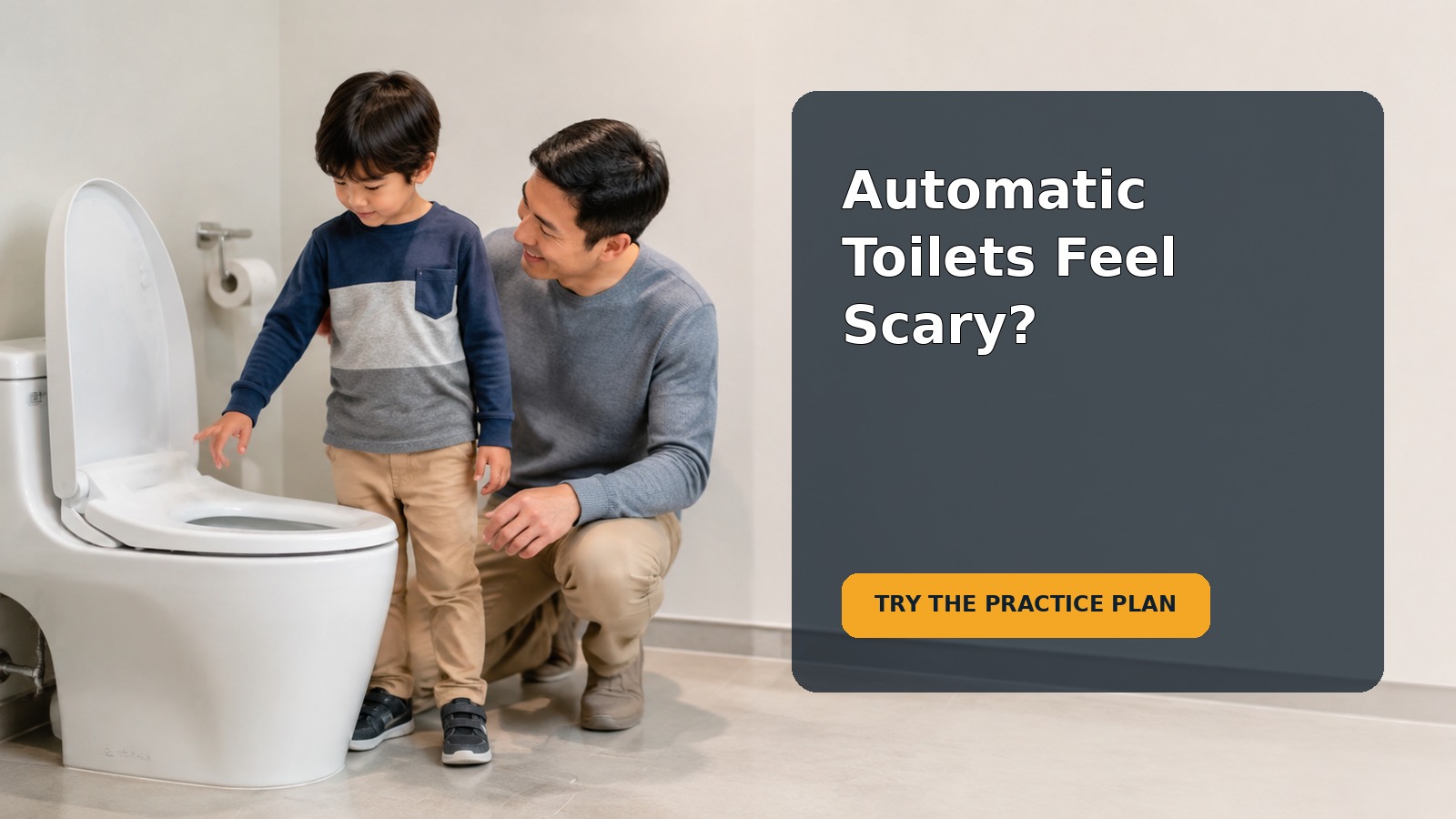
If your 4-year-old is afraid of automatic-flushing toilets, the noise and surprise can turn a simple bathroom stop into a stressful outing. The goal is not to prove that the toilet is harmless or make your child sit through fear. It is to make the experience more predictable, preserve bathroom access, and build confidence in small steps.
A preschooler may react to the loud flush, the sudden movement of water, the echo in a public restroom, an unfamiliar seat, or the worry that the toilet will flush while they are sitting. Some children are especially sensitive to sound or surprise. A calm, gradual practice plan can help, but pain, constipation, withholding, or distress across many everyday sounds deserves a conversation with an appropriate health professional.
Why automatic-flushing toilets can feel scary at age 4
At four, children can understand a simple explanation, remember an unpleasant surprise, and imagine what might happen next. They are also still learning to manage strong feelings and tolerate unfamiliar sensations. An automatic toilet combines several difficult features: a powerful sound, uncertain timing, a large unfamiliar fixture, and a restroom that may be busy or echoing.
The fear is real even when the danger is not. Saying “there is nothing to be scared of” may unintentionally tell a child that their body’s alarm signal is wrong or embarrassing. A more useful message is: “That flush is loud and surprising. You are safe, and we can make a plan.”
Start with a quick safety and comfort check
Before treating this only as a fear problem, consider whether something else makes toileting uncomfortable. Notice whether your child:
- has pain when urinating or passing stool;
- has hard, infrequent, or painful bowel movements;
- holds urine or stool for long periods;
- has new accidents after previously staying dry;
- seems afraid of all toilets rather than only automatic ones;
- has strong distress around many ordinary sounds or sensory experiences; or
- shows signs of illness, such as fever, vomiting, blood, marked abdominal pain, or appearing very unwell.
Contact your child’s pediatrician or other qualified clinician about pain, constipation, repeated withholding, urinary symptoms, regression, or concerns about development or sensory needs. Seek urgent medical advice for severe pain, a swollen abdomen with vomiting, significant bleeding, inability to urinate, dehydration, or a child who appears seriously ill. This article provides general education, not a diagnosis or individual medical plan.
The first rule: never make bathroom access conditional on bravery
A child who needs to go should not have to complete an exposure exercise first. Look for a manual-flush toilet, a family restroom, or another quieter option when one is available. If an automatic toilet is the only option, use the least stressful workable support. The immediate priority is comfortable toileting; confidence practice can happen separately.
Avoid forcing your child onto the seat, holding them there, flushing as a surprise, teasing them, or threatening an accident. Pressure can connect toileting with loss of control and may increase withholding. Progress is better measured by participation—walking into the restroom, looking at the toilet, or trying one planned step—than by whether your child uses the toilet on demand.
A gradual practice plan for automatic toilets
Use short sessions when your child does not urgently need the bathroom. Let your child know the plan in advance and stop before distress becomes overwhelming. Repeat a comfortable step until it feels routine, then invite—not force—the next step.
Step 1: explain the sensor at home
Use simple language: “The little sensor looks for movement. Sometimes it flushes when a person stands up, and sometimes it guesses too soon. The sound is loud, but we can prepare for it.” You can draw a toilet and sensor, use a toy figure to act out the sequence, or watch the bathroom routine from a comfortable distance during a calm outing.
Give the child one reliable phrase to use: “Tell me before it flushes,” or “I need my quiet plan.” The exact words matter less than giving your child a way to ask for help.
Step 2: build a predictable sound plan
Choose one or two supports your child accepts:
- covering their ears with their hands;
- using well-fitting hearing protection for the brief restroom visit;
- standing outside the stall while an adult demonstrates;
- counting together before the expected flush; or
- leaving the stall before the adult allows the toilet to flush, when that can be done hygienically and safely.
Do not use hearing protection to isolate a child from supervision or instructions, and do not let equipment become a substitute for addressing persistent, broad sound sensitivity with a professional. For many families, simply having a known response—“hands over ears, then step out together”—reduces uncertainty.
Step 3: visit without sitting
During a low-pressure outing, enter the restroom, identify the automatic toilet, and leave. The next time, stand near the stall for a few seconds. Another day, watch an adult use it from the doorway if your child agrees. Keep the visit brief and praise the specific effort: “You walked in and looked at the sensor even though the room felt loud.”
If your child becomes very upset, return to an easier step. Stepping back is not failure; it keeps practice within a range where learning is possible.
Step 4: practice the full sequence with control
When your child is ready, rehearse this sequence:
- Enter the stall together.
- Point out the sensor and review the sound plan.
- Help with clothing and seat stability as needed.
- Let the child choose whether to cover their ears before standing.
- Stand up, dress, and move toward the stall door together.
- Wash and dry hands using the least startling available option.
Some parents temporarily block an optical sensor with a removable piece of toilet paper while the child is seated, then remove it after the child has dressed and moved away. Restroom systems vary, so never tape, damage, dismantle, or permanently obstruct equipment, and do not leave anything behind. If you cannot do this safely and cleanly, use another support instead.
Step 5: repeat before making the task harder
Repeat the same restroom, if practical, before trying a busier or noisier one. A successful practice might mean your child enters calmly but still covers their ears. Independence can come later. The immediate goal is a usable routine, not perfect comfort.
A simple outing bathroom kit
Keep the kit small enough that it does not become another burden. Depending on your child’s needs, include:
- compact hearing protection your child already tolerates;
- wipes or tissues for ordinary hygiene needs;
- a change of underwear and clothing;
- a sealable bag for wet items;
- a visual card showing “toilet, wash, dry, leave”; and
- a note on your phone identifying quieter or family restrooms at frequent destinations.
A portable toilet-seat insert may help a child who fears the size of an unfamiliar seat, but use only a stable product as directed and supervise closely. It does not solve the automatic flush itself, so keep the sound plan too.
What to say in the moment
Long explanations rarely help when a child’s alarm response is active. Use a short script:
“The toilet might flush loudly. You can cover your ears, and I will stay with you. We can step out together. You do not have to practice a harder step right now.”
If your child refuses:
“I hear that this toilet feels too scary. Your body still needs a bathroom. Let’s look for a quieter toilet. If this is the only one, I will help you use our sound plan.”
Afterward, avoid a detailed critique. Try: “You told me what you needed and we got through the bathroom stop. Next time we can use the same plan.”
Common mistakes and better alternatives
Mistake: surprising the child “so they can see it is fine”
Better: announce what may happen and let the child use the agreed coping step. Predictability builds trust.
Mistake: rewarding only successful toilet use
Better: notice approach behaviors, such as entering, looking, asking for help, or recovering after a flush. Keep praise warm and specific rather than making toileting a high-stakes performance.
Mistake: practicing only when the child urgently needs to go
Better: separate confidence practice from urgent bathroom trips. An urgent body signal plus a feared sound creates unnecessary pressure.
Mistake: calling the child a baby or comparing them with siblings
Better: describe the challenge without a label: “That sound is hard for you right now.” Shame does not teach regulation.
Mistake: removing every challenge indefinitely
Better: accommodate immediate bathroom needs while offering small, voluntary practice opportunities. Support and gradual skill-building can happen together.
Coordinate with preschool or caregivers
Ask what kind of toilets the setting has, when bathroom breaks happen, and whether a quieter restroom is available. Share the child’s brief routine without giving unnecessary private details. For example:
“Automatic flushing is currently very distressing for my child. They do best with a warning, permission to cover their ears, and an adult nearby. Please do not force a flush exposure or delay bathroom access. Can we agree on a quiet option while we practice gradually?”
If the fear interferes with attendance, field trips, toileting at school, or daily family life, ask the pediatrician and school team what assessment or individualized support is appropriate. Policies and available accommodations differ by setting.
When to seek additional help
Schedule professional advice when the fear is not improving after several weeks of calm, consistent practice; when it is getting worse; or when it causes repeated withholding, accidents, missed activities, or major family disruption. Also ask for help if your child has intense reactions to many sounds, textures, or environments, or if you have broader developmental concerns.
A pediatrician can assess medical contributors such as constipation or pain and help decide whether support from an occupational therapist, mental-health professional, continence service, or another specialist is appropriate. No single toileting fear proves that a child has an anxiety, sensory, or developmental disorder.
Parent checklist for the next outing
- Ask your child what part feels hardest: the sound, surprise, seat, room, or something else.
- Identify a quieter or manual-flush restroom when possible.
- Review one short coping plan before entering.
- Keep urgent toileting separate from optional confidence practice.
- Offer one manageable step and allow a pause.
- Do not force sitting, surprise-flush, shame, or withhold access.
- Notice pain, constipation, withholding, accidents, or broad sensory distress.
- Repeat the same successful routine before increasing difficulty.
If your child is still learning the broader toileting routine, see Nappot’s guide to potty-training readiness signs. The automatic-flush plan works best when expectations also fit the child’s current toileting skills.
Frequently asked questions
Is fear of automatic toilets common in preschoolers?
Loud, unpredictable equipment can frighten young children, and an automatic flush has both features. The intensity and impact matter more than whether the fear is “common.” Seek advice if it causes withholding, pain, repeated accidents, or significant limits on daily life.
Should I make my child stay until the toilet flushes?
No. Forced exposure can increase distress and damage trust. Use gradual, agreed steps and allow your child to leave after completing the planned step.
How long should the practice plan take?
There is no fixed deadline. Look for small gains over several weeks: less distress entering, faster recovery, or willingness to try the routine. If there is no improvement or the problem is worsening, consult your child’s pediatrician.
Are headphones or ear defenders okay?
Brief hearing protection may be a practical support if it fits properly and the child can still be safely supervised. If your child needs hearing protection in many everyday settings or has broad sound sensitivity, discuss that pattern with a qualified professional.
What if my child holds urine or stool to avoid public toilets?
Do not wait for the habit to become entrenched. Provide an acceptable bathroom option and contact the pediatrician, especially if withholding is repeated or accompanied by pain, constipation, urinary symptoms, or accidents.
Sources
- American Academy of Pediatrics/HealthyChildren.org: Toilet Training
- CDC: Positive Parenting Tips for Preschoolers
- NHS: Anxiety in Children
This article is for general educational purposes and does not replace advice from your child’s clinician.