Moving between two homes can ask a lot of a child. They may be leaving a parent, stepparent, sibling, pet, bedroom, or unfinished game while also preparing for a different space and routine. Even when both homes are loving and the schedule is familiar, transition day can bring sadness, excitement, worry, relief, or several feelings at once.
To help a child transition between two homes, focus less on making every handoff cheerful and more on making it predictable, emotionally safe, and easy to manage. A child should not have to carry adult messages, monitor adult feelings, or repeatedly rebuild the practical basics of daily life.
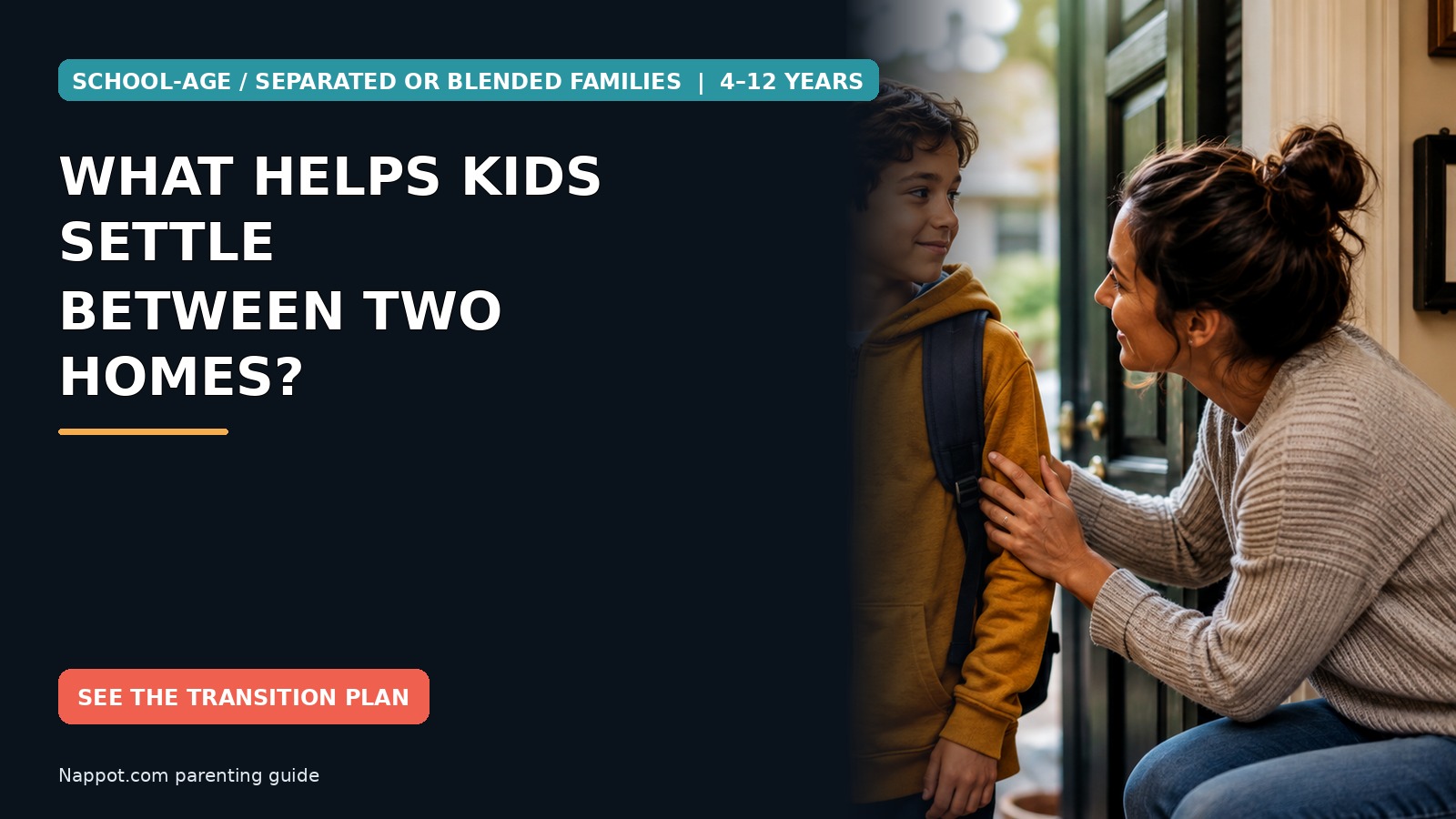
Why transition days can feel complicated
A handoff is not only a change of address. It may interrupt play, friendships, homework, sleep, and a child’s sense of where their belongings are. The sounds, foods, expectations, and people in each home may differ. Younger children can struggle to picture when they will return. Older children may worry that enjoying one home will hurt someone in the other.
Behavior after a move does not always reveal how the child feels about either parent. Irritability, silence, clinginess, tears, silliness, or an argument over a small rule may be signs that the child is tired and reorganizing. Avoid turning one difficult hour into a verdict about the other home.
The American Academy of Pediatrics’ HealthyChildren guidance on adjusting to divorce emphasizes reassurance, dependable routines, and protecting children from parental conflict. These principles can also help children in separated, blended, or other two-home arrangements.
Reduce the practical burden before the handoff
Predictability cannot remove every feeling, but it can reduce preventable stress. Build a small system around what the child repeatedly needs.
Duplicate everyday essentials where possible
Keep basic toiletries, pajamas, chargers, school supplies, and a few familiar comfort items in both homes when budgets and circumstances allow. Children may still want to carry special belongings, but they should not have to move their entire daily life in a suitcase.
If medication or essential equipment must travel, adults should use a clear transfer and confirmation process. Follow the prescription, storage instructions, and any relevant school or care plan. Never make the child solely responsible for transporting something necessary for health or safety.
Use one simple packing check
A short list can cover schoolwork, sports kit, comfort item, necessary device, and special event clothing. Keep it visible and age-appropriate. Preschoolers can point to picture cues; school-age children can pack with an adult check; tweens can take more responsibility while an adult still protects important deadlines.
The list should prevent blame, not create a new test. If something is forgotten, solve the immediate problem first and improve the system later.
Share essential information adult to adult
School notices, appointment details, medication updates, and time-sensitive changes should move through an agreed adult channel or approved co-parenting tool—not through the child. Keep communication brief, factual, and focused on the child’s needs. A shared calendar can reduce repeated questions when direct conversation is difficult.
Create a settling ritual in each home
A settling ritual tells the child, “You have arrived; there is time to adjust.” It does not need to be elaborate. Use a repeatable sequence such as:
- Put the bag in its usual place.
- Offer water and a familiar snack.
- Give the child a choice between quiet time, movement, or brief connection.
- Unpack necessary items together.
- Review only the next part of the day.
Keep the first 30 to 60 minutes relatively low demand when possible. A preschooler may want a cuddle and the same book. A school-age child may need a snack and outdoor movement. A tween may prefer music, a shower, or private time before talking. The ritual can be consistent without being identical at every age.
Ask one gentle question instead of conducting an interview: “Would you like company, help unpacking, or some quiet time?” If the child wants to talk about the other home, listen without searching for evidence or correcting their affection.
Keep the handoff child-focused
Children notice tone, facial expressions, and tension even when adults avoid an open argument. A useful handoff is usually brief, neutral, and unsurprising.
- Confirm logistics before the child is waiting at the door.
- Use a calm greeting and goodbye without demanding a particular emotional response.
- Do not discuss money, court issues, relationship grievances, or schedule disputes within earshot.
- Do not ask the child to deliver messages, report on the other home, or choose sides.
- Allow a forgotten item to be a practical problem rather than proof of someone’s character.
A child may cry when leaving and still be safe and happy after settling. They may run excitedly toward the next home and still love the person they are leaving. Adults can make room for both truths.
Respond to difficult behavior as a regulation signal
Understanding the transition does not mean ignoring aggression, damage, or disrespect. Hold a calm limit while reducing demands: “You can be upset. I will not let you hit. We can talk after your body is calmer.” Then offer space, water, movement, sensory comfort, or quiet company according to the child’s needs.
Delay questions and consequences that require complex thinking until regulation returns. Later, name the pattern without blaming either home: “Transitions seem to take a lot out of you. What would make the first hour easier next time?”
Track timing rather than assumptions. Note sleep, hunger, travel length, missed activities, packing problems, and the point at which behavior improves. A pattern may reveal a practical adjustment. If the child reports something concerning, listen calmly, record their words accurately, and seek appropriate professional guidance rather than interrogating them.
What should be consistent—and what can differ?
Children can usually adapt to different meals, decorating styles, leisure activities, and ordinary household preferences. Greater alignment matters for safety, health, school attendance, medication, and respectful communication. The Nappot guide to co-parenting consistency across two homes explains where shared rules matter most.
Do not force identical routines merely to prove cooperation. Instead, give the child a clear preview: “At this house, homework comes before gaming. At your other home the order may be different. Here is tonight’s plan.” Clear local expectations are easier to follow than criticism of another household.
When high conflict or safety concerns change the plan
Collaborative handoffs are not appropriate in every family. When there is abuse, coercive control, stalking, threats, substance-related danger, or a credible risk of abduction or violence, safety planning takes priority over friendly communication. Follow current court orders and advice from qualified local legal and safeguarding professionals.
Structured or supervised exchanges, a neutral location, written communication, or parallel-parenting arrangements may be safer. These are case-specific decisions; this article is general parenting information, not legal advice. The Association of Family and Conciliation Courts’ family resources can help families locate educational information, but local rules and professional guidance govern individual cases.
Seek support from a pediatrician, school counselor, or qualified child and family mental-health professional when transition distress is persistent, worsening, or affecting sleep, eating, school, relationships, or daily functioning. Promptly address disclosures of harm, serious threats, self-harm, or a child’s fear for their safety through appropriate local services.
Frequently asked questions
Why is my child rude after returning from the other home?
The child may be tired, hungry, overstimulated, sad about leaving, or testing whether expectations have changed. Begin with calm limits and a low-demand settling period. Look for a repeated pattern before deciding what the behavior means, and avoid blaming the other household without evidence.
Should children carry clothes between homes?
Some special items will need to travel, but duplicating inexpensive basics can reduce packing pressure and arguments. Clothing should not become a loyalty test. Adults can agree on a practical method for returning valued items without putting the child in charge of conflict.
How long should a settling period last?
There is no universal length. Start with 30 to 60 minutes of lower demands and adjust to the child’s age, travel time, and behavior. The aim is not to excuse harmful conduct or isolate the child; it is to allow a predictable shift before homework, chores, or detailed conversation.
What if handoffs are consistently tense?
Move disputed topics to a written adult channel, make the exchange brief, and consider a neutral place or trusted professional support. If tension includes intimidation, threats, or safety concerns, use a formal safety plan and qualified legal or safeguarding advice rather than informal negotiation.
A calmer transition plan
A practical plan to help a child transition between two homes begins with one predictable handoff routine, duplicated essentials, and a protected low-demand arrival period. Keep adult communication adult-to-adult and make space for mixed feelings without asking the child to manage anyone else’s emotions.
Success does not mean a child never feels sad or needs time to settle. It means the adults have reduced unnecessary burdens, maintained safe boundaries, and made both departure and arrival easier to understand.