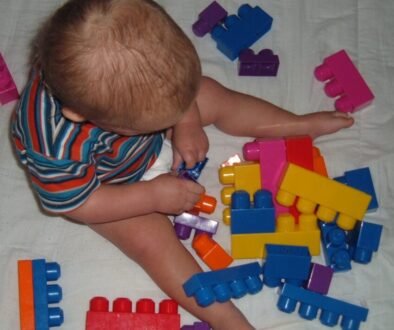
If your 11 month old is not pointing, it is reasonable to wonder whether you are seeing a developmental concern. Pointing is an important early gesture, but a single skill does not tell the whole story. At this age, communication includes looks, sounds, facial expressions, reaching, showing, giving, waving, copying and taking turns with you.
Many babies begin pointing near the end of the first year, while others show their intentions in different ways first. The useful next step is not to drill the pointing motion or compare your baby with another child. Instead, watch the full communication pattern, give your baby easy reasons to communicate during everyday play and bring clear observations to the 12-month checkup.

Start with the immediate question: should an 11-month-old point?
What is typical around 10–12 months
The American Academy of Pediatrics explains that toward the end of the first year, babies often communicate what they want by pointing, crawling or gesturing toward it. However, development is a range rather than a deadline that every baby meets on the same day.
The CDC’s one-year milestone checklist looks at several areas together. Communication and social milestones include waving “bye-bye,” calling a parent a special name such as “mama” or “dada,” understanding “no” briefly and playing an interactive game such as pat-a-cake. The CDC defines checklist milestones as skills most children—about 75% or more—can do by the listed age. Its page also encourages adults to respond with words when a baby points and to point out interesting things so the baby can follow another person’s attention.
That means pointing matters, but an absent point at exactly 11 months is not, by itself, a diagnosis. Look at how your baby communicates across the day and whether skills are growing.
Two purposes of pointing
Pointing can serve at least two broad purposes:
- Requesting: “I want that cup.” A baby may look, reach, vocalize or point toward it.
- Sharing interest: “Look at that dog!” The baby directs your attention to something simply to share the experience.
Before a clear index-finger point appears, you may see an open-hand reach, a whole-hand gesture, a look that shifts between you and an object, or a toy held up for you to notice. These are meaningful observations to record, even though they are not identical to pointing.
Do a calm communication check
What to observe before acting
Choose ordinary, relaxed moments over two or three days. Notice whether your baby:
- looks toward you to begin or continue an interaction;
- shifts their gaze between you and a toy, pet or sound;
- reaches toward something wanted or holds an object up to show you;
- gives you an object, even if they immediately want it back;
- copies gestures such as waving, clapping or raising both arms to be picked up;
- takes turns making sounds with you;
- babbles with different sounds and changes in tone;
- responds to their name or familiar voices in a quiet room;
- looks where you point; and
- uses the same look, sound or gesture consistently to ask for help.
You are looking for a pattern, not a perfect score. A tired, hungry or overwhelmed baby may communicate less. A baby also may respond differently in a noisy room, with an unfamiliar person or when deeply focused on a toy.
What to write down
A short note is more useful than “they never point.” Record the situation, what happened before the communication, what your baby did and how you responded. For example: “At breakfast, she looked from the banana to me, reached with her whole hand and said ‘uh.’ I named the banana and offered it.”
If you are comfortable doing so, take one or two brief videos of natural play to show the pediatrician. Do not repeatedly test your baby for the camera. The goal is to capture an ordinary interaction, not to make your baby perform.
A low-pressure plan to encourage gestures
Step 1: create a reason to communicate
Place two familiar, safe items where your baby can see them but needs your help to get one. Hold the items near your face and ask, “Ball or book?” Then pause for several seconds. Treat a look, reach, sound or gesture as communication. Name the choice and respond: “You looked at the ball. Ball!”
Do not withhold food, comfort or a necessary item until your baby points. Communication practice should feel like a warm exchange, not a test.
Step 2: model pointing and shared attention
During a walk, bath or floor play, point to something interesting and name it: “Look, a bird!” or “Bubbles!” Keep your language short, wait and watch your baby’s response. When your baby notices something, follow their gaze and comment on it.
You can also point to pictures while reading. Let your baby touch, pat or reach toward a picture. Respond as though the attempt matters: “Yes, the dog!” This teaches that gestures affect the conversation.
Step 3: build back-and-forth turns
Copy a sound your baby makes, then pause. Roll a ball to your baby and wait for any attempt to send it back. Hold out your hand for a block and say, “Can I have it?” If they offer it, thank them and return it. Songs with simple motions, peekaboo and pat-a-cake also combine attention, anticipation, sounds and gestures.
For more everyday interaction ideas, see these babbling games for early communication. Keep sessions brief and stop when your baby turns away, fusses or needs a break.
Step 4: review the pattern, not daily performance
Try these opportunities naturally for a week or two while arranging routine advice if you remain concerned. Look for more attempts to get your attention, more shared looks, new gestures or stronger back-and-forth exchanges. Progress can appear as a small change before a clear point develops.
Common mistakes and better alternatives
Do not move your baby’s finger for them
Physically shaping a baby’s hand into a point does not show whether they understand the social purpose of the gesture. Model the gesture yourself, pause and respond to voluntary attempts instead.
Do not ask “Where is it?” over and over
Repeated quizzing can make play tense and does not represent normal communication. Comment more than you test. Follow what interests your baby and add simple words and gestures.
Do not focus on pointing while ignoring hearing
Hearing affects access to speech and interaction. A baby may react to a loud noise yet still have difficulty hearing some speech sounds. Mention inconsistent responses to voices or name, frequent ear problems, or any concern about hearing to the pediatrician. A hearing check may be part of the follow-up.
Do not blame yourself or your baby
Developmental differences are not caused by a parent failing to practice enough, and a baby is not being stubborn. Supportive interaction helps learning, but it is not a substitute for evaluation when there are concerns.
When to involve a professional
Questions for the 12-month visit
Bring your observations to your baby’s pediatrician or primary care clinician. You can say:
“My 11-month-old is not pointing yet. They do reach and babble, but I am not sure how often they share attention with me. Can we review the full one-year milestone checklist, discuss hearing and decide whether developmental screening or a referral would help?”
Ask how your baby’s birth history, prematurity, hearing, vision, motor development and overall communication pattern affect the interpretation. If your baby was born early, the clinician may discuss corrected age while still taking your observations seriously.
If concerns remain, ask about a standardized developmental screening and local early-intervention services. In the United States, parents can contact their state’s early-intervention program directly; a diagnosis is not required to ask for an evaluation. The CDC advises parents not to wait when a child is missing milestones, has lost skills or when the parent has another developmental concern.
Concerns that deserve prompt discussion
Contact your baby’s clinician promptly rather than waiting several months if your baby:
- has lost a sound, gesture, social response or other skill they previously used;
- rarely responds to their name or familiar voices;
- shows little interest in back-and-forth interaction;
- rarely uses looks, sounds, reaching or gestures to communicate;
- does not seem to notice when you point to something nearby;
- has stopped babbling or has very limited sound-making;
- has possible hearing or vision difficulties; or
- is missing several one-year milestones across communication, social, movement or learning areas.
Loss of skills is especially important to report promptly. These signs do not identify a specific condition on their own; they indicate that a fuller review is appropriate. If your child is acutely ill, injured, difficult to wake, struggling to breathe or having a seizure, seek urgent medical care rather than treating it as a milestone question.
A one-page parent checklist
Before the appointment
- Complete the CDC one-year milestone checklist.
- Write down examples of reaching, showing, giving, waving and shared looks.
- Note babbling, response to name and response to quiet speech.
- Record any loss of skills, ear problems, prematurity or family concerns.
- Bring one or two short videos of natural interaction if useful.
During the appointment
- Lead with the exact concern: “My 11 month old is not pointing.”
- Describe what your baby does use to communicate.
- Ask for the whole developmental picture, not a yes-or-no judgment about one skill.
- Ask whether hearing evaluation, developmental screening or early intervention is appropriate.
- Agree on a specific follow-up date instead of “wait and see” without a plan.
What success should look like
Success is not forcing a point by a deadline. It is noticing your baby’s current communication, creating warm back-and-forth opportunities and getting timely help when the overall pattern raises concern. A useful plan tells you what to watch, whom to contact and when to review progress.
Frequently asked questions
Is it common for an 11-month-old not to point?
Pointing often emerges near the end of the first year, but timing varies. An absent point at 11 months should be considered alongside waving, reaching, showing, eye gaze, babbling, response to name and other one-year milestones. Mention the concern at the 12-month visit or sooner if other signs worry you.
Does not pointing mean autism?
No single gesture can diagnose autism or any other developmental condition. Clinicians consider patterns across social communication, play, behavior and development and use standardized screening and evaluation when appropriate. Do not use an online checklist to diagnose your baby.
Should I wait until 15 or 18 months?
You do not need to wait if you are concerned. Raise the issue now, especially if several communication signs are limited, hearing is uncertain or a skill has been lost. Early discussion may provide reassurance, monitoring, screening or support sooner.
Can screen videos teach my baby to point?
Babies learn communication best through responsive interaction with people. The CDC recommends limiting screen use under age 2 to video calling. Use real objects, books, songs and face-to-face play instead of milestone-training videos.
Sources
- CDC: Milestones by 1 Year
- CDC: Concerned About Your Child’s Development?
- American Academy of Pediatrics: Language Development, 8 to 12 Months
This article provides general educational information and does not replace individualized medical or developmental advice. Contact your child’s healthcare professional with concerns about communication, hearing or lost skills.