If you have a child not drinking water at school, an untouched bottle is useful information—not proof that your child is careless or defiant. A seven-year-old may forget, dislike the bottle, avoid the bathroom, feel rushed at lunch, or simply miss the few moments when drinking is easy.
Start with a quick safety check. If your child is alert, urinating normally, eating and drinking at home, and feeling well, you can usually investigate calmly and build a routine. If they seem unusually sleepy, weak, confused or dizzy, have a very dry mouth, produce much less or very dark urine, cannot keep fluids down, or are unwell in hot weather, contact a healthcare professional promptly. Severe symptoms require urgent medical care.
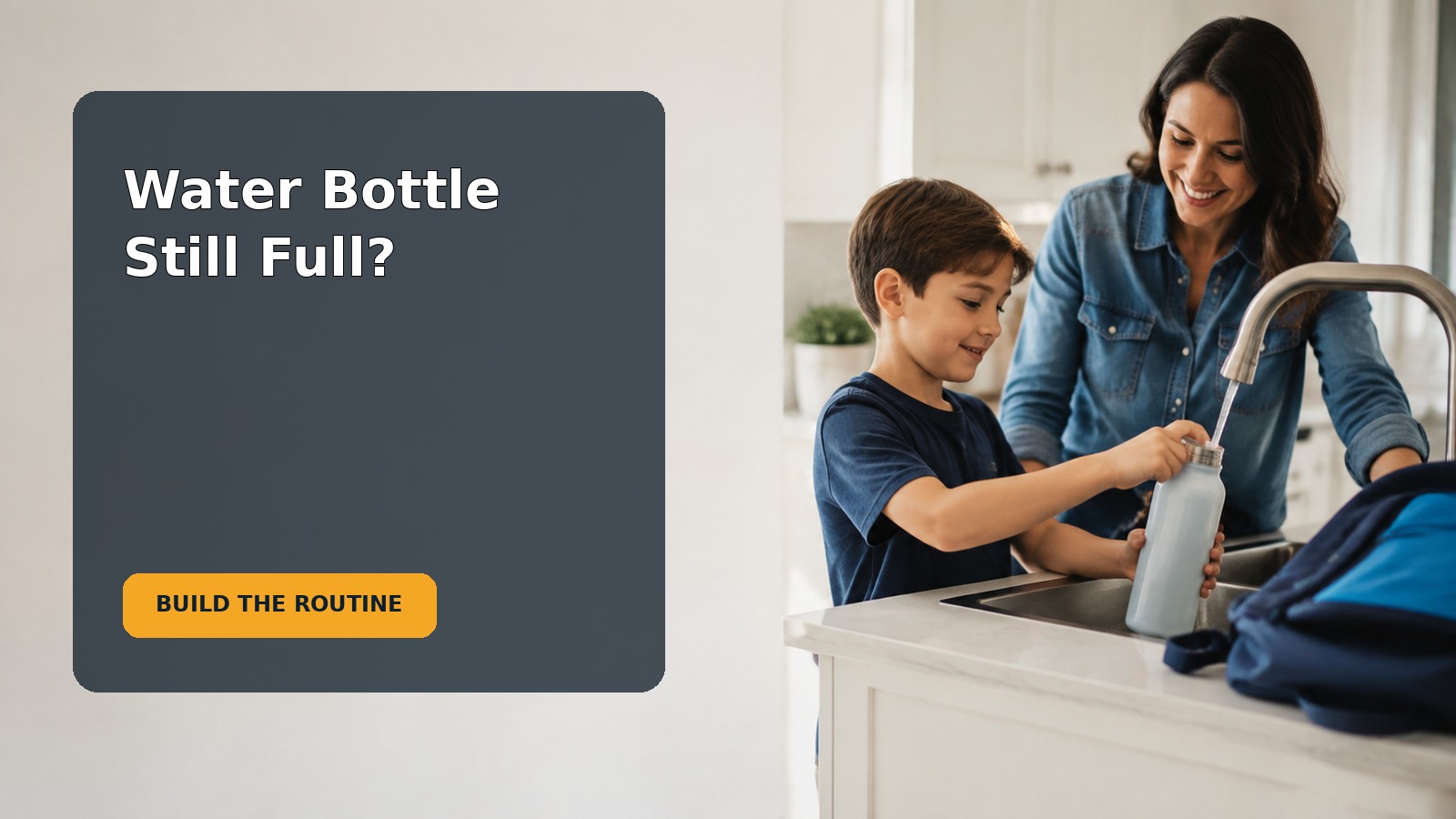
Why a Water Bottle May Come Home Full
Forgetting is only one possibility
Seven- and eight-year-olds are managing instructions, classmates, belongings, transitions and classroom rules at the same time. Drinking can fall out of working memory. The bottle may stay zipped inside a backpack, sit beyond reach, or be unavailable during the moments when your child notices thirst.
Other common barriers include:
- a lid that is hard to open or slow to close;
- a bottle that leaks, tastes soapy, smells stale or makes water warm;
- worry about asking permission to refill or use the toilet;
- avoiding school bathrooms because of noise, cleanliness, privacy or teasing;
- a short lunch period in which eating feels more urgent;
- not wanting to interrupt play or class;
- sensory preferences about temperature, taste, straws or mouthpieces;
- medication, illness or a health condition that changes thirst or fluid needs.
Do not judge hydration from the bottle alone
A bottle shows how much remains, not everything your child drank. They may use a fountain, drink milk with lunch, eat water-rich foods or refill the bottle. Conversely, an empty bottle does not prove they drank it; water may have spilled or been shared. Ask neutral questions and look at the whole day.
The American Academy of Pediatrics’ parent guidance gives broad daily fluid estimates, but it also emphasizes that needs vary with the individual, physical activity, heat and humidity. A target for the entire day is not the same as a required bottle volume during school. Your child’s clinician should guide fluid needs when health conditions, medicines or sports are involved.
A Calm First-Step Check
Use curiosity instead of interrogation
Choose a relaxed moment rather than confronting your child at pickup. Try:
“I noticed your bottle is still full. I’m not upset. I want to make drinking easier at school. Was it hard to reach, hard to open, or did you not feel thirsty?”
If “I don’t know” is the answer, offer concrete choices without forcing one: “Was the tricky part remembering, the bottle, the bathroom, or finding time?” Accept that the first answer may be incomplete. Children often identify the barrier after they walk through the day with you.
Collect clues for three school days
For a short observation period, note the starting and ending bottle level, weather, physical education or sports, whether your child drank at breakfast and after school, bathroom concerns, headaches, fatigue, and urine changes. Do not turn this into a public chart, reward contest or daily test. The purpose is to find a pattern.
Ask the teacher about opportunities, not compliance: Is the bottle permitted at the desk? Is there a refill station? Are children reminded after recess? Must they ask to use the bathroom? The answer may reveal a simple environmental fix.
A Practical School-Day Hydration Routine
Step 1: Make the equipment easy
Let your child test the bottle at home. They should be able to open, drink from and close it independently in a few seconds. Check that it does not leak when tipped, fits the backpack pocket, and is not too heavy when full. Wash and rinse it thoroughly so water does not taste like detergent.
Some children drink more comfortably from a straw lid; others prefer an open spout. Some prefer cool water, while very cold water bothers sensitive teeth. Offer two practical options and let your child choose. Label the bottle clearly, and agree that it is not for sharing.
Step 2: Attach drinking to reliable cues
“Drink more” is vague. A cue-based plan is easier to remember. Choose two or three natural points that the school permits, such as:
- a few sips after arriving and unpacking;
- a drink after recess or physical education;
- water with lunch;
- a few sips before dismissal.
The aim is regular opportunities, not large forced amounts. Pair the cue with an existing action: “When you put away your lunchbox, take a drink.” A small removable sticker on the bottle can serve as a private visual reminder.
Step 3: Coordinate discreetly with school
Send a brief, collaborative message:
“We are helping Sam remember to drink during the school day. Could you confirm when bottles and bathroom breaks are available? A quiet reminder after recess for the next week would help. Please let me know if the bottle is difficult to access or if Sam avoids the restroom.”
Ask for a low-key reminder rather than public monitoring. If bathroom avoidance is driving the problem, work on that directly. A child should not be encouraged to drink while feeling unable to use the toilet. School rules differ, and a child with a medical need may require an individual health or accommodation plan.
Step 4: Support the whole day
Offer water with breakfast and make water available after school. Foods such as oranges, melon, cucumber, berries, yogurt and soups can contribute fluid as part of a balanced diet. Plain water and milk are generally better everyday choices than sugary drinks. Do not use sweet drinks as the automatic solution to a routine problem; discuss special hydration needs with your child’s clinician.
Step 5: Review after one week
After five school days, ask what became easier. Look for progress such as remembering one cue, opening the bottle independently, asking for a refill, or explaining a bathroom concern. If the plan is not working, change one variable—not everything. Try a different bottle, move it to a visible place, reduce the number of cues, or ask the teacher about access.
| Barrier | What you may notice | Low-pressure next step |
|---|---|---|
| Forgetting | Bottle stays in backpack | Place it visibly and pair sips with arrival, recess and lunch |
| Hard-to-use bottle | Child asks adults to open it or avoids it | Practice at home or switch to an easier lid |
| Bathroom avoidance | Child limits drinks, rushes home or reports fear | Ask about restroom access, privacy, noise and support |
| Water preference | Child dislikes taste or temperature | Rinse the bottle well and test safe temperature or lid choices |
| Schedule problem | No clear time to drink or refill | Confirm permitted drinking and refill times with school |
| Health-related need | Persistent symptoms, unusual thirst or medication concerns | Contact the child’s clinician and coordinate a school plan |
Common Mistakes and Better Alternatives
Avoid pressure, shame and bottle policing
Warnings such as “You never listen” or “You must finish the whole bottle” can make hydration a power struggle. Do not require a child to gulp a large amount at once. Better language is specific and collaborative: “Your body needs regular chances to drink. Which reminder would work during your day?”
Rewards based on an empty bottle can also mislead because the measure is unreliable. Praise the skill instead: remembering, speaking to an adult, refilling safely, or telling you what got in the way.
Do not overlook school and sensory barriers
A child may say “I forgot” because explaining a noisy bathroom, a strict rule or teasing feels harder. Take repeated avoidance seriously without assuming the cause. Children with sensory differences, attention challenges, diabetes, kidney or heart conditions, swallowing concerns, or medicines affecting thirst and urination may need individualized advice rather than a standard routine.
When to Involve a Professional
Schedule advice when the pattern persists
Contact your child’s pediatrician or other qualified clinician if low intake continues despite reasonable access, or if it comes with frequent headaches, constipation, pain with urination, repeated dizziness, unusual fatigue, weight change, very frequent urination, unusually strong thirst, swallowing difficulty or a major change from your child’s usual pattern. A clinician can consider medical, medication, developmental and sensory factors.
Speak with the teacher, school nurse or relevant support staff when your child cannot access water, avoids the restroom, repeatedly loses learning time because of symptoms, or needs a health plan. Keep the message factual and protect your child’s privacy.
Know the urgent warning signs
Seek prompt medical guidance for markedly reduced or very dark urine, a very dry mouth, no tears when crying, significant dizziness, unusual sleepiness, weakness, confusion, fast breathing, a fast heartbeat, persistent vomiting or inability to drink. Heat illness can worsen quickly. If your child faints, is confused, is difficult to wake, or appears severely ill, seek emergency care.
This article offers general education, not a diagnosis or a personal fluid prescription. Recommendations can differ for children with medical conditions or clinician-directed fluid limits.
One-Page Parent Checklist
Before school
- Offer a drink with breakfast.
- Use a clean, leak-tested bottle your child can open.
- Fill it to a manageable weight and label it.
- Name two or three permitted drinking cues.
During and after school
- Confirm bottle, refill and bathroom access.
- Ask for a discreet reminder if needed.
- At pickup, ask what helped rather than demanding an empty bottle.
- Watch the whole-day pattern and any symptoms.
- Review after one week and adjust one barrier at a time.
What success looks like
Success is not a perfectly empty bottle every afternoon. It is a child who has reliable chances to drink, can use the bottle, feels safe using the bathroom, recognizes body cues, and knows how to ask an adult for help.
Frequently Asked Questions
How much should a seven-year-old drink?
Broad guidance can provide a starting point, but there is no single bottle target for every child. Total fluid comes from drinks and foods, and needs change with body size, activity, weather, illness and health conditions. Use your clinician’s advice for individualized needs.
Should I flavor the water?
First fix access, bottle and routine barriers. If taste is the issue, you can ask your child’s clinician or dentist about appropriate options. The American Academy of Pediatrics suggests simple ideas such as adding fruit or herbs to water, but plain water should remain an easy everyday choice.
What if my child refuses the plan?
Reduce it to one shared experiment: one easy bottle and one cue after recess for five days. Give limited choices and invite feedback. Refusal often softens when the real barrier is addressed.
What if the teacher cannot remind my child?
Use environmental cues your child can manage, such as keeping the bottle in the approved visible location or pairing drinking with lunchbox unpacking. Ask the school which routine already exists so your plan fits the classroom.