A preschooler who will not blow their nose is not being difficult. Coordinating a breath out through the nose is a learned skill, and a child who feels congested, rushed, or worried about the sensation may resist it. The practical goal is not a perfect tissue every time. It is to keep your child comfortable, reduce irritation around the nose, and build a small skill through calm practice.
This guide can help you teach preschooler to blow nose during a cold or allergy season. It is general education, not a diagnosis. A stuffy nose can have many causes, and a child who is having trouble breathing, is unusually sleepy, is not drinking enough, or seems significantly unwell needs medical advice rather than another practice game.
Start with a quick comfort and safety check
Before practicing, look at the whole picture. Is your child breathing comfortably when resting? Are they drinking and urinating as usual? Do they have a fever, ear pain, facial pain, a persistent cough, or symptoms that are worsening rather than gradually improving? Those details matter more than whether a tissue is successful.
For an otherwise comfortable child, begin with comfort. Offer a soft tissue, wash hands before and after wiping, and use a gentle moisturizer around irritated skin if it is appropriate for your child. The American Academy of Pediatrics advises families to be cautious with cough and cold medicines in young children and to talk with a clinician or pharmacist before using them. Do not try to force air out by pinching both nostrils, and do not turn practice into a struggle.
Why nose blowing can be hard at ages 3 to 5
Preschoolers are still learning to coordinate body movements on request. “Blow your nose” can be confusing because they know how to blow bubbles or blow out candles, but those activities use the mouth. Congestion can make the result feel unrewarding. Some children also dislike the sound, the tissue’s texture, or the feeling of mucus moving.
It helps to separate skill practice from the moment your child is already miserable. You can practice for a few seconds when they are calm, then use wiping or a warm washcloth when they are not ready. Success may look like recognizing the cue, holding the tissue near the nose, closing the mouth for a short breath, or trying once without distress.
A play-based plan to teach preschooler to blow nose
1. Demonstrate without pressure
Say what you are doing in simple language: “I am keeping my mouth closed and making a tiny puff through my nose.” Let your child watch. Avoid asking them to copy immediately. A light, matter-of-fact demonstration is often more useful than repeated instructions.
2. Practice the direction of air first
Use a clean, low-stakes visual cue. Hold a small piece of tissue in front of your own nostrils and show how a gentle nasal puff makes it move. Then offer your child a turn. Keep the tissue outside the nose; do not insert it. If they blow through their mouth, acknowledge the effort and try again later: “That was a good mouth blow. Our nose puff is a different trick.”
3. Add the tissue only when the skill feels familiar
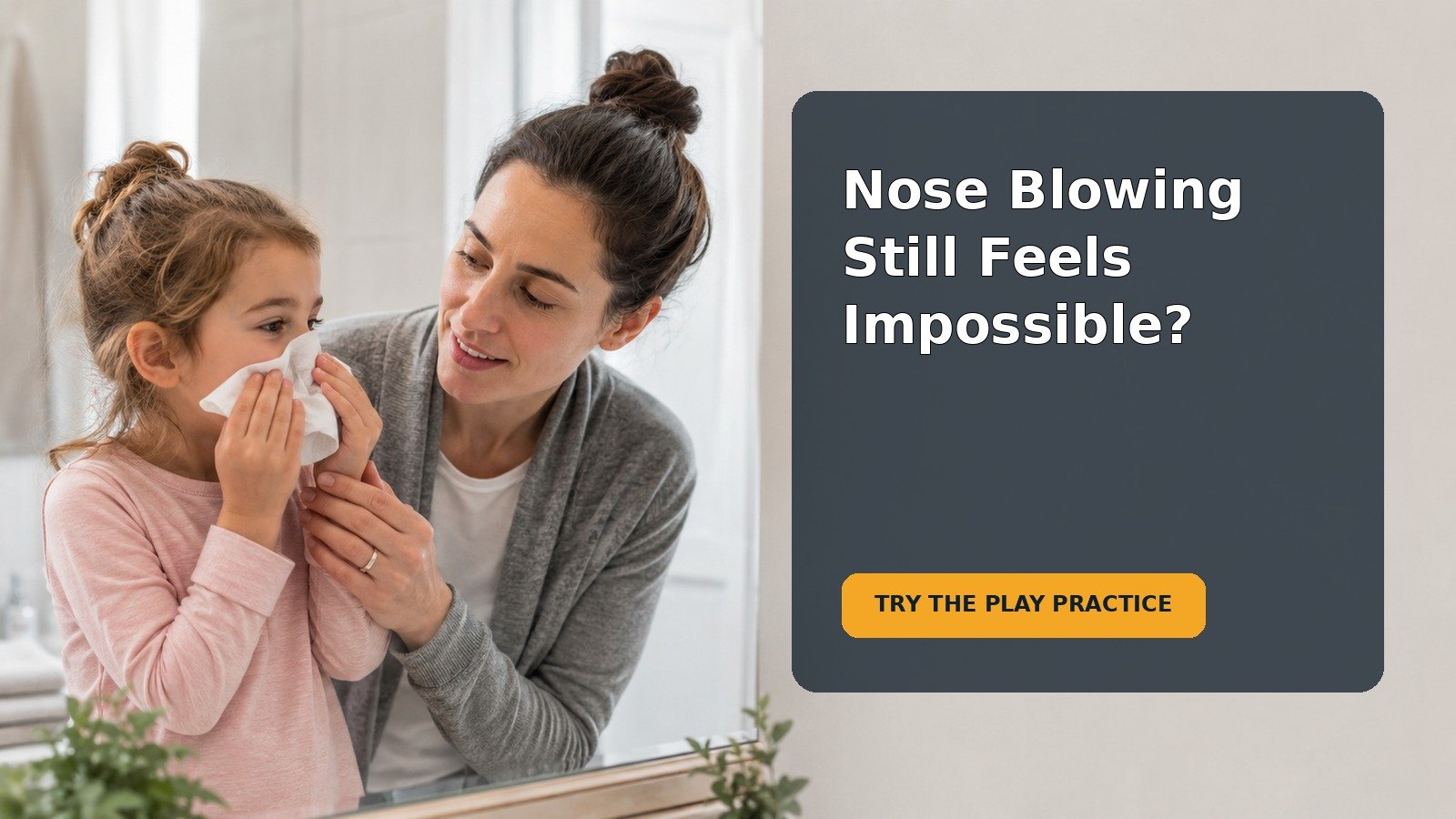
When your child is willing, hold a soft tissue lightly over the lower part of the nose and ask for one small puff with their mouth closed. Encourage one nostril at a time only if your child can do it comfortably; never forcefully block both nostrils. A gentle wipe afterward is fine if nothing comes out.
4. Keep the practice brief and predictable
Try one or two attempts, then stop. A predictable script can reduce resistance: “One tiny nose puff, then we are done.” Offer a choice that does not change the health boundary: “Blue tissue or white tissue?” “Do you want to hold it, or should I?” Praise cooperation and persistence, not the amount in the tissue.
5. Protect dignity and hygiene
Use neutral words such as “mucus” or “snot” according to your family’s usual language, without teasing. Throw away used tissues and wash hands. If your child is at preschool, pack familiar soft tissues if the setting permits and tell caregivers the same short cue that works at home.
What to avoid
- Do not make it a test. Repeated demands can make an unfamiliar skill feel like a power struggle.
- Do not use a forceful technique. Avoid squeezing both nostrils shut or asking for a hard blow. Gentle, short attempts are enough for practice.
- Do not assume every blocked nose is a simple cold. Allergies, irritation, a foreign object, and other conditions can need a different response.
- Do not use medicine as a shortcut without advice. Product ages, ingredients, and risks vary. Ask a pediatric clinician or pharmacist about a medicine for a preschooler.
When to call a clinician or seek urgent care
Contact your child’s clinician for guidance if symptoms are severe, persistent, or worrying to you. The AAP notes that cold symptoms can overlap with other problems, so it is reasonable to call when you are unsure. Ask promptly about significant ear or facial pain, symptoms that improve and then worsen, a high or persistent fever, poor fluid intake, or a child who is not acting like themselves.
Seek urgent medical help for trouble breathing, blue or gray lips or face, inability to stay awake, signs of dehydration such as very little urine or no tears when crying, or any emergency concern. If you suspect an object has been placed in the nose, do not probe inside it; contact a clinician for advice.
A simple parent script
“Your nose feels full, and that can be annoying. We are going to try one tiny nose puff with this soft tissue. You can hold it, or I can hold it. If it does not work today, we can wipe gently and try another day.”
This script keeps the boundary clear without turning a body skill into a performance. If your child becomes upset, pause. Comfort and connection are more useful than completing the step.
Parent checklist
- Check breathing, drinking, energy, fever, and pain before focusing on the tissue.
- Use soft tissues and wash hands after wiping or practice.
- Practice a gentle nasal puff while your child is calm.
- Keep attempts brief; stop before frustration grows.
- Use choices about the tissue or who holds it, not choices about basic care.
- Call a clinician for concerning, severe, persistent, or worsening symptoms.
Frequently asked questions
Is it normal that my preschooler cannot blow their nose yet?
Many children need time and practice to learn the coordination. Focus on comfort and short, calm attempts rather than expecting a specific age-based deadline. If you have concerns about breathing, frequent infections, development, or discomfort, ask your child’s clinician.
Should I keep practicing when my child has a cold?
Only if your child is comfortable enough for a brief try. Wiping gently, offering fluids, rest, and following clinician advice may be more useful on a hard day.
Can nose blowing make an ear infection?
Do not use forceful blowing. If a child has ear pain, fever, or other concerning symptoms, contact their clinician rather than trying to solve it with more practice.