Flying with a baby for the first time can feel like a test you have not studied for. The useful goal is not a perfectly quiet flight. It is a safe, workable trip in which you can respond to your baby’s needs, ask for help when you need it, and arrive with the essentials still within reach.
This guide is for babies aged 4–12 months. Their routines, mobility, feeding patterns, and ability to sit with support vary widely, so use it as a planning framework rather than a promise about how a particular flight will go. Airline rules, ticketing requirements, baggage allowances, and approved-restraint policies can differ; check your airline directly before you travel.
Start with a 60-second reassurance-and-safety check
Many babies travel safely, and a difficult moment does not mean you have done anything wrong. Before booking or packing, pause to check four basics: your baby’s current health, the airline’s infant and seat rules, the documents needed for every traveler, and how your baby will be restrained on the plane.
The Federal Aviation Administration says the safest place for a child during turbulence is in an approved child-restraint system, rather than unrestrained on an adult’s lap. If you plan to use a car seat, confirm that it is approved for aircraft use and that your airline will accept it in the seat you book. A lap-infant option may be available, but availability is not the same as the safest setup. Ask the airline about seating restrictions, including exit-row rules, before travel day.
What is typical at 4–12 months?
At this age, a baby may take bottles, breastfeed, eat some familiar solids, nap unpredictably, want to move, or become unsettled in a new and noisy space. A six-month-old who is content with a familiar caregiver may have very different needs from an eleven-month-old who is pulling up and protesting stillness. Plan for comfort and flexibility, not a fixed schedule.
What changes the answer for your child?
Talk with your child’s clinician before travel if your baby was born prematurely, has a heart or lung condition, has recently had ear surgery or a significant ear infection, is currently ill, or has any other condition that makes air travel a concern. For a routine question, ask well before departure so you have time to follow individualized advice. If your baby is struggling to breathe, unusually hard to wake, or showing signs of serious illness, seek urgent medical care rather than trying to travel.
A calm first-step check before you leave home
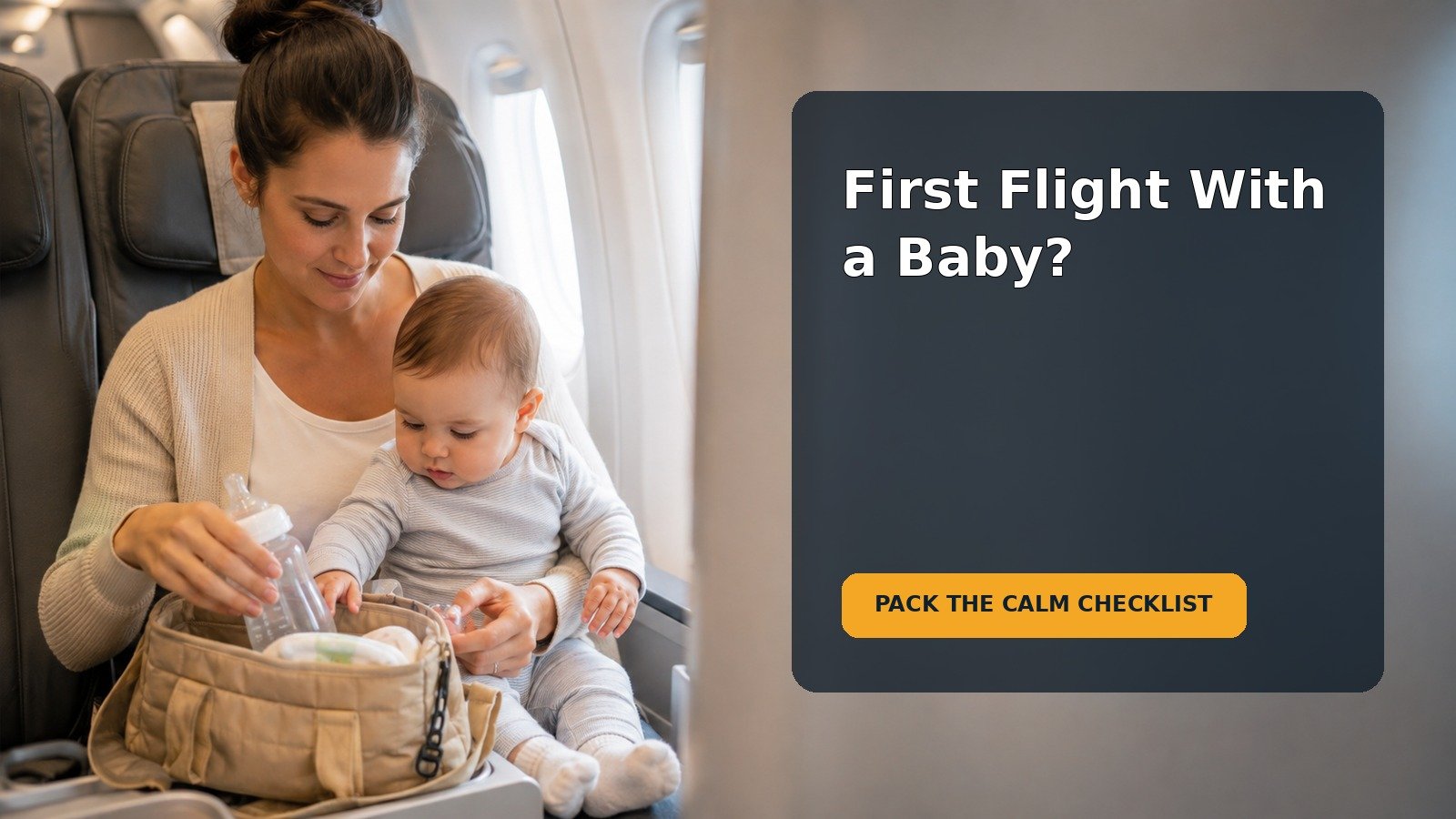
Put the things you may need during the flight in one small, reachable bag. Do not depend on the overhead bin being convenient once boarding starts. A simple approach is to pack for the flight plus a delay, then keep the bag organized in a few clear groups.
What to observe before acting
- How long your baby usually goes between feeds and naps.
- What helps them settle: holding, a familiar song, a small approved comfort item, movement, or a quieter space.
- Whether they have any new fever, vomiting, diarrhea, breathing symptoms, rash, or reduced feeding that needs a clinician’s advice before departure.
- How they fit in their usual car seat and whether the harness and labels are ready for an airline check.
What to write down or verify
- Your airline’s infant-ticket, seating, baggage, stroller, and child-restraint rules.
- The airline’s current policy for breast milk, formula, baby food, and ice packs, plus the airport security guidance for your route.
- Your baby’s travel documents and a way to contact their clinician.
- The location of a change of clothes for baby and caregiver.
Policies can change and airport staff make decisions under real-time conditions. Arrive early, keep liquids and feeding supplies easy to explain, and leave room for a slower security process. The Transportation Security Administration provides current information on traveling with children and medically necessary liquids; use its official guidance for the airport you are using rather than relying on an old social-media checklist.
The practical plan for a first flight with a baby
Step 1 — Prepare the environment and expectations
Choose the calmest realistic flight time for your family, not an imaginary perfect nap window. If you can select seats, consider what will make diaper changes, feeding, and getting up easiest. A window seat may reduce passing traffic; an aisle seat may make it easier to stand when the seatbelt sign is off. The right answer depends on your baby and your travel companion.
Dress baby in comfortable layers and pack one more layer than you think you will need. Cabins can feel cool or warm. Keep a diaper, wipes, disposal bags, a changing pad, and a spare outfit within one reach. Pack more feeds than the expected travel time suggests, allowing for delays. If your baby takes bottles, bring the supplies needed to prepare them safely; if breastfeeding, choose clothing that lets you feed comfortably.
Step 2 — Try the lowest-pressure action
At takeoff or landing, offer a normal feed, pacifier, or other familiar sucking option if your baby wants it and it fits their usual feeding plan. Swallowing may feel comfortable during pressure changes for some babies, but it does not guarantee that ear discomfort or crying will be prevented. Do not force a feed, add medicine, or wake a sleeping baby solely to follow a timing rule without professional advice.
During the flight, start small. Check the obvious needs first: a diaper, hunger, temperature, position, or a break from stimulation. Then use one familiar calming strategy for a few minutes before switching tactics. You can say to yourself: “We are checking needs, then trying one calm thing.” This protects you from the feeling that you must solve everything immediately.
If your baby is upset, a simple script can help with nearby travelers and cabin crew: We are working through a hard moment. Thank you for your patience.
You do not need to apologize for your baby existing in public. Cabin crew can also tell you when it is safe to stand, where changing facilities are located, and what equipment must stay secured.
Step 3 — Review the result and adjust
After a feed, diaper change, or short calming attempt, notice whether your baby is becoming more alert, sleepy, hungry, or uncomfortable. Adjust one variable at a time: a layer off, a brief walk when permitted, a quieter hold, or a different familiar toy. If nothing is working, return to the safety basics: keep your baby securely restrained whenever required, ask cabin crew for practical help, and do not take risks to chase sleep.
Common mistakes and better alternatives
Trying to make the flight look easy
A first flight may be messy. Packing only for a best-case timeline often creates more stress after a delay. Instead, bring enough diapers, wipes, feeding supplies, and clothing for the journey to run longer than planned. Keep the essentials accessible and accept that a nap may happen at an inconvenient time—or not at all.
Using unverified travel or restraint advice
Car seats, bassinets, carriers, and lap-infant rules are not interchangeable. Follow the product instructions and the airline’s current rules. Check the FAA and your airline before using a child-restraint system. Never place a baby in an unapproved setup simply because it appears in a travel video.
Making feeding a pressure tool
Feeding can be comforting, but babies may refuse when overtired, distracted, or uncomfortable. Offer normal feeds and follow your baby’s cues. If feeding is consistently difficult, your baby has fewer wet diapers than usual, or you are worried about hydration or illness, contact a clinician rather than treating travel tips as medical care.
When to involve a professional
For a routine question, schedule advice before travel if your baby has a medical condition, recent surgery, recurrent ear concerns, a complicated feeding plan, or a recent illness. Your clinician can tell you what is relevant for your baby; this article cannot assess fitness to fly.
Seek urgent help for breathing difficulty, blue or gray color, a seizure, severe allergic symptoms, unusual unresponsiveness, or signs of serious dehydration. On a plane, alert cabin crew promptly so they can follow their emergency procedures. If a non-urgent concern comes up after arrival, contact your child’s usual care team or local health service.
Your one-page flying-with-a-baby checklist
Before the flight
- Confirm ticket, seating, documentation, and child-restraint rules with the airline.
- Check the FAA guidance for approved child-restraint systems and current airport security guidance for feeding supplies.
- Pack accessible diapers, wipes, changing supplies, extra clothing, familiar feeds, and a small comfort item.
- Ask your clinician early about any health, feeding, or ear-related concern.
During the flight
- Keep your baby secured as required; use an approved restraint system when you have one.
- Offer familiar feeding or soothing cues, without forcing them.
- Check simple needs first and change one thing at a time.
- Ask cabin crew for practical help and follow their safety instructions.
After landing
- Give yourselves time for a feed, diaper change, and reset before the next transition.
- Watch for illness or feeding changes that are unusual for your baby.
- Count a safe arrival and a responsive caregiver as success—not a silent flight.
Frequently asked questions
Is flying with a baby common at 4–12 months?
Yes, many families travel during this stage. The planning details vary with your baby’s health, feeding, mobility, and temperament, so verify airline rules and seek individualized clinical advice when needed.
What should I do first?
Confirm the airline’s infant and restraint rules, then pack an accessible carry-on kit for feeding, diapering, clothing, and delays. If there is a health question, contact your child’s clinician before travel.
What if my baby becomes upset?
Check basic needs, use one familiar calming strategy, and keep safety requirements first. Ask cabin crew for help if you need it. Crying is communication, not a parenting failure.
Sources
- Federal Aviation Administration: Flying with Children
- American Academy of Pediatrics: Travel Safety Tips
- Transportation Security Administration: Traveling with Children
Note: This article offers general education, not medical, legal, or airline-specific advice. Airline, airport, and product rules can change; verify them before travel and consult a qualified clinician for individual health concerns.