It is understandable for a teen to feel nervous about learning to drive. Driving asks them to coordinate new physical skills, read a changing environment and make decisions while another person is watching. Nervousness is not proof that they are incapable. It is useful information: the next practice step may need to be smaller, quieter or more predictable.
A gradual plan gives a new driver repeated chances to succeed without pretending that safety rules do not matter. This guide is general education, not a substitute for local licensing rules, a professional driving instructor or mental-health care. Check your state or provincial learner-permit requirements before every practice session; rules about supervising adults, hours, passengers and roads vary.
Start with the immediate safety check
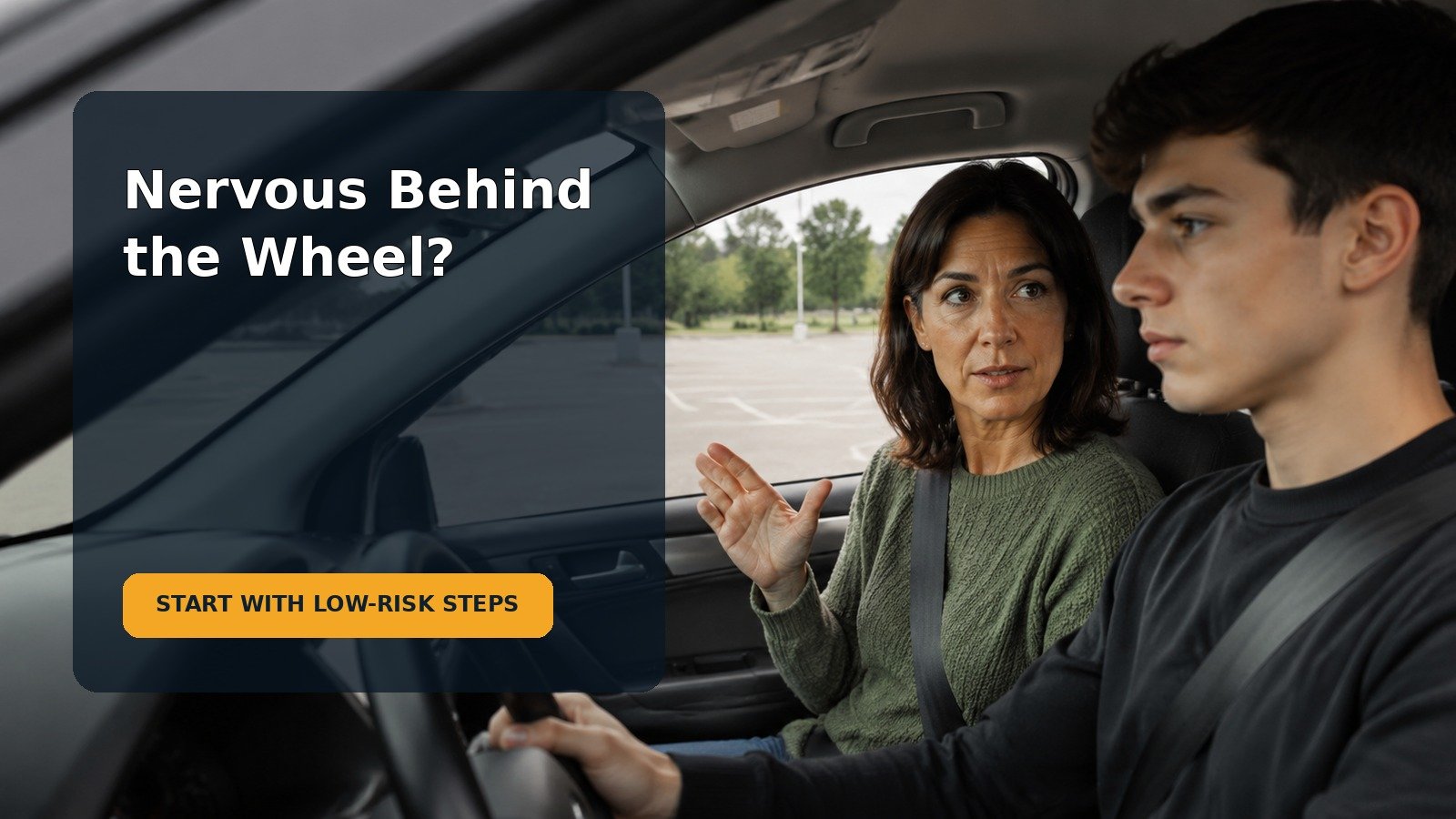
Before trying to “push through” nerves, check whether today is a suitable day to drive. A learner should be legally permitted, physically well-rested and able to focus. The supervising adult should be qualified under local law, calm enough to give short instructions, and willing to end the session early if either person becomes too stressed. Everyone in the vehicle should wear a seat belt; phones should be put away before the engine starts.
Ask one simple question: What part feels hardest right now? A teen may be worried about steering, traffic, making a mistake in front of a parent, an earlier near-miss, or simply not knowing what comes next. Their answer helps you choose a skill to practice. “All driving is scary” becomes more manageable when it is narrowed to “merging feels too fast” or “I forget which mirror to check.”
When to pause instead of practice
Do not practice when panic, tears, anger or physical symptoms make it hard for the teen to control the vehicle or take in instructions. Pull over only where it is safe to do so, switch drivers if permitted, and end the session. Repeated intense fear, a crash or traumatic event, avoidance that disrupts daily life, or thoughts of self-harm deserve support from an appropriate health professional. A certified driving instructor can also provide neutral, skill-focused coaching when family lessons have become tense.
Build a low-pressure practice ladder
The safest way to help a teen who is nervous about learning to drive is usually to change one variable at a time. Start in a legal, low-risk setting and progress only after several calm, competent repetitions. Do not treat this as a race toward a road test. The National Highway Traffic Safety Administration emphasizes graduated practice and parent involvement for teen drivers, while the CDC notes that teen crash risk is especially high early in independent driving.
Step 1: Agree on a short session plan
Choose a 15- to 30-minute session, one goal and one route. A nearly empty parking area or other location that is both legal and suitable under local rules may be appropriate for basic vehicle orientation; do not assume a private lot is always allowed. Early goals can include adjusting the seat and mirrors, identifying controls, smooth starts and stops, steering through wide turns, or parking in a marked space.
Before moving, agree on the language you will use. The supervising adult can say, “At the next empty space, ease off the gas and begin braking,” rather than several instructions at once. The teen can say, “I need a quieter instruction,” “Please repeat that,” or “I want to stop after this turn.” A planned stop signal removes the fear that they have to keep going while overwhelmed.
Step 2: Repeat one skill until it feels predictable
Predictability builds confidence. Practice the same simple route at a low-traffic time, then review what went well before naming one adjustment. For example: “You checked your mirrors before moving. Next time, begin braking a little earlier.” Avoid a running commentary, sarcasm or a list of every small error. Those habits can overload a novice driver and make the car feel like a test.
Keep a brief log after each session: date, location, weather, skill practiced, what felt easier and one next step. This is not a scorecard. It helps a nervous teen notice genuine progress that is easy to forget after a difficult moment.
Step 3: Add one new demand at a time
When the earlier step is consistently safe and calm, add one demand: a slightly busier street, a different time of day, a controlled intersection, light rain, or a planned parking task. Do not stack new demands such as rush-hour traffic, unfamiliar roads, passengers and bad weather in the same lesson. Local law may restrict any of these for permit holders, and the supervising adult should follow those restrictions rather than using a family preference alone.
A useful sequence is: vehicle controls; quiet, familiar routes; simple intersections; routine traffic; parking and low-speed maneuvers; then more complex conditions. The exact order depends on the teen, the vehicle and local requirements. If a new step goes badly, return to the last successful level rather than framing it as failure.
Make the car a calmer classroom
The adult’s job is not to create a flawless driver in one afternoon. It is to set up a safe learning environment. Practice in a roadworthy vehicle with current insurance and any required safety equipment. Before each session, check that the seat, mirrors and steering-wheel position allow clear visibility and comfortable pedal reach. Keep music off at first, silence notifications and limit conversation to driving-relevant cues.
Use specific, timely feedback
Good feedback describes an action the teen can repeat or change. Try:
- “You left a comfortable following distance there.”
- “Let’s look farther ahead before the next intersection.”
- “You noticed the pedestrian early and slowed smoothly.”
- “That turn felt rushed. On the next one, brake before you begin turning.”
Avoid labels such as “careless,” “bad driver” or “you always panic.” They do not tell a learner what to do differently. If the adult finds themselves raising their voice, the session has stopped being a good teaching setting. Take a break and consider a qualified instructor for the next stage.
Common mistakes that increase driving anxiety
Practicing only when there is a deadline
A test date, a new job or pressure from peers can make every lesson feel high stakes. Build practice time into ordinary weeks when possible. Small, regular sessions are usually more useful than one long, exhausting drive.
Comparing siblings or friends
Teens learn at different rates and may have different access to practice, instructors and vehicles. “Your sister was ready by now” can turn a skill lesson into a judgment. Keep the comparison point personal: what was safer or easier for this teen than last week?
Using exposure without consent or preparation
Surprising a nervous learner with a highway, a crowded roundabout or extra passengers can undermine trust. Explain the route beforehand, invite questions and make it clear that stopping safely is always an option. Confidence grows from supported success, not from feeling trapped.
When professional support is the right next step
Book a certified driving instructor if the family dynamic is getting in the way, if the teen needs a different teaching style, or if local licensing rules require professional hours. Seek medical or mental-health guidance when anxiety is severe, persistent or broader than driving; when it follows a crash or other trauma; or when it causes panic symptoms that make safe control difficult. Urgent help is appropriate if anyone is in immediate danger or a teen expresses an intention to harm themselves.
For road-safety information, start with the NHTSA teen-driving guidance and the CDC’s teen-driver overview. Then use your local licensing authority for the rules that apply where your family lives. A professional instructor or licensing office can clarify a rule; do not rely on a social-media tip, another family’s experience or this article to interpret local law.
A one-page practice checklist
- Confirm permit, supervising-adult and vehicle requirements for your location.
- Choose one skill, a short route and a low-demand time.
- Seat belts on; phones away; no extra passengers unless local rules allow them.
- Use one clear cue at a time and an agreed stop signal.
- End while the teen still has enough focus to finish safely.
- Write down one success and one specific next step.
- Move up only after calm, safe repetition—not because someone else expects it.
Frequently asked questions
Is it normal for a teen to be nervous about learning to drive?
Yes. Learning to drive combines unfamiliar skills and real responsibility. The important question is whether the teen can practice safely with support. Intense or persistent anxiety that prevents safe participation deserves professional guidance.
How long should each practice session be?
There is no universal number. A short session with a clear goal is often more productive than continuing until the teen is overloaded. Follow local practice-hour requirements and stop when concentration drops.
Should I make my teen drive on the highway to get over the fear?
No. Highway practice should come only when it is legal and the teen has mastered the earlier skills needed for that environment. Add complexity gradually, with a calm qualified adult and a route you have discussed in advance.
What if my teen makes a mistake?
Prioritize immediate safety, then discuss one concrete adjustment after the car is safely parked. Mistakes are expected in learning; unsafe patterns, near misses or overwhelming anxiety are reasons to slow down and seek additional instruction.