A tween asking to volunteer is often showing real care for other people, animals, or a cause they value. That interest is worth taking seriously. The best first step is not to promise a role immediately; it is to help your child choose a small, supervised opportunity that fits their maturity, schedule, and comfort level. This guide can help families look for volunteer opportunities for tweens while keeping safety, consent, and local rules in view.
There is no single “right” age to volunteer. Organizations set their own minimum ages, and some activities are designed for families rather than children working independently. A good match should feel purposeful without making a 9- to 12-year-old responsible for adult work, safety decisions, or another person’s care.
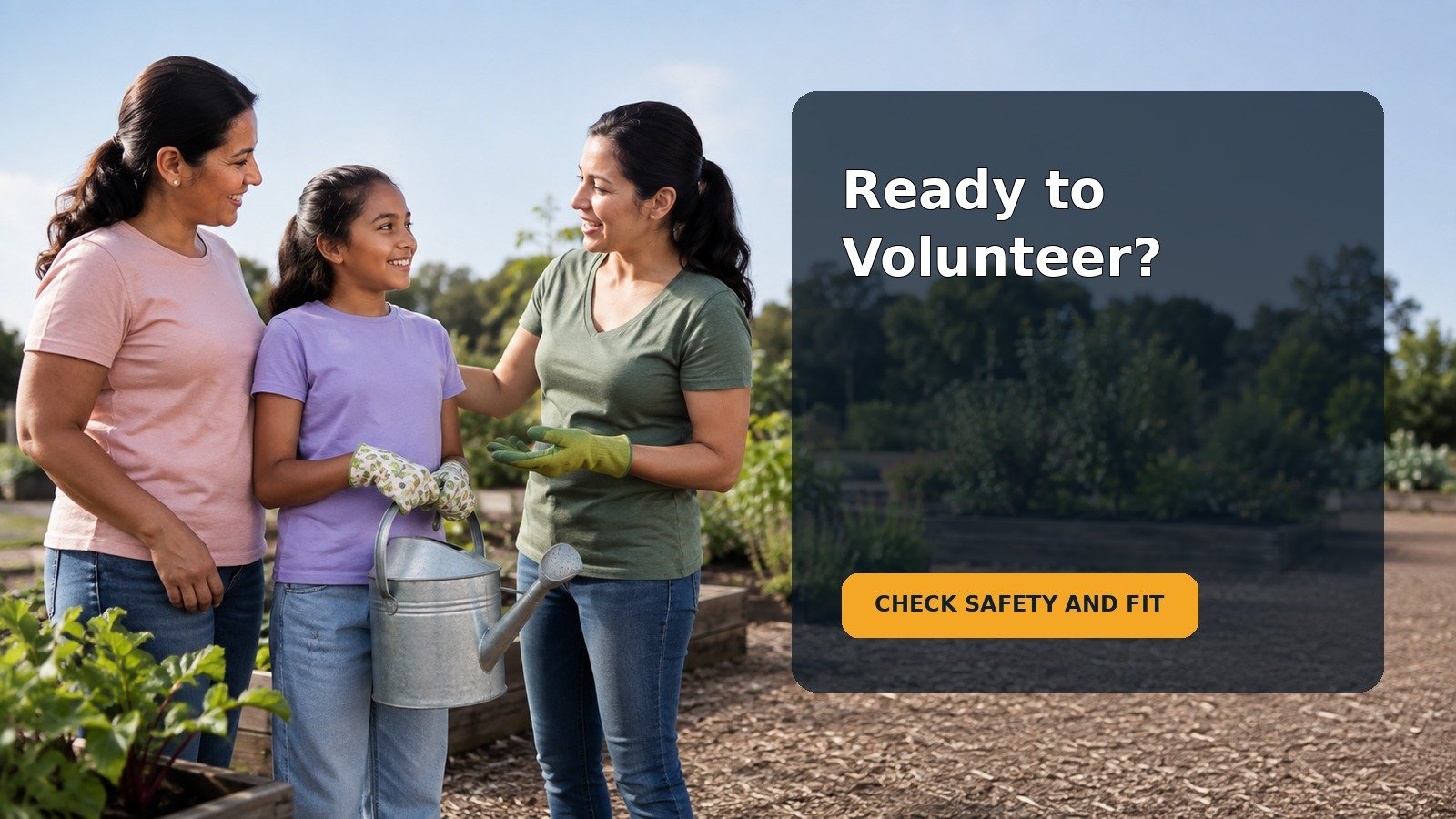
Start with the question behind “I want to volunteer”
Ask what is drawing your tween in. They may want to help animals, spend time outdoors, support a neighbor, meet people with a similar interest, complete a school-service goal, or simply try something new. Their answer helps you look beyond a generic sign-up page and toward a role with a clear purpose.
What is typical at ages 9–12
Many tweens can follow a short routine, ask for help when prompted, and take pride in contributing. They are still learning how to judge risk, manage time, and speak up when an adult or task feels wrong. That is why the strongest roles at this age have a named supervisor, predictable tasks, brief shifts, and a parent or trusted caregiver nearby when the organization requires it.
What can change the answer
Consider your child’s comfort with unfamiliar adults, ability to follow safety instructions, allergies or health needs, transportation, school workload, and family schedule. A child who is eager but easily overwhelmed may do better with a one-hour family project than a weekly commitment. A child with a disability may need an accessible setting or a task adapted to their strengths; that is a reason to ask the organization specific questions, not a reason to rule out participation.
A calm readiness check before you contact an organization
Use this short conversation to decide what kind of first experience is likely to go well. It is a planning tool, not a test your child has to pass.
- Interest: Can your tween name a cause or activity they care about?
- Task fit: Can they handle a simple assigned task, or would they need it broken into smaller steps?
- Communication: Do they know how to say, “I need help,” “I do not understand,” or “I need to check with my parent”?
- Time: Can they commit to one trial shift without crowding out sleep, schoolwork, sports, or needed downtime?
- Safety: Do they understand that they should not go anywhere alone, share personal contact details, or accept a task that was not explained to them?
If several answers are “not yet,” keep the goal but shrink the first step. Sorting donated books with a caregiver, joining a supervised neighborhood clean-up, or helping prepare supplies for a school event can still give a child a meaningful experience.
How to choose volunteer opportunities for tweens
1. Start with a supervised, age-specific role
Look for an organization that clearly states whether children can participate and what adult accompaniment is required. A family volunteer day, school-sponsored service project, library program, park clean-up, food-drive sorting shift, or a carefully supervised animal-welfare event may be a better first experience than an open-ended role.
Read the task description together. It should say what the child will do, where they will be, who will supervise, how long the shift lasts, and what to bring. Avoid arrangements that depend on vague promises such as “just help wherever needed.” For a first role, clarity is kind.
2. Check the organization, the setting, and the adult plan
Before registering, visit the organization’s official website and use a public contact number or email listed there. Ask whether the program is run by staff or trained volunteers, whether a parent must remain on site, and how participants check in and out. Ask who your tween should approach if they are uncomfortable, lost, injured, or asked to do something unexpected.
For roles involving fundraising, door-to-door activity, transportation, tools, food handling, animals, water, or contact with vulnerable people, ask about additional safeguards and whether the task is appropriate for a child. Your tween should never be expected to provide personal care, handle medication, use hazardous equipment, enter private homes, or be alone with an unfamiliar adult.
3. Make a simple first-shift plan
Set a short, realistic first commitment. Agree on the start and end time, transport, clothing, food or water, and the adult who will pick them up. Put a check-in plan in writing: for example, “Stay in the assigned area, ask the supervisor before changing tasks, and find me or call me if anything feels confusing or unsafe.”
A simple script can help: “I’m here with my parent. Could you show me the task and tell me who I should ask if I need help?” Another useful phrase is: “I need to check with my parent before I do that.” Practicing these words before the event makes it easier to use them under pressure.
4. Debrief without turning it into a performance review
Afterward, ask open questions: “What part felt useful?” “What was harder than you expected?” “Did you know who to ask for help?” and “Would you do that kind of task again?” Celebrate effort and learning, not hours logged. If it was not a good fit, that is valuable information. Try a different cause, a quieter setting, or a more structured role next time.
Safety boundaries that should stay firm
Enthusiasm does not replace adult responsibility. A tween’s volunteer experience should be freely chosen, supervised, and easy to leave. Keep these boundaries clear:
- A parent or guardian follows the organization’s youth-participation and transport rules.
- Your child does not share a home address, school schedule, private phone number, passwords, or personal photos with people they have just met.
- Tasks are explained in advance; a child can pause and get a trusted adult if instructions change.
- Children do not do work that is unsafe, prohibited for their age, or meant to replace paid adult labor.
- Any concern about bullying, sexualized behavior, threats, secrecy, unsafe transport, or an adult asking for private contact should end the activity and be reported to the organization and the appropriate authorities when needed.
In the United States, youth work rules can vary by age, task, and location. The U.S. Department of Labor’s YouthRules resources explain that rules for young workers exist to protect health, well-being, and educational opportunities. Volunteer roles can have their own rules too, so confirm the organization’s current policy rather than assuming that a role advertised online is suitable for every child.
Common mistakes—and better alternatives
Choosing prestige over fit
A well-known organization is not automatically the best first placement. Choose the role that gives your child clear guidance, a safe setting, and a manageable task. A small local project with attentive supervision can be more meaningful than a complicated event that leaves them waiting or confused.
Making service a punishment or a résumé project
Volunteering works best when it is connected to a child’s interest and offered as a choice. Requiring it as punishment can make helping feel humiliating; loading it with adult expectations can turn a kind impulse into stress. You can encourage follow-through while still allowing your tween to say that a particular cause or format is not for them.
Expecting adult-level reliability from day one
Tweens benefit from reminders and a short runway. Put the date on a calendar, lay out what they need the night before, and review the plan together. If they forget or become nervous, treat it as a chance to practice preparation rather than proof that they are irresponsible.
When to pause or ask for more support
Pause the plan if your child is persistently distressed, feels pressured by an adult or peer, cannot describe who supervises them, or is being asked to take on tasks beyond the agreed role. Contact the organization before returning. If anxiety is making school, sleep, friendships, or everyday activities difficult, a pediatrician or qualified mental-health professional can help you think through support that fits your child.
For legal, insurance, screening, or age-minimum questions, rely on the organization and the relevant local authority. This article offers general family planning guidance; it cannot confirm whether a particular role is permitted or safe in your area.
A first-volunteer checklist for families
Before the event
- Choose a cause your tween actually cares about.
- Confirm the organization’s youth age policy, supervision, location, and check-in process.
- Read the task, duration, dress requirements, and any accessibility or health information together.
- Agree on transport, a pickup adult, and a way to ask for help.
During the event
- Stay with the assigned group and check with the named supervisor before changing tasks.
- Take breaks, drink water, and speak up if something feels unsafe or unclear.
- Keep personal information private and contact a caregiver before accepting any new plan.
After the event
- Talk about what felt meaningful, difficult, safe, and uncomfortable.
- Thank the organizer when appropriate.
- Decide together whether to repeat, adjust, or try a different kind of service.
Frequently asked questions
What age can a tween start volunteering?
It depends on the organization and activity. Many programs welcome children only with a caregiver, while others have specific youth programs. Check the current age and supervision rules directly with the organization.
Can my tween volunteer alone?
Do not assume so. For ages 9–12, many opportunities require a parent or designated adult to stay on site or to complete registration and pickup. Follow the organization’s policy and choose settings with clear adult supervision.
How many hours should a tween volunteer?
Start with one short, successful experience. The right amount is one that leaves room for sleep, school, family responsibilities, and rest. Meaningful participation matters more than a large hour total.
What if my child changes their mind?
Talk about what happened. If the role was safe but unfamiliar, a smaller follow-up step may help. If the setting or task was not a good fit, it is reasonable to choose another opportunity instead of pushing through.
Sources
- U.S. Department of Labor, YouthRules!
- AmeriCorps, Volunteer
- Confirm the host organization’s current youth-participation, supervision, screening, transport, and insurance rules directly before registering.