A vacuum can sound enormous to a baby. A sudden start, an unfamiliar hum, and a change in a caregiver’s attention can all be enough to bring on a startle, crying, or a strong wish to get away. If your baby is scared of the vacuum, the goal is not to make them tolerate a loud sound quickly. It is to keep them safe, make the routine predictable, and give them small, low-pressure chances to learn that the sound comes and goes.
This guide is general parenting information, not a diagnosis. Babies differ in how they respond to noise, especially when tired, hungry, ill, or already overstimulated. You do not need to “train” a baby through distress. A calm plan that follows their cues is more useful than pushing through a crying spell.
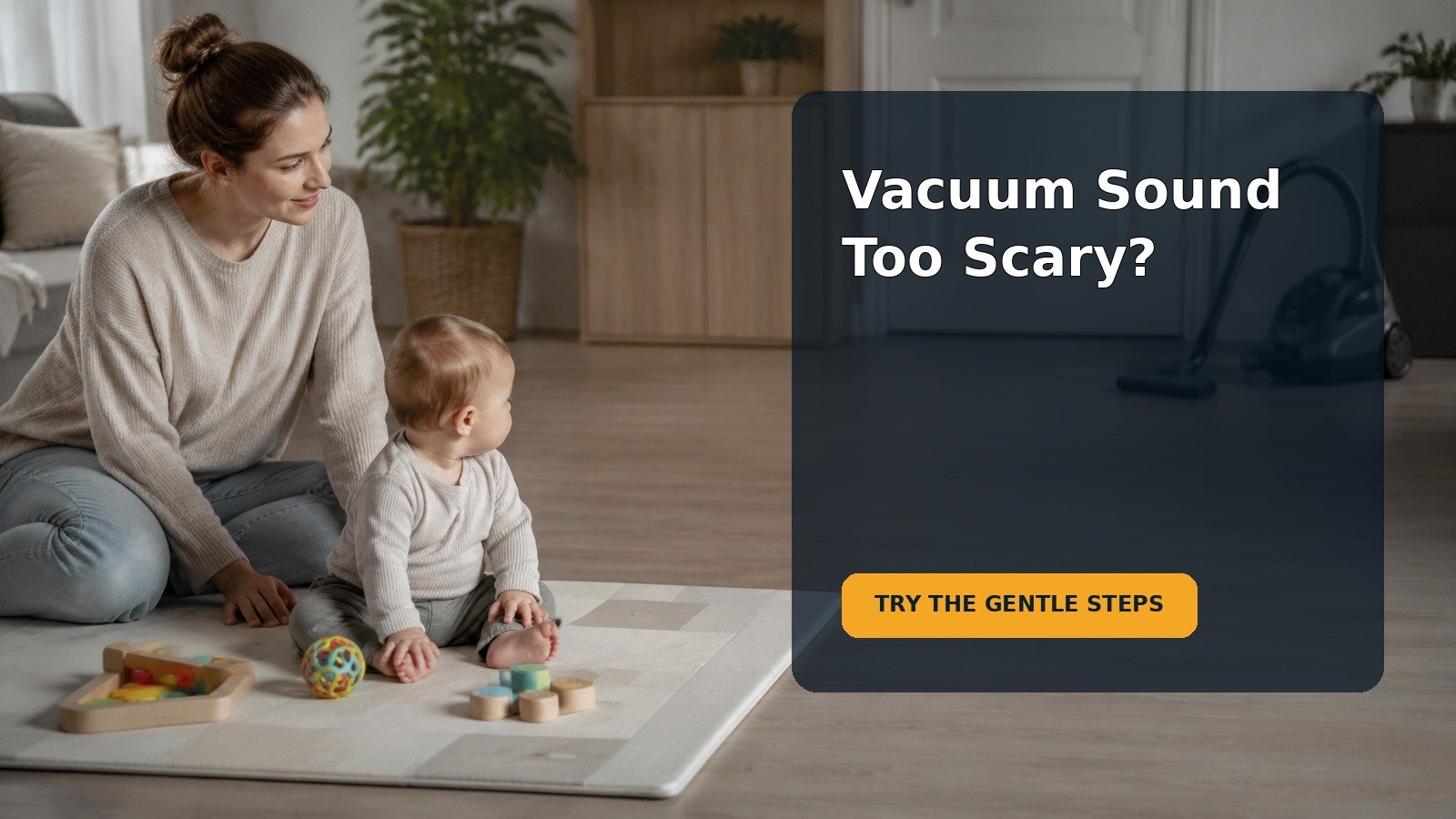
Why the vacuum can feel overwhelming
At 6 to 12 months, babies are learning which sights and sounds belong to everyday life. A vacuum is loud, moves through the room, and may begin without warning. Some babies briefly startle and recover; others cry, cling, turn away, or become upset before the machine even starts. Those reactions do not by themselves mean that anything is wrong.
Volume and unpredictability matter
For a baby, the difficult part may be the sudden change rather than the appliance itself. Starting a vacuum near a baby, moving it toward them, or switching it on during a calm activity can be startling. Loud sound can be more uncomfortable in a small room, when a baby cannot see the source, or when they are already close to their limit for the day.
Fear is different from an ordinary surprise
A brief startle followed by curiosity or a quick return to play can be a normal response. A baby who repeatedly cries hard, cannot settle after the sound stops, or reacts strongly to many ordinary sounds deserves a slower approach and a conversation with their pediatric clinician if the pattern continues. Focus on the whole picture, not one vacuum episode.
Start with safety and a simple plan
Before trying any practice, choose a time when your baby is fed, rested, and with a familiar caregiver. Do not hold a baby while operating a vacuum, and do not run loud equipment beside them. If you need to clean, it is completely reasonable for another caregiver to take the baby to a quiet room, outside, or on a walk.
- Keep the baby well away from the machine and its cord.
- Use a steady, brief warning phrase such as, “The vacuum will make a loud sound. I’m right here.”
- Let the baby see the vacuum while it is off before you expect them to hear it.
- Plan to stop if their signals say the step is too hard.
A predictable routine is not a promise that your baby will like the sound. It is a way to reduce surprise and help them learn that an adult notices and responds.
A gradual sound-exposure practice
Move through these steps over days or weeks, not all in one session. Repeat only a step your baby can handle calmly or with mild, brief concern that settles quickly. If they become distressed, return to an easier step next time.
1. Let your baby explore the quiet object
Park the unplugged vacuum at a distance during ordinary play. Name it simply: “That is the vacuum.” Let your baby look from your lap or crawl nearby if it is safely stored and cannot tip. There is no need to encourage touching the cord, buttons, or moving parts. The point is only to make the object less mysterious.
2. Practice the warning cue without turning it on
Use the same short sentence you will use before cleaning. Then move the off vacuum a small distance and return to a familiar activity. This pairing helps your words become a calm, predictable signal rather than a last-minute warning.
3. Let the sound come from far away
With another responsive adult holding or playing with your baby in a separate room, run the vacuum very briefly at the far end of the home. Stop before your baby is overwhelmed. If they look toward the sound but stay settled, offer calm connection: a familiar song, eye contact, or simple narration such as, “You heard the vacuum. It stopped.”
4. Increase exposure only when your baby is ready
On a different day, you might repeat a short, distant sound. Do not make the sound longer or closer just because a schedule says it is time. If your baby turns away, stiffens, cries, or reaches to be picked up, the next helpful step is usually more distance, less time, or a quiet break—not persuasion.
Follow your baby’s cues
Babies communicate through their body and behavior. Look for signs that say “this is manageable” and signs that say “please stop.” A baby may be coping when they glance at the sound, check your face, accept comfort, and return to play soon afterward. Pause when they cry intensely, arch away, become very still, cling urgently, or remain upset after the sound ends.
Comfort is not a reward for fear. Picking up a baby, moving to a quiet space, or ending the practice teaches that caregivers respond when something feels too much. A useful sentence is: “That was loud. You are safe. We’re taking a break.”
Make real cleaning more predictable
Not every family has time for a practice session before the floor needs cleaning. On ordinary cleaning days, reduce the surprise where you can. Tell your baby what is about to happen, begin in another room, and keep the first pass short. A familiar caregiver can stay with the baby in a quieter space and return when the main noise has passed.
Try not to use screens, snacks, or high-energy distraction as the only way through every loud sound. Those tools may help in a pinch, but the lasting message comes from predictable words, distance, and a caregiver who stays available. If a baby is already overtired or unwell, postponing nonessential vacuuming can be the kindest option.
What not to do
- Do not switch the vacuum on beside your baby to “get them used to it.”
- Do not force them to stay near the sound while they are crying or trying to get away.
- Do not label a baby as dramatic, sensitive, or difficult for reacting to noise.
- Do not put headphones or earplugs on a baby without advice from an appropriate health professional.
- Do not assume that one fearful reaction means a hearing or developmental problem.
When to discuss sound sensitivity with a clinician
Bring it up at a routine visit if sound distress is persistent, getting stronger, or appears across many settings. It can help to note what sounds caused a reaction, how close the sound was, what your baby did, how long it lasted, and what helped. This record is more useful than trying to decide on your own what the reaction means.
Contact a clinician promptly if you notice a sudden change in your baby’s response to sound, signs of ear pain or illness, or a concern that they do not respond to voices or everyday sounds as expected. Seek urgent medical help for breathing trouble, blue or gray color, unusual unresponsiveness, or any immediate safety concern. These signs need attention for their own sake, whether or not a vacuum was involved.
A short script for the next cleaning day
You can keep the language simple:
“I’m going to vacuum in the other room. It will be loud for a little while. You’re with me, and when it stops we can read your book.”
If your baby cries: “That sound felt big. I’m here. We’re going somewhere quiet.” Repetition matters more than perfect wording. Over time, many babies become less startled when they know what to expect and learn that the sound ends.
Frequently asked questions
Is it normal for a baby to be scared of the vacuum?
Many babies startle or become upset around loud, unpredictable household sounds. A single reaction is not enough to explain why it happened. Use distance and reassurance, and watch the pattern over time.
How long should we try the gradual plan?
There is no fixed timeline. Use brief, low-pressure steps and reassess after a few attempts. If distress remains intense or appears with many sounds, share your observations with your child’s clinician.
Should I keep vacuuming while my baby cries?
For nonessential cleaning, stop or move the baby to a quiet, supervised space with a caregiver. Avoid treating sustained crying as a step your baby must endure.
Sources
- Centers for Disease Control and Prevention: Child Development
- American Academy of Pediatrics / HealthyChildren.org: Baby Development
- American Speech-Language-Hearing Association: Loud Noise and Hearing
This article offers general education and cannot assess an individual child. For a concern about hearing, development, or persistent distress, consult your child’s pediatric clinician.