Hearing that your child was pressured to shoplift can bring up fear, anger and a lot of urgent questions. Start with the two priorities that matter most: make sure your tween is safe now, and make it clear they can come to you without being shamed. A calm plan gives them words to use before the next uncomfortable moment.
Start with safety, not a lecture
Peer pressure is common in the tween years, when belonging can feel especially important. But being asked to take something that is not theirs is not a small social test. Tell your child: “I am glad you told me. Your safety matters more than staying with the group, and we can work out the next step together.”
Ask simple, non-leading questions: Were they threatened or dared? Did anyone take their phone, block them from leaving, or pressure them to hide something? Did anything get taken? Is there an adult they can contact right away? Listen first. Avoid asking them to identify every detail while they are frightened or overwhelmed.
If there were threats, coercion, exploitation, violence, or an immediate risk of harm, get a trusted adult involved at once. Call emergency services if someone is in immediate danger. Laws, school rules and store procedures differ, so this article cannot give individual legal advice.
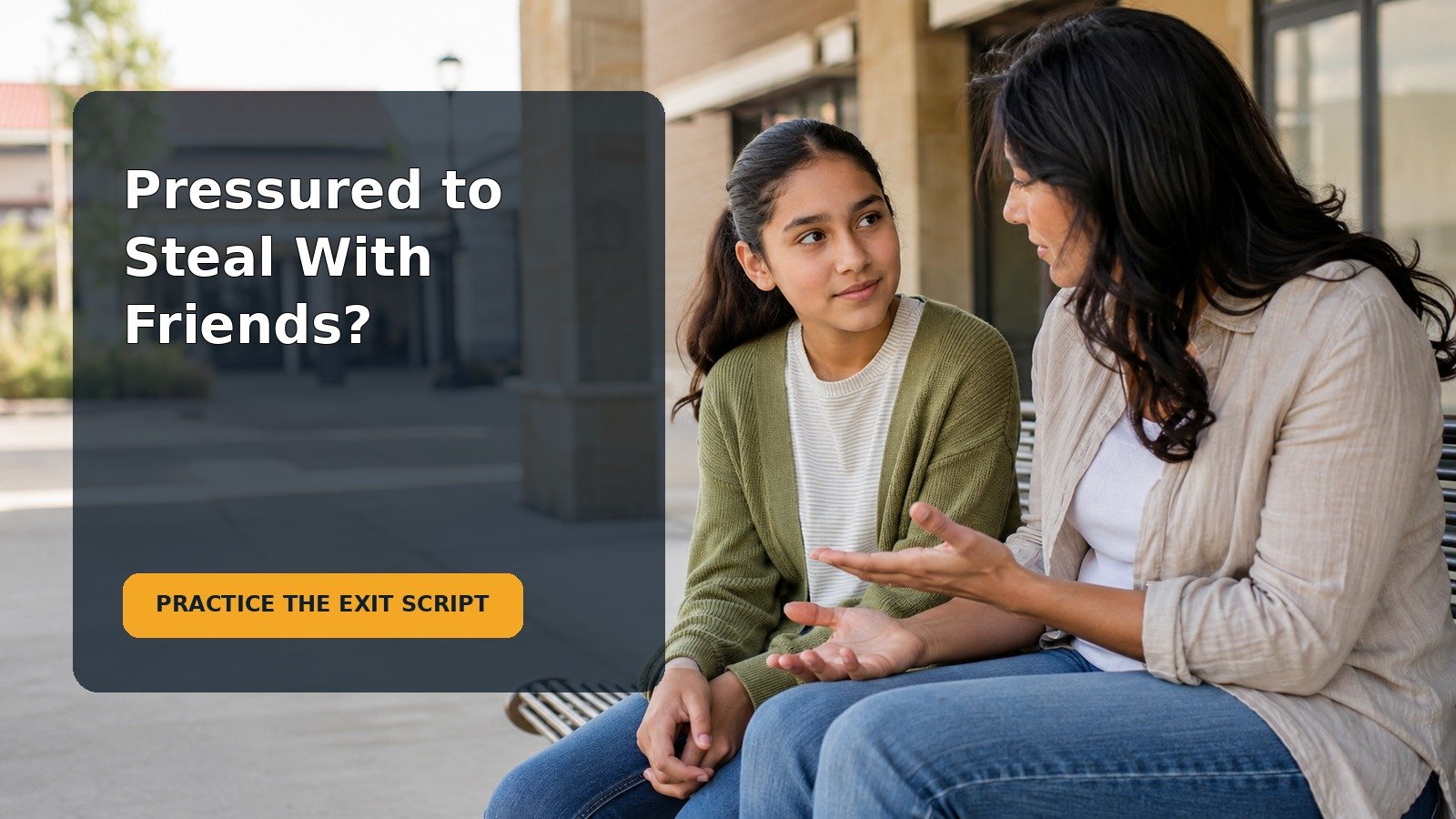
A tween peer pressure shoplifting plan to practice
1. Make the exit the goal
The safest response is usually to avoid taking anything, leave the situation, and move toward a trusted adult or a public, staffed place. Your tween does not need a brilliant argument or permission from friends to leave. Rehearse a short line they can remember:
- “No. I’m not doing that.”
- “I have to go meet my parent.”
- “I’m leaving now—don’t wait for me.”
They can repeat the line rather than debate. A planned excuse can be useful if a direct refusal feels too hard: “My parent is calling,” or “I need the restroom,” followed by moving toward an employee, security desk, front office, or another known safe adult.
2. Set up a no-questions-asked pickup
Create a family code word or a plain text such as “Need pickup.” Agree that you will respond with a calm pickup when possible and talk through the details later. The promise is not that there will never be consequences for unsafe choices; it is that getting out safely comes first.
Before outings, confirm the plan: who is driving, where your child can wait safely, which adult is available, and how they can contact you if their phone battery dies. A charged phone helps, but a safe plan should also include asking a store employee, school staff member, transit worker, or another trusted adult for help.
3. Practice the body language
Role-play for two minutes at home. Have your tween stand a step back, keep their hands visible and free, use a steady voice, and walk toward an exit or trusted adult. The point is not to make them responsible for managing other children’s feelings. It is to help the words feel familiar before they need them.
If something has already happened
Keep the immediate conversation factual and calm. Check that your child is safe and whether anyone pressured, threatened, or recorded them. Do not tell a child to hide evidence, run from staff, confront another child, or return to a store alone to “fix it.” Those choices can increase risk.
Instead, pause and get qualified local guidance before deciding how to repair harm. Depending on what happened, that may mean speaking with a parent or caregiver, school administrator, youth advocate, or a lawyer. If your child was pressured by an older child or adult, was threatened, or may be being exploited, treat that as a safeguarding concern and seek help promptly.
How to talk about the friendship without shaming
It helps to separate the behavior from your child’s worth. Try: “You deserve friends who do not make you prove yourself by doing something unsafe. What made it hard to leave, and what would make leaving easier next time?”
Then make a specific boundary. It might be pausing unsupervised outings with that group, changing pickup arrangements, or involving the other child’s caregiver through an appropriate adult channel. A boundary works best when it is paired with a replacement plan: another friend, an activity, or a safe way to leave early.
Notice what went right, even if the situation was imperfect. A tween who tells an adult, refuses, leaves, or asks for pickup used an important safety skill. Praise the help-seeking behavior directly.
Common mistakes to avoid
- Making your child promise to handle it alone. Tweens need an adult backup plan.
- Using humiliation as a deterrent. Shame can make a child less likely to ask for help next time.
- Focusing only on punishment. Clear consequences may be needed, but they should not replace safety, accountability and problem-solving.
- Giving tactics to avoid detection. The goal is not to outsmart staff or rules; it is to avoid harm and involve a trusted adult.
- Assuming every situation is ordinary peer pressure. Threats, repeated coercion, older youth involvement, or sexualized/financial exploitation need prompt adult attention.
When to bring in more support
Consider contacting the school counselor, pediatrician, or a qualified mental-health professional if peer pressure is repeated, your tween seems intensely anxious, they are withdrawing from usual activities, or friendship problems are affecting sleep, mood, attendance, or safety. Ask the school what support is available for bullying, coercion, and safe reporting.
For immediate danger, threats, violence, or a child who cannot get to safety, contact local emergency services. For ongoing bullying or intimidation, the federal StopBullying.gov help guidance explains options for getting adults involved. Review the plan with your tween when everyone is calm, then practice the exit and pickup steps together.
A quick family checklist
- We have one refusal line and one exit line to practice.
- My tween knows they can contact me for a safety pickup.
- We know where to find a trusted adult in common outing places.
- We will not hide, run, confront someone, or try to solve a legal problem alone.
- We will tell an adult promptly if there are threats, coercion, or someone cannot get safely away.
Frequently asked questions
Should I punish my tween for being around friends who shoplift?
Start by finding out what happened and whether your child was pressured or frightened. Set clear boundaries around safety and honesty, but keep the door open for future help-seeking. If an incident may have legal consequences, obtain qualified local advice rather than relying on a general article.
What if my child says, “Everyone was doing it”?
Acknowledge that belonging is powerful, then return to the plan: they can say no, move away, contact an adult, and leave. Practice the exact words together so the choice is easier under pressure.
Should I contact the other child’s parent?
That depends on the facts, the children’s safety, and the relationship between families. If there are threats, coercion, or a school-related pattern, begin with a school administrator or another qualified adult who can help choose a safe next step.
The takeaway
A tween peer pressure shoplifting plan is not about making your child fearless or perfect. It is about giving them a practiced exit, a reliable adult connection, and a calm place to tell the truth. Those supports make it more likely they will choose safety when a group is pushing them in the wrong direction.