When a child comes into parents bed night after night, it can leave everyone tired and unsure what to do next. For many school-age children, an occasional nighttime visit is not a sign that anything is wrong. A bad dream, illness, a change at school, travel, or a stressful week can make a child seek extra closeness. The useful question is not “How do we make this stop tonight?” but “What does our child need, and what calm routine can we repeat?”
This guide is for families who want to help a 6–9-year-old return to their own room gradually, without shaming or sudden separation. When a child comes into parents bed repeatedly, a steady plan can protect both connection and sleep. It is general education, not a diagnosis. If sleep has changed sharply or seems linked to health, breathing, or emotional distress, bring that information to the child’s clinician.
Start with the immediate question
What can be typical at ages 6–9?
School-age children still need predictable sleep, but they also have growing imaginations, social worries, and more awareness of what happens around them. A nighttime check-in can be a normal request for comfort. The American Academy of Pediatrics notes that a regular, calming bedtime routine supports healthy sleep habits for school-age children. The goal is not to make a child handle a hard moment alone; it is to offer reassurance in a way that also keeps the family’s sleep plan clear.
What may change the answer?
Pause the habit plan and look more closely if there is loud frequent snoring, gasping or breathing pauses, pain, repeated nightmares, new daytime sleepiness, a major behavior change, panic, a recent frightening event, or a sudden loss of skills. These details matter more than the number of trips to your room. Avoid locking a child in their room, teasing them, or using frightening consequences.
A calm first-step check
What to observe before acting
For one week, make a short note of bedtime, wake time, nighttime visits, and anything unusual that day: fever, medication changes, conflict, a school event, scary media, or a sleepover. Notice whether your child is fully awake, afraid, uncomfortable, or simply used to finishing the night in your bed. This is not a scorecard. It helps you choose a response that fits the pattern.
What to verify
Check the basics first: a comfortable sleep space, a consistent wind-down, an age-appropriate wake time, and enough opportunity for sleep. The AAP’s healthy sleep habits guidance can help families discuss sleep needs with a pediatrician. If a child reports a specific fear, listen for the detail rather than arguing with it.
The gradual return-to-their-room plan
Step 1: Agree on the plan in daylight
Do not introduce the plan at 2 a.m. Talk during a calm daytime moment. State the boundary warmly: “Everyone sleeps best in their own bed. If you wake up, we will help you get settled there.” Let your child choose one or two supportive details, such as a night-light, a water bottle, a comfort object, or a short phrase you will use at night. Keep the choices small; the adult still owns the plan.
Rehearse the route from your room to theirs. You might make a simple card that says: “Wake up, come get a parent, walk back together, tuck in, rest.” For a child who is worried about being alone, begin with an adult sitting quietly beside the bed for two minutes, then shorten that support over several nights. Do not promise to stay until they are asleep if that is not a promise you can keep.
Step 2: Use the same low-pressure response overnight
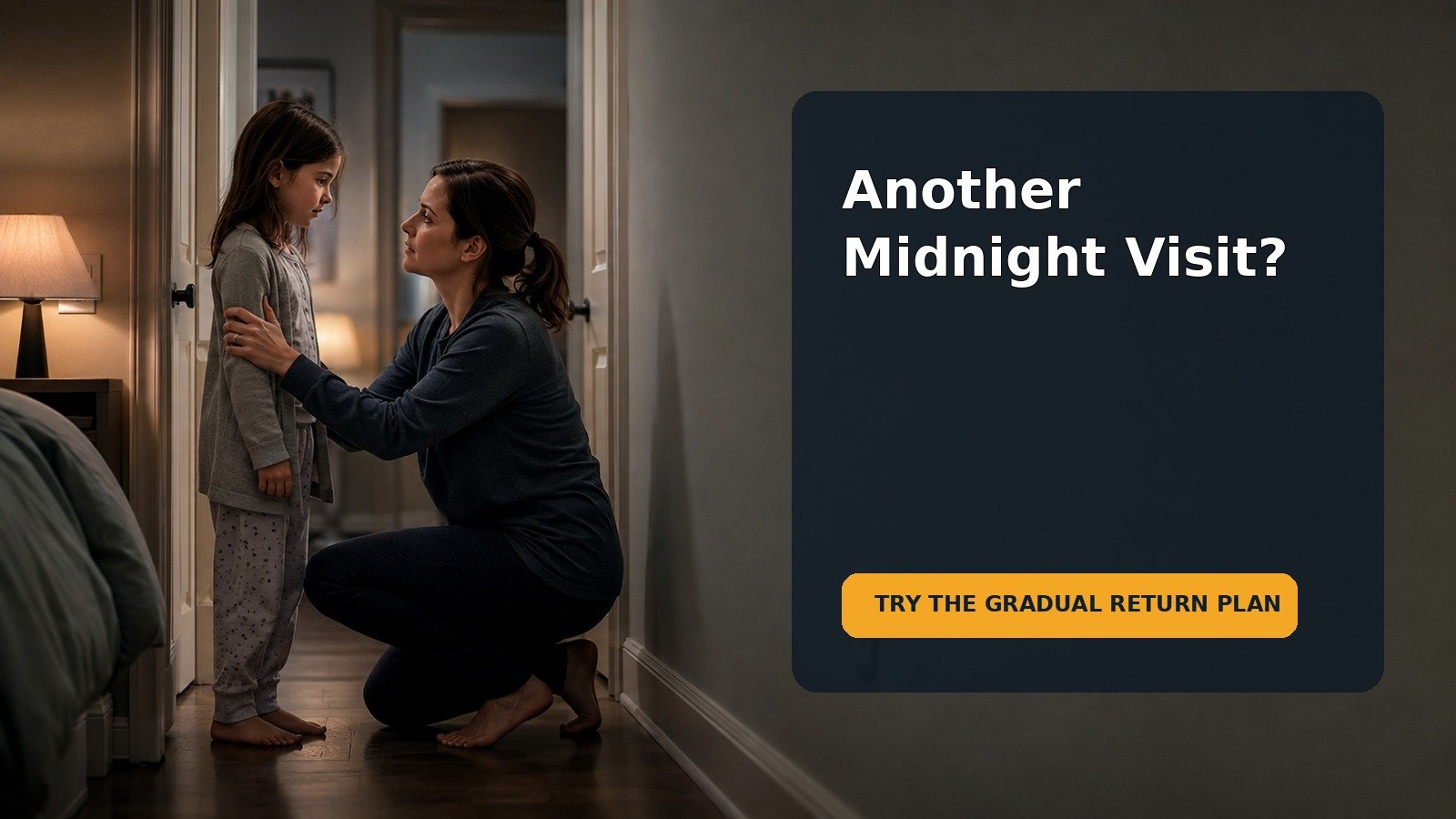
When your child arrives, keep your voice low and your words brief. Offer a quick safety check and connection: “You are safe. I’m here. Let’s go back to your bed.” Walk them back rather than negotiating in the dark. Tuck them in, repeat the agreed phrase, and leave or sit for the short planned interval.
If they return again, repeat the same response with less conversation. Consistency is kinder than a long midnight debate. If you choose a temporary exception because a child is sick or there is a genuine family emergency, name it as an exception the next day and return to the regular plan when appropriate.
Step 3: Review, praise, and adjust
In the morning, praise the effort rather than promising a reward for perfect sleep: “You were scared and you practiced going back to your room.” Review after five to seven nights. Is the child settling faster? Are visits fewer, or simply less intense? If the plan is making distress worse, slow down. A gradual plan may mean first helping the child fall asleep in their own room before expecting them to stay there all night.
Common mistakes and better alternatives
Avoid shame and all-or-nothing rules
Statements such as “You are too old for this” can make a child hide fears without helping them sleep. A better message is: “This is hard right now, and we can practice it.” Similarly, an abrupt rule that no adult will respond can feel frightening to a child with a real concern. Keep the response brief and predictable instead.
Keep the plan collaborative and realistic
Parents do not have to solve every cause before setting a boundary. But a plan is more likely to work when it fits the child’s temperament and the household’s capacity. If caregivers use different responses, agree on one short script and one return-to-bed routine. The AAP’s bedtime routine guidance for school-age children is a useful starting point for a calm, repeatable wind-down.
When to involve a professional
Routine questions to raise
Contact your child’s pediatrician or another qualified clinician if nighttime visits continue to disrupt family sleep despite a consistent plan, or if you are unsure whether anxiety, medication, pain, or another health issue is involved. Bring your one-week notes. Ask what sleep pattern is appropriate for your child and whether a more tailored assessment would help.
Red flags that need prompt help
Seek timely medical advice for breathing pauses, gasping, persistent loud snoring, significant daytime sleepiness, severe or escalating anxiety, or pain that wakes a child. If your child talks about hurting themselves or someone else, or cannot be kept safe, use urgent local mental-health or emergency support rather than waiting for a bedtime plan to work.
A one-page parent checklist
- Before bed: keep the wind-down predictable; check for illness, discomfort, or a specific worry; review the nighttime plan in simple words.
- During a visit: reassure briefly, walk back together, tuck in, repeat the same phrase, and keep lights and conversation low.
- Afterward: praise effort in the morning, note patterns without blame, and review the plan after about a week.
- Success looks like: your child gradually needs less help returning to their bed—not necessarily perfect sleep immediately.
Frequently asked questions
Is this common at 6–9 years?
Occasional nighttime reassurance can happen at this age. Frequency, distress, daytime effects, and physical symptoms are more useful signals than a child’s age alone.
What if my child refuses to go back?
Stay calm and reduce the talking. Repeat the same return-to-bed routine. If the refusal is intense or new, explore the fear in daylight and consider a slower version of the plan.
How long should we try before reassessing?
Give a consistent, gentle plan roughly five to seven nights before judging the trend, unless red flags appear or distress is escalating.
Sources
- American Academy of Pediatrics: Healthy Sleep Habits—How Many Hours Does Your Child Need?
- American Academy of Pediatrics: Bedtime Routines for School-Aged Children
This article provides general parenting information and is not medical advice. A child’s sleep needs and concerns can vary; consult a qualified health professional for individualized guidance.