Hearing that a friend has been hurting themselves can leave a teenager frightened, loyal, and unsure what to do. The most important message for a teen friend self-harm situation is simple: listen with care, but do not carry the secret alone. A trusted adult needs to know so the young person can get real support.
Parents can make that step feel less like a betrayal. Your job is not to investigate, diagnose, or turn your child into a crisis responder. It is to help them move from isolation to adult support, while keeping the conversation calm and clear.
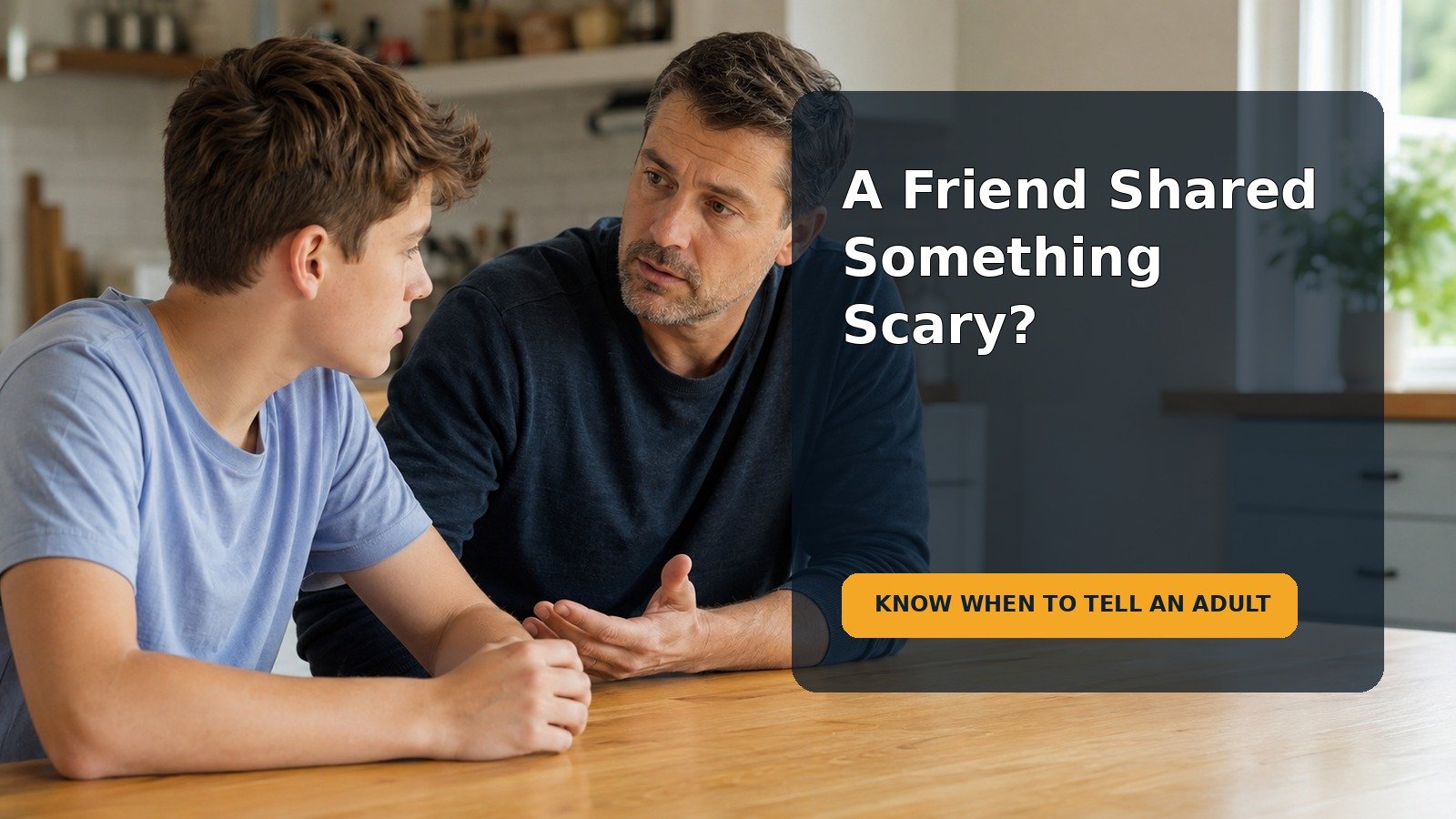
Teen friend self-harm: start with the parent’s immediate question
What is typical at ages 13–18?
Teen friendships often carry intense trust. A child may worry that telling an adult will end the friendship, make things worse, or cause their friend to be angry. Those feelings are understandable. But self-harm and possible suicide risk are safety concerns, not ordinary secrets. A teen can be a caring friend without being the only person who knows.
Start with a short reassurance-and-safety check: “I’m glad you told me. You did not cause this, and you do not have to solve it by yourself. We can get an adult who knows how to help.” Avoid asking your child to promise anything they cannot control, such as that their friend will be fine.
What changes the answer?
Take the situation more urgently if your child says the friend has talked about wanting to die, has a plan, has access to a method, has recently injured themselves, is intoxicated, is alone, has sent a goodbye message, or cannot say they will stay safe. In the United States, call or text 988 for immediate crisis guidance. Call local emergency services if there is imminent danger. If you are elsewhere, use your local emergency or crisis service. Do not leave a person in immediate danger alone while waiting for help.
A calm first-step check
What to learn before acting
You do not need every detail. Ask only enough to choose the next safe adult step: What did the friend say or show? When did it happen? Is the friend safe right now? Does your child know where they are? Has the friend mentioned suicide, a plan, or being unable to stay safe? Has another adult already been told?
Listen without pressing for images, methods, or graphic descriptions. Detailed retelling can overwhelm your child and is not necessary to begin getting help. If they have screenshots or messages, preserve only what may help an adult understand urgency; do not share them widely with peers.
What to write down or verify
Make a brief factual note of the date, the words used, the friend’s location if known, and the names of adults contacted. This is not about building a case against a young person. It helps adults avoid losing key information in a stressful moment. If the disclosure happened at school, contact the school counselor, nurse, safeguarding lead, or administrator according to the school’s process. If the friend’s parent or guardian can be contacted safely, a responsible adult should make that connection.
The practical plan
Step 1 — prepare the environment and expectations
Choose a private, unhurried moment. Tell your teen that you will take them seriously and that you may need to involve another adult if someone could be unsafe. This boundary is caring, not punitive. You might say: “I will respect your privacy where I can. But I cannot keep a secret if someone might be hurt.”
Step 2 — take the lowest-pressure safe action
If there is no sign of immediate danger, ask your teen to help choose the first trusted adult: you, another parent or caregiver, a school counselor, coach, teacher, or the friend’s caregiver. Offer to sit with them while they send a short message or make a call. A simple script is enough:
“My friend told me they have been hurting themselves. I care about them, and I’m worried they may not be safe. I don’t know what to do alone. Can you help us get the right adult support?”
Your teen can also tell their friend: “I care about you too much to keep this only between us. I’m going to get an adult who can help.” Do not encourage them to monitor the friend all night, promise secrecy, or negotiate safety alone through messages.
Step 3 — review the result and adjust
After an adult has been told, check in with your teen. They may feel guilty, angry, relieved, or worried about retaliation. Remind them that telling a safe adult was an act of care. Ask whether they need a break from messaging, help at school the next day, or someone else to talk with. If the first adult minimizes the concern, contact another responsible adult or crisis resource. Keep escalating until someone with safeguarding responsibility responds.
Common mistakes and better alternatives
Avoid shame, secrecy, or all-or-nothing rules
Do not say, “You should have told me sooner,” or demand every private message. Those reactions can make the next disclosure less likely. Instead, thank your teen for speaking up and explain the limit around safety. At the same time, do not say, “Just block them,” as the only response. A pause from contact may be useful, but adult support for the friend must come first.
It is also important not to label the friend as attention-seeking or assume that self-harm automatically means a suicide attempt. Self-harm can occur with or without suicidal intent, and only a qualified professional can assess an individual situation. Any disclosure still deserves a calm, timely adult response.
Keep the plan collaborative and age-appropriate
Older teens may want a say in which adult is told; younger teens may need more direct help. In either case, do not put them in charge of clinical decisions. Encourage kindness without making your child the friend’s therapist, messenger, or sole safety plan. Boundaries protect both young people.
When to involve a professional or urgent help
Routine questions to raise
If the immediate risk has been addressed, a pediatrician, family doctor, school mental-health professional, or licensed clinician can help families decide what support is appropriate. Parents can ask how to support their own teen after a peer disclosure, how to manage contact and online messages, and what school supports are available. The National Institute of Mental Health and the 988 Lifeline provide current guidance on recognizing concern and helping someone connect with support.
Red flags that require urgent action
Seek emergency help now if there is an active injury, stated intent to die, a plan or access to lethal means, a goodbye message, severe intoxication, disappearance, or an inability to stay safe. Contact emergency services for imminent danger. In the U.S., 988 can help a concerned adult decide what to do during a mental-health crisis. If you know the friend’s location, share it with emergency responders. Stay with your own teen while adults take over; they may be deeply shaken.
A one-page parent checklist
Before, during, and after
- Thank your teen for telling you and state clearly that safety secrets must be shared with an adult.
- Ask brief, factual safety questions; avoid graphic details or amateur risk assessment.
- Contact a trusted adult for the friend, school safeguarding staff, a crisis line, or emergency services according to urgency.
- Do not ask your teen to keep watch alone or promise confidentiality.
- Document essential facts and follow up if the first contact does not respond appropriately.
- Check on your teen afterward and arrange support if they are distressed, having trouble sleeping, or feel responsible.
What success should look like
Success is not your child finding the perfect words or keeping everyone calm. It is moving the concern to capable adults, reducing isolation, and showing your teen that caring boundaries are part of friendship. A calm response today can help both young people understand that asking for help is a strength.
If anyone may be in immediate danger: contact local emergency services. In the United States, call or text 988 for crisis support and guidance. This article offers general education, not diagnosis or individual medical advice.
Image credit: Nappot editorial asset package; exact matched image supplied in the 15 August 2026 Drive package.