Learning how to dress a newborn for sleep can feel surprisingly high-stakes. One room feels cool to an adult, another feels stuffy, and a baby cannot tell you whether they need a layer removed. The useful goal is not to find a perfect outfit chart. It is to make a simple check of the room, the sleep layers, and the baby’s comfort while keeping the sleep space clear.
Newborns need adults to help manage their temperature, but too many layers can increase the risk of overheating. This guide gives general safety information, not a substitute for advice from your baby’s clinician. Premature babies, babies with health conditions, and babies who are unwell can need individualized guidance.
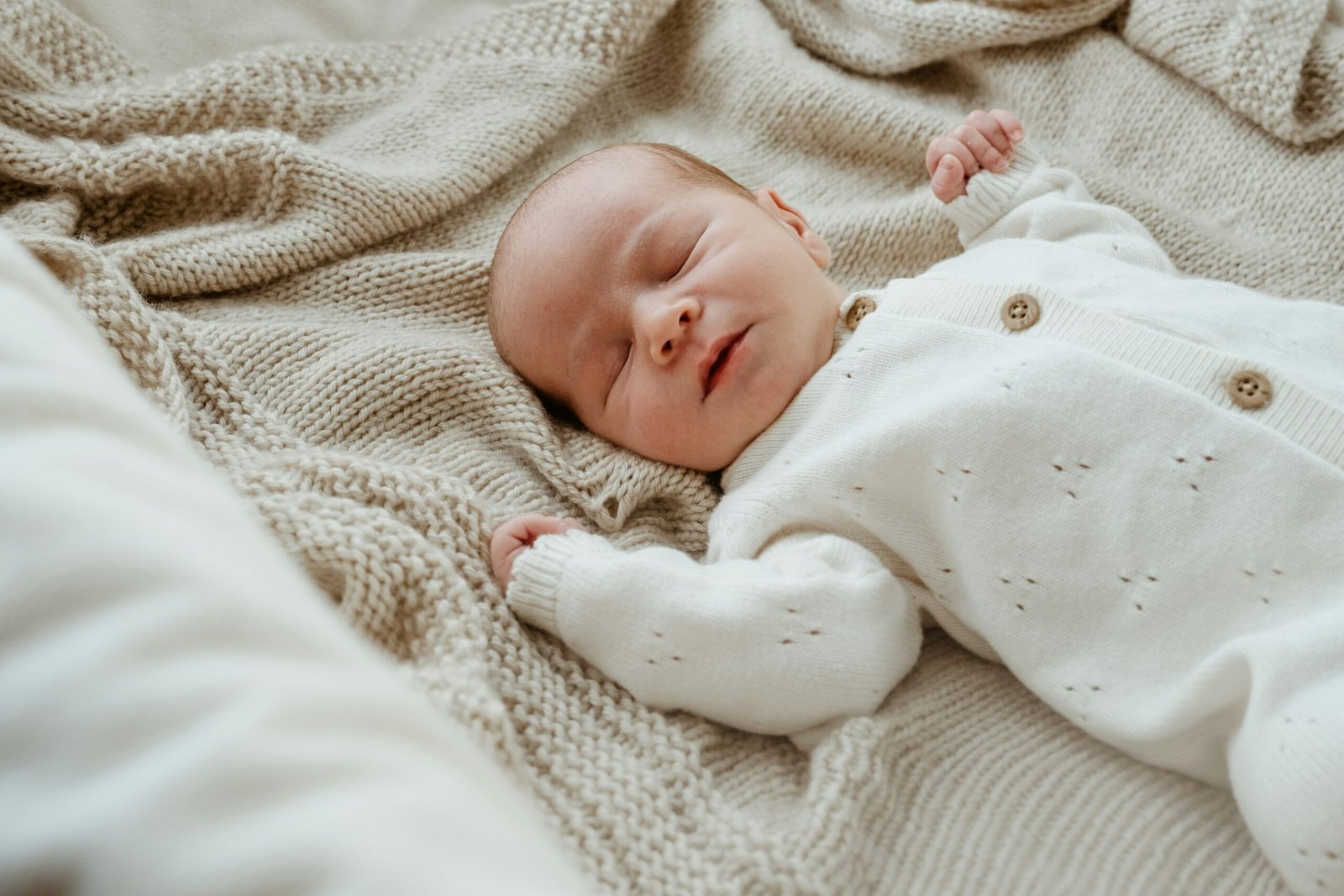
Start with the sleep space, not the outfit
Before choosing clothing, set up a safer sleep space: place your baby on their back on a firm, flat, level surface made for infant sleep, with only a fitted sheet. Keep loose blankets, quilts, pillows, stuffed toys, positioners, and weighted items out of the sleep area. Clothing and a properly fitted wearable blanket or sleep sack, when appropriate, are safer ways to add warmth than loose bedding.
Do not use an adult bed, couch, armchair, car seat, stroller, swing, or other sitting device as a regular sleep space. If a baby falls asleep in a sitting or carrying device, move them to their regular sleep space as soon as practical. These steps matter regardless of the room temperature.
A practical room-temperature and layering check
Start by making the room comfortable for a lightly dressed adult. The American Academy of Pediatrics offers a useful rule of thumb: a baby often needs about one more light layer than an adult would wear comfortably in the same environment. It is a starting point, not a prescription. A room thermometer can help you notice a very warm or very cold room, but it cannot replace checking your baby.
- Choose breathable, well-fitting layers. A bodysuit and footed sleepwear may be enough in many homes. Avoid bulky outerwear for indoor sleep.
- Use a wearable blanket only as intended. Choose the right size and follow its instructions. It should not ride over the baby’s face or come loose.
- Skip hats indoors for sleep. Hats can shift over a baby’s face and make it harder to release heat.
- Do not add loose blankets. A blanket tucked around a baby is still loose bedding in the sleep space.
- Adjust one layer at a time. If you think your baby is warm, remove a light layer rather than making a dramatic change.
How to check whether your newborn is comfortable
Hands and feet can feel cool even when a baby is comfortable, so they are not the best guide. Instead, gently feel the chest, back, or the back of the neck. Skin that feels comfortably warm is usually reassuring. A sweaty neck, damp hair, flushed cheeks, rapid breathing, or a hot chest can be signs that your baby is too warm. Remove a layer and reassess the room and clothing.
Cool skin, unusual sleepiness, poor feeding, breathing concerns, fever, or a baby who seems unwell need more than an outfit adjustment. For newborns, ask a clinician promptly about a temperature concern or behavior that worries you. Seek urgent care for trouble breathing, blue or gray color, extreme difficulty waking, or other emergency signs.
Common situations
A warm summer room
Use fewer light layers. In a hot room, a single light layer may be enough. Focus on the whole environment: close blinds against direct sun, use air conditioning safely if available, and avoid aiming a fan directly at the baby. Do not place a baby near a heater, radiator, fireplace, space heater, or direct sun.
A cool winter room
Add warmth through fitted sleep clothing or a correctly sized wearable blanket rather than loose bedding. Do not use electric blankets, heating pads, hot-water bottles, or a heavy coat for sleep. If the room is consistently difficult to keep comfortable, ask your baby’s clinician for guidance tailored to your situation.
After a car ride or outdoor trip
Remove coats, bunting bags, and other bulky outer layers before placing your baby in the sleep space. Car-seat clothing and blankets are for travel conditions, not a reason to keep the same layers once you are indoors.
A quick bedtime checklist
- Check that the sleep surface is firm, flat, level, and clear except for a fitted sheet.
- Put your baby down on their back.
- Choose one light base layer, then add only what the room calls for.
- Keep hats, loose blankets, and weighted items out of the sleep area.
- Feel the chest or back of the neck after settling your baby, rather than judging by hands and feet.
- If your baby seems hot, remove one light layer and reassess. If they seem ill or you are worried, contact a clinician.
What not to rely on
A temperature chart printed on a product package may be a helpful reference, but room insulation, humidity, airflow, and what your baby is already wearing vary. Do not rely only on a monitor, a thermostat, or another adult’s comfort level. Avoid trying to “train” a newborn to tolerate being cold or using extra layers to make them sleep longer. Comfort and safer sleep setup are the priorities.
Also avoid assuming that sweating is the only concern. If a newborn has a fever or seems unwell, do not treat it as a layering question. In babies younger than three months, a rectal temperature of 100.4°F (38°C) or higher needs prompt medical evaluation; follow your local clinical advice for taking and responding to a temperature.
When to ask for help
Call your baby’s clinician for individualized advice if your baby was born early, has a medical condition, repeatedly seems too hot or cold despite reasonable layers, is feeding poorly, is unusually hard to wake, or has a fever. Ask before using specialty sleep products that promise temperature control, position support, or weighted pressure. A clear sleep space and simple fitted layers are easier to check and safer than adding products to solve uncertainty.
The bottom line
For how to dress a newborn for sleep, begin with a clear, firm sleep space and then use light, fitted layers. A simple room-temperature check, one-extra-layer starting point, and a gentle check of your baby’s chest or neck can guide small adjustments. Keep loose bedding and hats out of the sleep area, and contact a clinician when your newborn seems unwell or you are uncertain.