When your baby starts pulling to stand, the change can seem to happen overnight. One day they are content on the floor; the next they are reaching for the sofa, the coffee table, the pet bowl, and every cord within reach. This is an exciting movement skill, but it changes what “safe enough” looks like at home.
Baby pulling to stand safety is not about creating a perfectly empty room. It is about spotting the hazards that become reachable at your baby’s new height, then making a few high-impact changes before they practise again. Start with the places your baby uses most, and repeat the check as their reach and confidence grow.
What pulling to stand changes
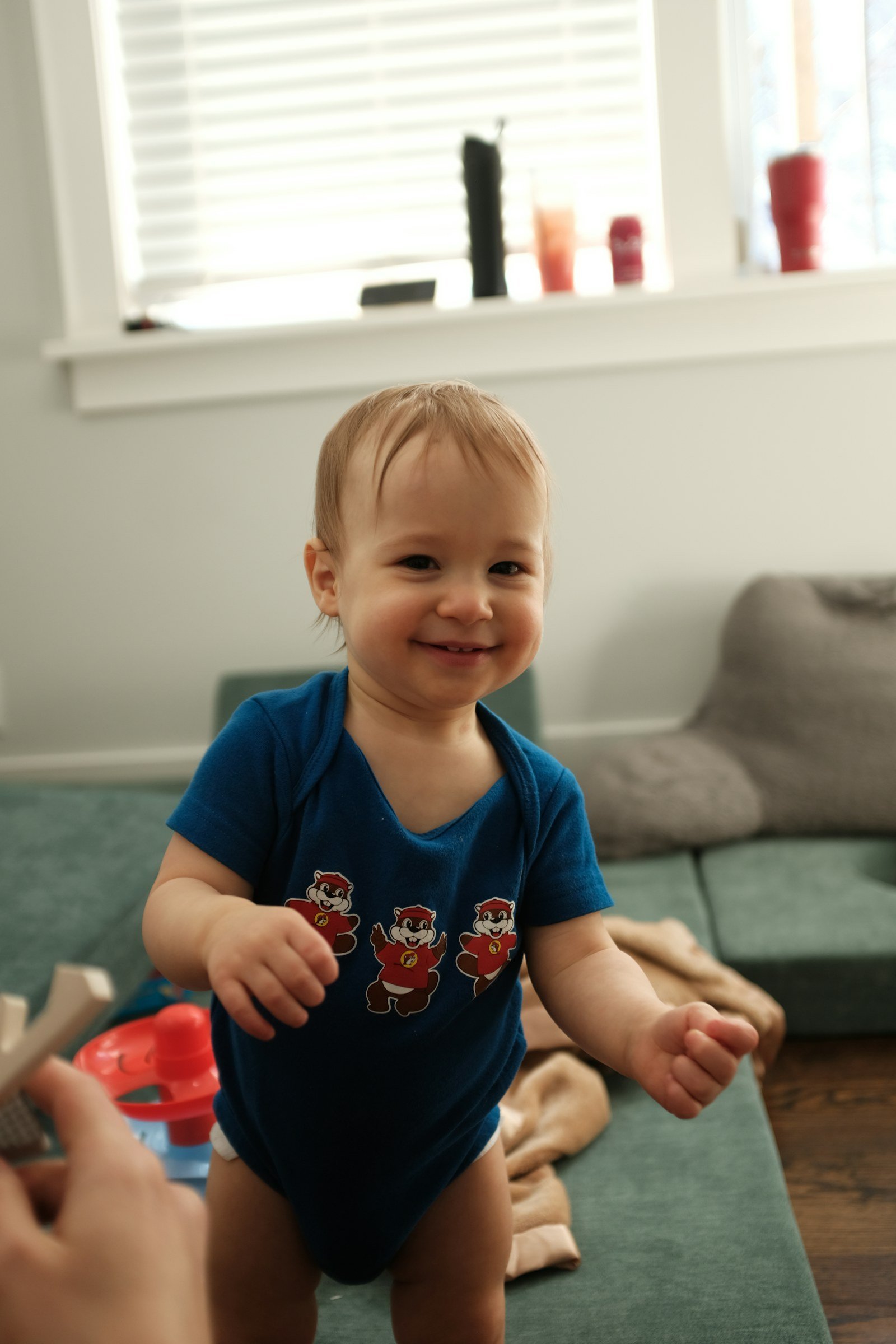
Pulling to stand usually means your baby can reach higher, shift their weight, and grab an object while using furniture for support. They may not yet know how to get down safely. A light table can tip, a cord can pull an object down, and a small item left on a shelf can quickly end up in a mouth.
Developmental timing varies. The point is not to compare your baby with another child or rush the next step. Once your baby is trying to stand, use that behaviour as your cue to refresh the environment. Keep offering supervised floor time; it lets your baby practise moving, sitting, crawling, pulling up and lowering down at their own pace.
Start with the two biggest priorities
Anchor furniture that could fall
Secure tall or heavy furniture to the wall according to the manufacturer’s instructions: dressers, bookcases, television stands and similar pieces. Put televisions on stable furniture designed for them, and anchor the furniture as well. Do not rely on a heavy item alone to stay put when a child pulls, climbs, or opens a drawer.
Move tempting objects away from the top of furniture. A remote control, toy, phone, or snack can encourage a baby to reach or climb. Keep drawers closed; drawer stops can help, but anchoring is still the main protection against a tip-over.
Make stairs and falls harder to reach
Use hardware-mounted gates where a gate is needed at the top of stairs. Follow the gate instructions exactly and check that it stays secure. At the bottom of stairs, use an appropriate gate or a reliably closed door to prevent unsupervised access. Never use an old-style accordion gate with large openings that could trap a child’s head or neck.
Keep windows closed and locked when possible. Move chairs, cribs, low shelves and other climbable furniture away from windows. Window screens are designed to keep insects out, not to stop a child from falling.
A room-by-room safety reset
Living room and play area
- Anchor televisions, media units, bookcases and dressers.
- Choose a clear, stable place for a baby to pull up. A firmly secured sofa or low, sturdy activity surface is safer than a wheeled chair or folding table.
- Move drinks, hot mugs, glass objects, remotes, batteries and small items above reach and out of reach.
- Cover unused outlets, manage cords, and keep lamps where a tug cannot pull them down.
- Check rugs for sliding edges and remove low unstable décor that could topple.
Kitchen and dining area
The kitchen often needs the fastest reset because a newly standing baby can grab a tablecloth, reach a hanging towel, or pull on an oven handle. Keep hot food and drinks away from table edges. Turn pot handles toward the back of the stove, and use back burners when practical. Store knives, cleaning products, alcohol, medicines and dishwasher pods in locked or reliably secured cabinets.
Do not leave a baby alone in a high chair, on a counter, or near a rolling kitchen chair. A child can use a chair as a climbing tool before adults expect it. If you need both hands for a hot task, put your baby in a safe place first.
Bathroom and laundry area
Keep bathroom and laundry doors closed or use a secure latch. Store medicines, cosmetics, razors, detergent products and cleaning supplies locked up and in their original containers. Empty buckets, tubs and sinks immediately after use. A small amount of water can be dangerous to a young child, so active supervision around water matters even after the room has been “babyproofed.”
Bedroom and nursery
Lower the crib mattress before your baby can pull to stand, following the crib manufacturer’s instructions. Keep the crib clear of pillows, loose blankets, toys and positioners. Move the crib away from windows, blinds and cords. Check that monitors and charging cables are well out of reach; a cable that once seemed far away may now be reachable from a standing position.
Practise getting down, not just getting up
Many bumps happen because a baby can pull up before they can lower themselves with control. During calm, supervised play, stay close and help your baby bend their knees and return to sitting. Place a favourite toy low enough that they can look down and reach toward it. Keep the surface soft enough for ordinary play but firm and clear enough that they can move freely.
Avoid trying to “teach” standing by holding both hands overhead or using a mobile seated baby walker. The American Academy of Pediatrics warns that mobile baby walkers can lead to serious injuries and do not help babies learn to walk. Floor play, supervised cruising on stable furniture, and time to explore are safer ways to build skills.
Everyday habits that make the reset work
- Do a reach check: Get down to your baby’s new eye level and look for cords, small objects, tablecloths and handles.
- Recheck after visitors: Bags, coins, medicines and chargers are common temporary hazards.
- Keep one safe zone: A cleared, gated play area gives you a reliable place to put your baby when you need to answer the door, cook, or use the bathroom.
- Use gates and locks as backup, not a substitute: They reduce access, but close supervision is still needed around stairs, water, hot items and pets.
- Refresh the plan regularly: Cruising, climbing and opening cabinets create new risks soon after pulling to stand begins.
When to ask for advice
Talk with your child’s clinician if you have questions about your baby’s movement, muscle strength, use of one side of the body, pain, or a loss of skills they previously had. For an injury, poisoning concern, fall, or possible swallowing of a battery or magnet, use urgent local medical or poison-control guidance rather than waiting for a routine appointment.
A simple safety checklist for today
- Anchor or block access to furniture and televisions that could tip.
- Install or check stair gates and move climbable furniture away from windows.
- Pick up small objects, cords, hot drinks and breakables from the new reach zone.
- Lock medicines, cleaning products and detergent products away.
- Lower the crib mattress if your baby is pulling to stand there.
- Choose one clear, supervised place for daily pulling-up practice.
The bottom line
Baby pulling to stand safety is a practical reset, not a one-time project. Anchor what can fall, block dangerous spaces, remove grab-and-pull hazards, and stay close while your baby learns how to move up and down. Small changes now can make this new stage safer while leaving plenty of room for confident exploration.