If your 2-year-old is climbing out of the crib, the priority changes quickly from sleep routine to fall prevention. One successful escape is enough to take seriously. You do not need to panic or make every decision in one night, but you do need a safer plan before the next sleep.
For many families, that plan means moving to a toddler bed or a mattress placed low to the floor in a carefully prepared room. The right timing depends on the crib, the child and the room—not on a birthday alone. This article offers general safety information. For a child with an injury, unusual sleep problem or developmental concern, contact a pediatric clinician.
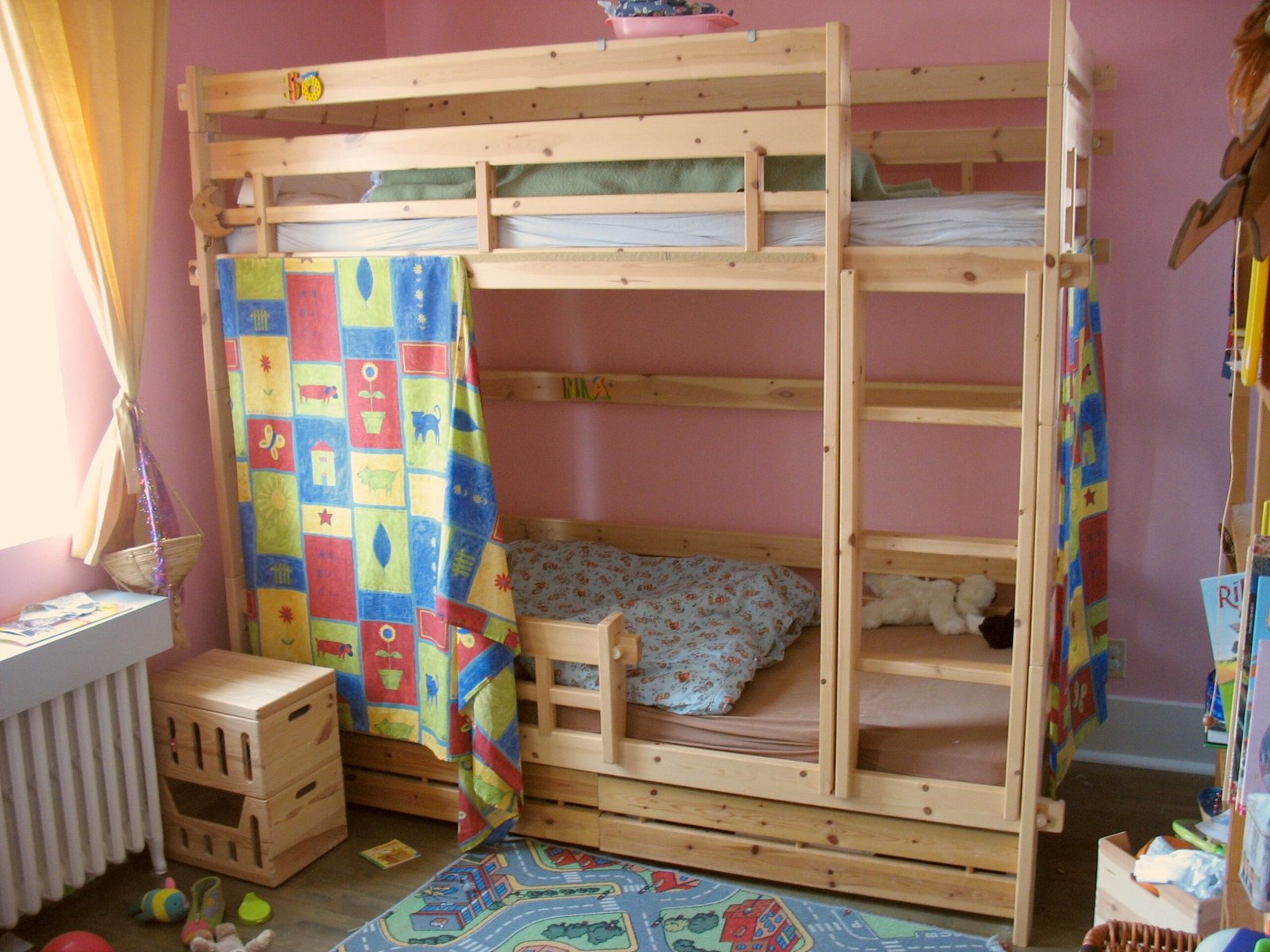
Why climbing out changes the safety decision
Cribs are designed to contain a child only while the child stays within the product’s limits. The American Academy of Pediatrics advises that a child who can climb out may be ready to move to a bed. A fall from a crib can cause injury, and repeated attempts can happen with little warning. Lowering a mattress or removing toys may delay climbing for some children, but it is not a dependable solution once a child is already getting over the rail.
Check the manufacturer’s instructions for your specific crib, including its maximum height or other transition guidance. Do not use improvised covers, tents or modifications that were not made for that crib.
What to do tonight
- Remove climb helpers: Take out large stuffed animals, boxes, pillows and furniture that can help a child reach the rail.
- Lower the mattress only if the manual permits it: Use the lowest approved setting. Do not add extra mattresses or padding.
- Plan for the room, not just the bed: A child who can leave the crib can also explore at night. Anchor furniture, cover outlets, secure cords, lock away medicines and small choking hazards, and use a safety gate for stairs where needed.
- Keep the sleep space simple: Whether your child remains in a crib briefly or moves to a bed, avoid loose items that create a fall or entanglement risk.
Is it time for a toddler bed?
When a 2-year-old is climbing out of the crib, moving to a bed is often the safer choice. A toddler bed, a low twin mattress, or another age-appropriate low sleep setup can work. Choose the option that lets your child get in and out with the least distance to the floor and that fits the room safely.
Do not rely on a bed rail as a substitute for making the whole room safe. Follow the manufacturer’s age and installation instructions for any rail. Check the mattress fit, avoid gaps that could trap a child, and keep the bed away from windows, blind cords and heavy furniture.
Questions that help you choose
- Can the bed be kept low and stable?
- Is the room childproofed for a child who may wake before you?
- Does the mattress fit the frame without dangerous gaps?
- Can you keep the bedtime routine almost the same during the change?
- Are all caregivers able to use the same plan overnight?
Make the transition predictable
A toddler may be proud of a new bed one minute and upset about it the next. Keep the routine short and familiar: pajamas, teeth, one or two books, a cuddle, then lights out. Explain the change plainly: “The crib is not safe for climbing. This is your safe sleep bed. I will help you learn it.”
Let your child make one small choice, such as a sheet or a bedtime book. Avoid turning bedtime into a long negotiation about returning to the crib. If your child gets up, guide them back calmly with few words. Repetition is more helpful than lectures or punishment.
Expect some testing—and keep the boundary calm
New freedom can lead to repeated exits. Stay boring and consistent: walk your child back, use the same short phrase, and leave again. If they are frightened or unsettled, offer brief reassurance while keeping the plan clear. A gate at the bedroom doorway may be appropriate only if it is installed and used safely and does not create a fire-escape concern; consider your home layout and local safety guidance.
It can help to check in before sleep rather than promising to stay until your child is asleep. For example: “I will come back in two minutes to check that you are tucked in.” Do this only if you can follow through, then stretch the check-ins gradually if they are helping.
Common mistakes to avoid
- Adding improvised crib barriers: These can create entrapment or climbing hazards.
- Assuming a low mattress makes the room automatically safe: Childproofing matters because your toddler can roam.
- Moving several routines at once: If possible, avoid combining the bed move with toilet training, a new caregiver or another major change.
- Using shame: Climbing is a developmental skill, not misbehavior. Focus on the safety rule.
- Leaving unsafe furniture unanchored: A child who gets out of bed may climb dressers or shelves.
When to seek extra support
Get medical advice after a fall, especially if your child has a head injury, vomiting, unusual sleepiness, worsening pain, trouble walking, or behavior that worries you. Contact a pediatric clinician for ongoing sleep difficulties that are affecting daytime wellbeing or when you are unsure how to handle a developmental or medical concern. Seek urgent local help for an immediate injury or danger.
A simple transition checklist
- Read your crib manual and stop using the crib if it no longer meets its limits.
- Choose a low, stable sleep option with a well-fitting mattress.
- Anchor furniture and remove cords, medicines, small objects and climbable hazards.
- Keep the bedtime sequence familiar.
- Use one calm return-to-bed response every time.
- Check the room again from your toddler’s height.
The bottom line
When a 2-year-old is climbing out of the crib, treat it as a safety signal. A thoughtfully prepared toddler bed or low bed can reduce fall risk, but the bigger job is making the entire sleep space safe for a mobile child. Keep the routine steady, respond calmly to getting up, and ask for clinical advice when a fall or sleep concern needs individual guidance.