Making an 8 year old sleepwalking home safety plan can feel urgent after a child is found in the hallway, at the stairs, or trying to leave their room at night. Sleepwalking is common in children. During an episode, a child may have a blank look, may not respond normally, and often will not remember it in the morning. The immediate goal is safety: reduce the chance of a fall, a trip, or a child leaving the house while not fully awake.
This guide is general education, not a diagnosis. A pediatric clinician can assess a pattern that worries you or affects your child’s health. If your child is in immediate danger, call local emergency services.

What sleepwalking can look like
Sleepwalking usually happens during deep sleep, often in the first part of the night. A child may sit up, walk, talk, do a simple routine, or seem awake while not fully aware of what is happening. They may return to bed on their own and have no memory of the episode. Sleepwalking is different from a nightmare, where a child is awake, frightened and can usually describe a dream.
Do not treat the episode as misbehavior. Keep your voice low and your movements calm. The American Academy of Pediatrics advises parents to focus on preventing injury and gently lead a child back to bed rather than trying to force a full wake-up.
Start with a one-night safety sweep
Clear the route from bed to bathroom
Pick up toys, cords, shoes, bags and loose rugs that could cause a fall. Keep the path from the bedroom to the bathroom and to the stairs clear. A dim night-light can help an adult see the route without making the room brightly stimulating.
Block stairs and exits
Use a safety gate or another reliable barrier at stairs where appropriate for your home and your child’s ability. Keep exterior doors and accessible windows closed and secured. Put keys, sharp tools and other hazards out of reach. If your child has tried to leave the bedroom or house while sleepwalking, consider a door alarm that alerts adults without shaming the child.
Make the sleeping space lower-risk
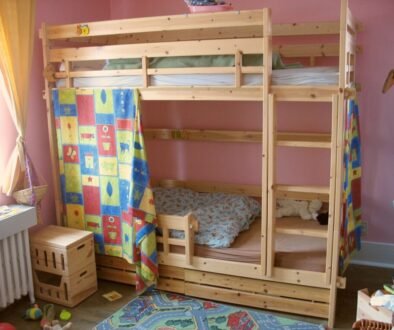
For a child who sleepwalks, avoid a top bunk. Check that the bed area is free of clutter and that furniture is stable and anchored as recommended by its manufacturer. Do not rely on a locked bedroom door that could delay an adult getting to a child in an emergency; choose safeguards that preserve safe access for caregivers.
What to do during an episode
- Stay with your child. Quietly position yourself between them and stairs, doors, windows or hazards.
- Use few words. Try a simple phrase such as, “You’re safe. Let’s go back to bed.”
- Guide, do not argue. If they will move with you, gently steer them back to bed. Sudden waking can leave a child confused, scared or upset.
- Keep the environment calm. Avoid bright lights, long questions, teasing, filming or scolding.
- Note what happened. Once your child is safe and asleep, record the time, what you observed and any possible triggers.
If you must wake your child because there is an immediate safety risk, do it gently and keep your explanation short. Their safety comes first.
Build a prevention routine without blaming your child
Lack of sleep, illness with a fever, stress and disrupted routines can be linked with sleepwalking in some children. A regular wind-down cannot guarantee that episodes stop, but it can support enough sleep and make patterns easier to spot.
A practical evening plan
- Keep a consistent wake time and a realistic bedtime on school nights.
- Use a calm, repeatable wind-down: wash up, prepare for tomorrow, read or listen to a quiet activity, then lights out.
- Avoid letting an overtired week build up when possible.
- Talk about worries earlier in the evening, not during an episode.
- Tell babysitters or overnight caregivers exactly how to keep your child safe and guide them back to bed.
A brief sleep diary can be useful. Record bedtime, wake time, illness, major changes, episodes and any daytime tiredness. Do not assume one event caused another; the diary is a starting point for a conversation with a clinician if needed.
When to call the pediatrician
Contact your child’s pediatric clinician for advice if sleepwalking is frequent, creates a risk of injury, disrupts sleep, becomes suddenly much worse, or comes with unusual daytime sleepiness. Also ask promptly about loud snoring, breathing that stops or starts during sleep, pain, new medicines, or other symptoms that concern you. Those details can matter because sleep problems sometimes need individual assessment.
Seek urgent help for an injury, an episode involving immediate danger, or any breathing emergency. Do not start, stop or change medication based on an online article; speak with the prescriber or your child’s clinician.
A simple family safety checklist
- Clear floors and the path to the bathroom.
- Secure outside doors and windows; protect stair access.
- Store keys, tools and sharp objects safely.
- Avoid a top bunk for a child who sleepwalks.
- Agree on one quiet response: stay nearby and gently guide back to bed.
- Tell overnight caregivers what to do.
- Keep a short sleep-and-episode diary.
- Call the pediatrician if episodes are risky, disruptive or paired with breathing concerns or daytime tiredness.
The bottom line
An 8 year old sleepwalking home safety plan does not need to be complicated. Clear hazards, secure exits, protect stairs, stay calm during an episode and seek individualized medical advice when the pattern is risky or disruptive. These practical steps help make nighttime safer while protecting your child’s dignity.