If your 7 year old needs an orthodontist visit even though their teeth look straight, the short answer is that an evaluation can still be useful. The American Association of Orthodontists recommends a first orthodontic check no later than age 7. That does not mean every seven-year-old needs braces, or that a parent has missed a problem. It means a trained clinician can look at how the teeth and jaws are developing while there is still time to plan calmly.
This article explains what the visit can and cannot tell you. It is general education, not a diagnosis or a treatment recommendation for a particular child. Your child’s dentist and orthodontist are the right people to assess their mouth, bite and medical history.
Why age 7 is often used for a first check
By around age 7, many children have a mix of baby teeth and permanent teeth. The first permanent molars and front teeth may be coming in, which gives an orthodontist useful information about the bite, jaw growth and the amount of room available for teeth that have not erupted yet. Problems can be easier to spot than they are in a toddler, but there is still plenty of growth ahead.
A first check is not a promise of treatment. Many children are simply placed on periodic observation. The purpose is to identify whether there is something worth watching, whether another dental issue needs attention, or whether a timing-sensitive concern should be discussed sooner.
Straight-looking teeth are only one part of the picture
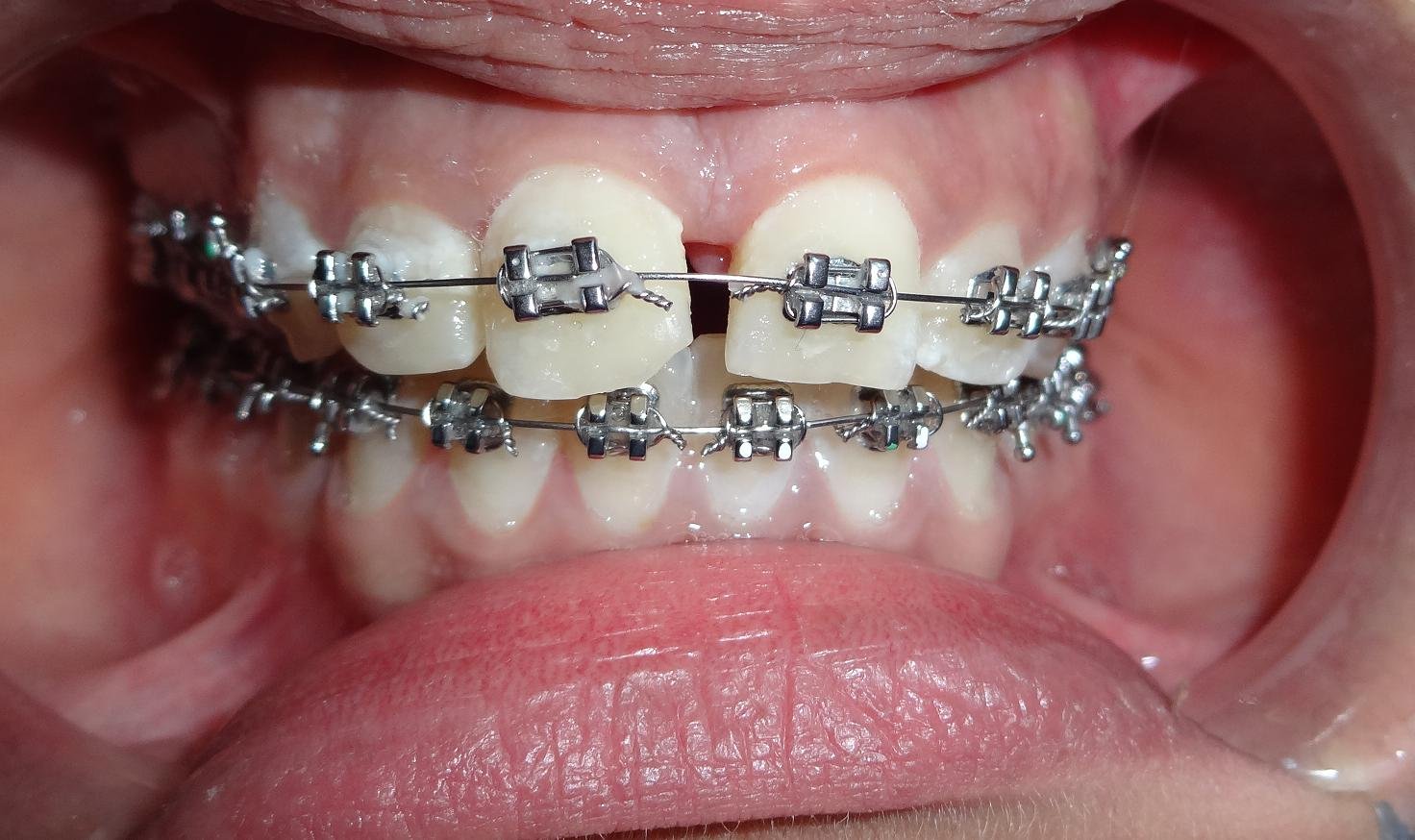
Front teeth can look tidy while the bite or jaw relationship needs a closer look. An orthodontist may assess how the top and bottom teeth meet, whether teeth are crowded or spaced, whether a tooth is coming in an unusual direction, and how the jaws relate when the child closes their mouth.
Parents do not need to diagnose these details at home. Still, it can help to mention observations such as mouth breathing, difficulty biting or chewing, early or late loss of baby teeth, frequent cheek biting, thumb or finger sucking that continues, a jaw that shifts when closing, or a family history of significant crowding. These signs do not prove an orthodontic problem; they give the clinician useful context.
What happens at a first orthodontic visit
The appointment is usually an information-gathering visit. The clinician may review dental and health history, look at teeth and gums, observe the bite, and take photographs or X-rays if they are needed for an individual assessment. Ask the office beforehand what to expect and whether your child should bring recent dental records.
A good first visit should leave you with a clear answer to three questions: Is there a concern now? What should we watch? When should we return? If treatment is suggested, ask what problem it addresses, what could happen if you wait, and whether there are reasonable alternatives.
Possible outcomes after the check
Observation only
This is common. The orthodontist may suggest a follow-up in six, nine or twelve months while permanent teeth and jaw growth continue. Keep the recommended review date, even if your child has no pain and their smile still looks unchanged.
Dental care or a referral
Sometimes the next step is simply routine dental care, a check for a missing or extra tooth, or coordination with your family dentist. An orthodontist may also recommend discussing a medical or airway concern with the appropriate clinician rather than trying to manage it through orthodontic treatment alone.
Early treatment discussion
For some specific bite, jaw or eruption concerns, a clinician may discuss early treatment. The details and timing are individual. Ask for plain language: what is being treated now, what will still need to wait until more permanent teeth arrive, and how the plan will be monitored. Do not assume that an early appliance means a child will avoid all later orthodontic work.
Questions to bring to the appointment
- What are you checking that I cannot see just by looking at the front teeth?
- Does my child need treatment now, monitoring, or a routine return visit?
- What changes should make us call sooner?
- How does jaw growth affect the timing?
- Are any X-rays necessary today, and what information will they provide?
- Should we keep seeing our family dentist on the usual schedule?
- If treatment is recommended, what is the goal, the expected duration, the risks and the alternatives?
How to prepare a seven-year-old without creating worry
Use simple, accurate language: “This dentist looks at how teeth and jaws are growing. They will count and look at your teeth, and we will find out whether we need to do anything now.” Avoid telling a child they are getting braces before a clinician has made a recommendation. Bring a comfort item if the office allows it, and let your child know they can say if something feels uncomfortable or confusing.
It also helps to separate oral care from appearance. Brushing with fluoride toothpaste as advised by the child’s dentist, flossing where teeth touch, regular dental visits and a balanced diet support oral health whether or not orthodontic treatment is ever needed.
When to call the dental office sooner
Contact your child’s dentist or seek prompt dental advice for dental pain, a knocked-out or broken tooth, swelling, signs of infection, a facial injury, or a sudden change that worries you. Those are not concerns to wait on until a routine orthodontic screening. Follow local urgent-care guidance for a serious injury or swelling that affects breathing or swallowing.
The bottom line
A 7 year old first orthodontist visit can be useful even when teeth look straight because the check considers jaw growth, bite and developing teeth—not just the visible smile. It is an opportunity to get clear information, not a commitment to braces. Keep regular dental care, ask practical questions, and use the orthodontist’s timing advice for your individual child.