Parents often ask when can baby sit in a shopping cart because a cart seat can seem like an easy next step once an infant is curious about the store. There is no single birthday that makes every baby ready. A safer answer starts with the child’s ability to sit steadily and the instructions for that particular cart.
For many babies, shopping-cart-seat readiness comes sometime in the second half of the first year, but development varies. This guide is general safety education, not an assessment of your child. If you are unsure about your baby’s sitting skills, muscle tone, health, or the cart’s instructions, use an alternative and ask your pediatric clinician for individualized guidance.
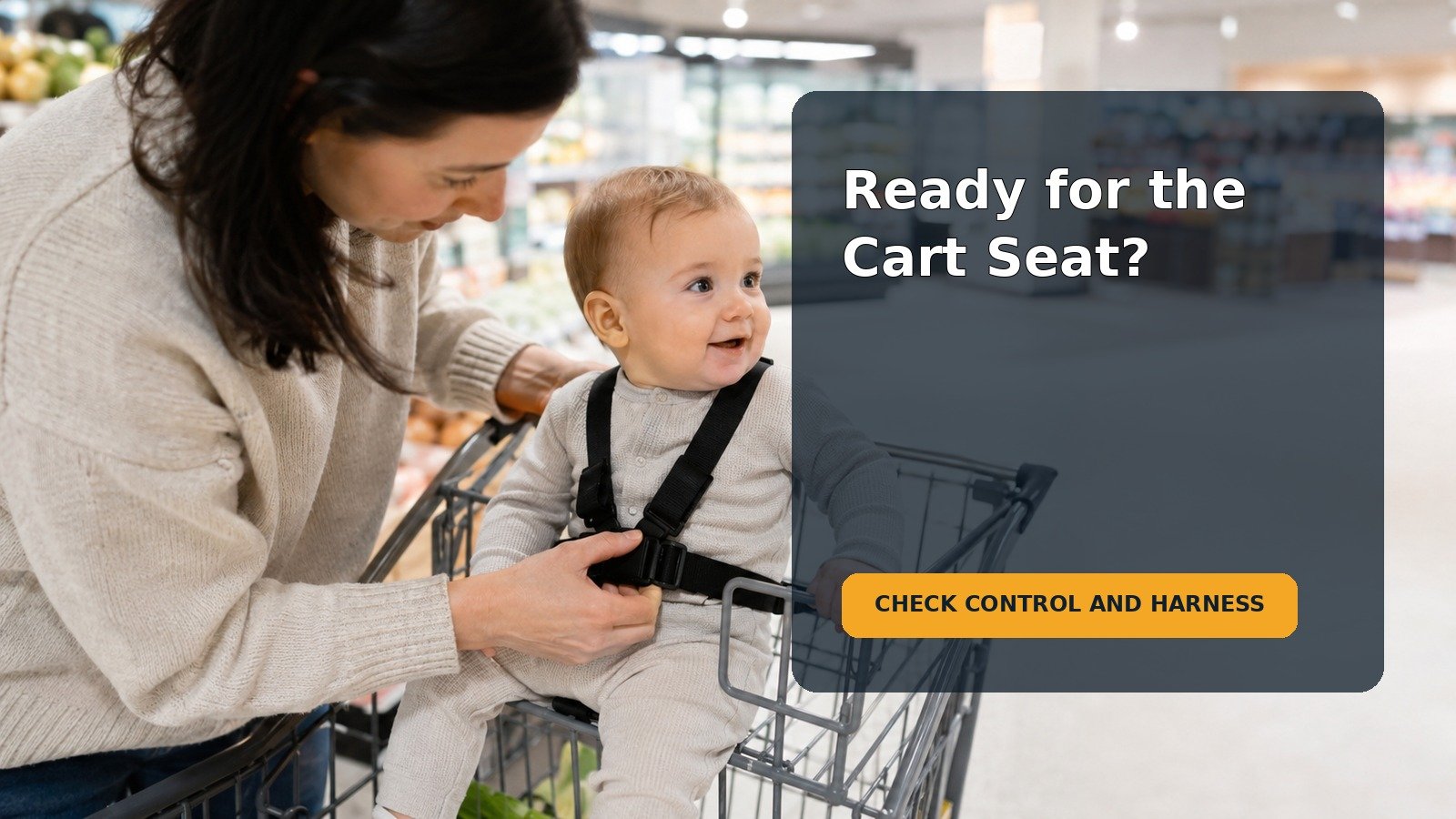
Start with the safety answer: readiness matters more than age
The Consumer Product Safety Commission warns that shopping carts can tip and that children can be injured in falls. The American Academy of Pediatrics advises using the child seat and safety belt, staying close, and never placing a child carrier on top of a cart. Those basics apply even when a baby appears comfortable for a few minutes.
Before using a cart’s child seat, check the manufacturer’s label or instructions. The cart—not a general age chart—sets its weight, height, and use limits. If the label says your baby is not ready, or if the seat or belt is damaged, choose a different option.
What stable sitting looks like in everyday terms
Look for a baby who can sit upright on the floor without being propped, hold their head steadily, and keep their trunk reasonably centered while reaching and turning. A baby who immediately slumps, folds forward, leans hard to one side, or needs your hands to stay upright is not ready for a cart seat. These signs are not a diagnosis; they are a reason to wait and use a safer arrangement.
What can change the answer
Prematurity, a recent illness or injury, a developmental concern, a bulky coat, a poorly fitting seat, and a cart without a working harness can all change the plan. A baby may sit well at home but become tired or wiggly in a noisy store. Treat readiness as something to check each trip rather than a permanent milestone.
A 60-second cart-seat check before you shop
- Read the cart label. Confirm that the seat is intended for your child’s size and that its belt and buckle work.
- Inspect the cart. Skip carts with a loose, cracked, wet, or damaged child seat, or a belt that will not latch.
- Check your baby. Use the child seat only if your baby is awake, comfortable, and able to sit steadily without help.
- Secure the harness every time. Fasten it as the cart directs, snug enough to hold your baby in place without pinching.
- Plan for a change. Bring a carrier or stroller, or choose a basket/cart alternative, if your baby becomes tired or unsettled.
The practical plan for a short, safer trip
Step 1: Start small
Try a brief, low-pressure trip when your baby is rested and fed. Stand close to the cart and keep one hand available during turns, stops, and loading. A short success is more useful than pushing through a long trip after your baby has had enough.
Step 2: Keep your baby in the fitted child seat
Use the seat built into the cart and the harness provided. Do not place an infant carrier, car seat, basket, or booster on top of the cart. Do not let an older child ride in the basket, stand on the frame, push the cart, or climb on it while a baby is seated. Extra movement can make a cart unstable.
Step 3: Stay within reach
Never leave your baby alone in the cart, even for a moment. If you need to reach for an item that is far away, take the cart with you or ask for help. Avoid hanging heavy bags from the handle, overloading one side, or using the cart as a place for a baby to nap.
Common mistakes and safer alternatives
- “They are almost sitting, so this will help them practice.” A shopping cart is not a safe place to practice sitting. Wait for stable floor sitting.
- Skipping the belt for a quick stop. Buckle the harness for every trip, including a one-item errand.
- Using the basket when the seat feels too small. The basket is not a safer substitute for a baby who is not ready for the child seat.
- Putting a carrier on top. Use a stroller, a wearable carrier, or another store-approved option instead.
- Trying to manage a tired or upset baby in the cart. End or adapt the trip rather than relying on a position that is no longer working.
When to choose another option
A stroller, a properly used wearable carrier, curbside pickup, or shopping with another adult can be a better fit when your baby cannot yet sit steadily, falls asleep, is recovering from illness, or the available carts are in poor condition. The safest choice is the one that matches both your baby’s current abilities and the equipment in front of you.
When to ask for professional advice
Bring up sitting readiness with your pediatric clinician if your baby consistently cannot sit with support or seems unusually floppy, stiff, uncomfortable, or asymmetric. Ask promptly about new loss of skills, persistent pain, injury, breathing trouble, feeding concerns, or any developmental change that worries you. For an immediate injury or urgent health concern, seek urgent medical care.
A one-page shopping-cart safety checklist
- My baby can sit upright with stable head and trunk control.
- I checked the cart’s label and the child seat is intact.
- The fitted harness is fastened correctly.
- My baby is in the child seat, not the basket or an infant carrier on top.
- I will stay within reach and keep the cart with me.
- No one will climb, ride, or hang bags on the cart.
- I have a stroller, carrier, or exit plan if my baby is tired or not settled.
FAQ
Can a baby use a shopping-cart seat before they can sit alone?
No. If a baby still needs propping to sit or cannot hold a stable upright position, use a safer alternative. The cart seat should not be used to teach or test sitting.
Is the harness really necessary if I am holding the handle?
Yes. The harness is part of the seat’s safety system. Stay close as well, because a harness does not prevent every fall or tip hazard.
Can I put a car seat on top of the cart?
No. The AAP advises against it because the cart can become unstable. Use the cart’s fitted child seat only when your baby is ready and it is within its instructions.
The bottom line
When you are deciding when can baby sit in a shopping cart, choose stable independent sitting, a fitted harness, and the cart maker’s instructions over a specific age. If any part of that check is uncertain, waiting and using another option is the safer call.