Hearing that your child is picked last in PE can hurt. For an eight- or nine-year-old, it can quickly become a story about being “bad at sports” or not belonging. Yet one selection moment does not tell you why it happened or what your child needs. The most useful response to a child picked last in PE is calm, specific and collaborative: listen without minimizing, check whether the experience is safe, and work with the school on an inclusive way forward.
The goal is not to make every child equally skilled or to demand that classmates become friends. It is to make sure your child can participate with dignity, learn skills, and get adult help if exclusion, bullying, disability access, or unsafe conduct is involved.
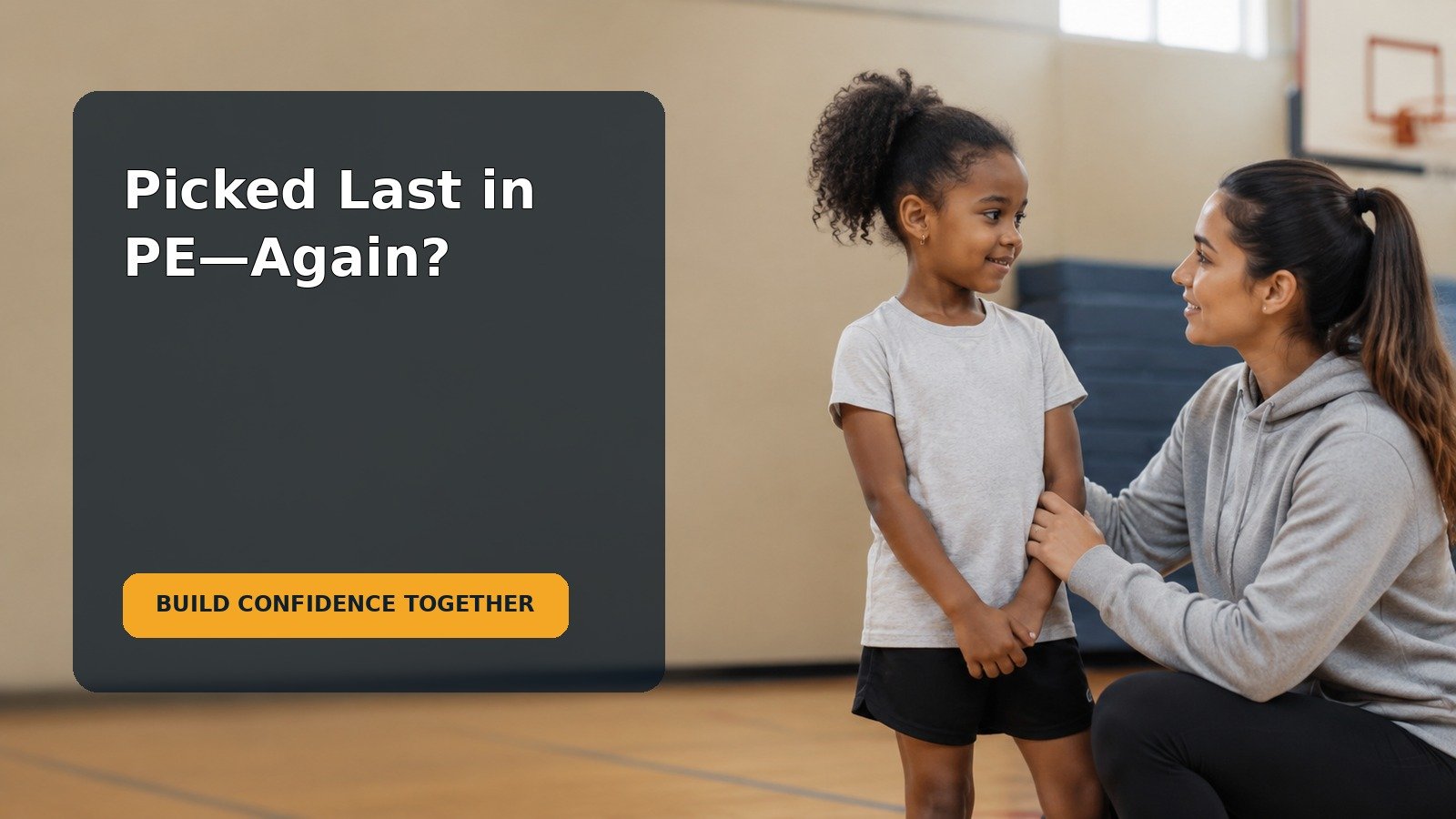
Start with the immediate question: what happened, and how did it feel?
What can be typical at 8–9 years
At this age, children notice comparisons more sharply. Team games can make speed, coordination, confidence, social status, and familiarity with rules visible all at once. A child may be selected late because captains chose close friends, because the game rewards a particular skill, or because adults allowed a rushed routine. None of those explanations makes a repeated experience harmless, but it does mean you do not need to decide the cause from one report.
Choose a quiet time and lead with curiosity: “I heard choosing teams was hard today. What happened from the beginning?” Then listen. Avoid replies such as “It does not matter” or “Just get better at sports.” They can make a child feel they must carry the problem alone.
Details that change the next step
- Was this a one-time event or a repeated pattern?
- Was your child sad, embarrassed, frightened, angry, or mostly unbothered?
- Were names, insults, threats, physical contact, or deliberate rule changes involved?
- Does your child avoid PE, complain of headaches or stomachaches, or dread school?
- Could an injury, disability, sensory need, language barrier, or unfamiliarity with the activity affect access?
Do not ask your child to diagnose classmates’ motives. Write down their exact words, the date, activity, adults present, and any observable change in mood or attendance. Specific information helps the school respond without turning a concern into gossip.
Do a calm first-step check
Safety comes before confidence coaching
Ask directly but gently whether anyone has been calling names, blocking participation, taking equipment, threatening them, touching them in a way that feels unsafe, or telling them to keep secrets. Repeated targeted exclusion can be a safeguarding or bullying concern, not a lesson in resilience. If your child reports immediate danger, threats, physical harm, harassment, or fear of retaliation, contact the school promptly through its safeguarding process and follow local emergency guidance when necessary.
If there is no urgent concern, ask the PE teacher for observation before conclusions. A short note can say: “My child has reported being picked last in PE and feels discouraged. Could you discreetly observe team selection and participation for the next few lessons, including how teams are formed and whether they have a meaningful role? I would appreciate a brief conversation about inclusive options.”
What to observe or verify
| What staff can observe | Why it matters |
|---|---|
| How teams are formed and whether the same children are repeatedly last | Public captain picks can amplify social hierarchy and leave patterns hidden. |
| Whether every child receives instruction, equipment and a role | Participation is more than being placed on a team. |
| Peer language, laughter, gestures and response from adults | This separates ordinary disappointment from targeted mistreatment. |
| Physical, sensory, medical or access barriers | Activities may need adaptation or an accommodation conversation. |
| What helps your child join in | Useful support can be built from strengths, not labels. |
A practical plan for confidence and inclusion
Step 1: prepare expectations at home
Tell your child: “You deserve to be treated respectfully and to have a way to take part. Being chosen late does not measure your worth.” Ask them to pick one manageable goal for the next class: learning one rule, asking the teacher a question before the game, practicing a movement for five minutes, or identifying one activity they enjoy. Keep the goal about access and effort, not becoming the best player.
Brief practice can build familiarity without turning home into another tryout. Throwing a soft ball, walking together, dancing, swimming, or practicing balance can all support comfort with movement. Follow your child’s interests, health needs and access to safe space. The CDC notes that schools have an important role in supporting physical activity; inclusive PE should make room for different abilities and starting points.
Step 2: ask for the lowest-pressure school change
Ask the teacher what team-selection method is used and whether it can change. Private teacher-made teams, numbered groups, stations, cooperative challenges, rotating roles, or random grouping can reduce the public ranking that captain picks create. These are not special favors for one child; they can improve the climate for the whole class.
Use a collaborative script: “We are not asking anyone to lower expectations. We are hoping for a routine that lets every child enter the activity without public ranking. What grouping method and skill support would be realistic in your class?” If your child has a documented disability or health need, ask the school’s appropriate support team how participation and accommodations are handled; do not assume an informal promise replaces the school’s process.
Step 3: review, then adjust
Set a review point after two or three PE lessons. Ask the teacher what they observed and ask your child one short question: “Did anything make PE feel easier or harder?” Notice effort and information, not popularity: “You told the teacher what you needed,” or “You kept trying after the first round was hard.” If the pattern continues, ask for a meeting with the PE teacher and classroom teacher or school support professional to agree on specific actions and a follow-up date.
Common mistakes and better alternatives
Avoid shame, secrecy and all-or-nothing rules
- Instead of: “You have to toughen up.” Try: “We can take this seriously without deciding you did anything wrong.”
- Instead of: confronting other children or families, try: asking the school to observe and address the setting.
- Instead of: demanding your child be a captain, try: requesting a fair, less public grouping routine.
- Instead of: enrolling your child in intensive sport solely to fix the problem, try: offering enjoyable movement choices and skill practice they actually want.
Do not promise that everyone will choose your child next time. Promise what you can control: you will listen, take safety seriously, and keep working with adults until there is a reasonable plan for participation.
When to involve additional support
Routine questions to raise
Schedule a conversation with the teacher or school support team when late selection is repeated, your child wants help entering activities, PE grades or attendance are affected, or there may be an access need. A pediatrician or qualified clinician can help if pain, breathlessness, injury, developmental concerns, anxiety, or broader mood changes affect participation. One difficult PE experience does not establish a diagnosis.
Red flags that deserve prompt action
Seek prompt school action for repeated humiliation, slurs, threats, physical aggression, coercion, discriminatory comments, retaliation, or exclusion linked to a disability or protected characteristic. Seek urgent mental-health support if your child talks about self-harm, suicide, or not wanting to live; in the United States, call or text 988, or use local crisis and emergency services elsewhere.
A one-page parent checklist
Before the next PE class
- Listen to your child’s account without labeling them or their peers.
- Record dates, activity, exact words and any safety concerns.
- Ask what one small support would feel useful.
- Contact the teacher with a factual request for discreet observation.
During the school plan
- Ask how teams are formed and whether every child has a meaningful role.
- Request inclusive grouping rather than public captain picks when appropriate.
- Confirm one adult your child can approach.
- Keep the child’s information private and avoid recruiting peers as “helpers.”
What success can look like
Success is not necessarily being chosen first. It can mean entering class with less dread, knowing the activity rules, receiving respectful instruction, taking part safely, trying a new role, and trusting that adults will respond to mistreatment.
Frequently asked questions
Is being picked last common at this age?
Team selection can feel especially visible at eight and nine, but repeated public ranking should not be dismissed as inevitable. Ask what is happening, how it affects your child, and what the teacher can change in the activity design.
What should I do first?
Listen, check for safety concerns, and ask the teacher for discreet observation. A clear picture of team formation and participation is more useful than assumptions.
How long should we try the plan?
Review after two or three lessons, or sooner if distress or safety concerns increase. If a change is not helping, revise it with the school rather than asking the child to endure it.
What if my child refuses PE?
Take the refusal seriously without forcing a full explanation in the moment. Inform the school, ask about safety and access, and discuss broader anxiety, pain or mood concerns with an appropriate health professional.
Sources
This article provides general education, not a diagnosis, safeguarding investigation, individualized legal advice, or a substitute for school policy and professional guidance.