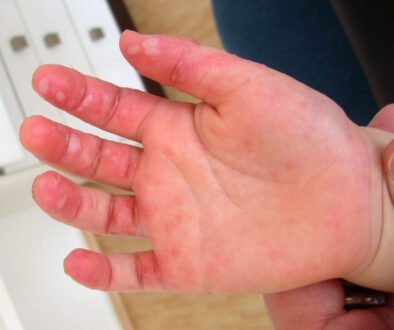
Newborn peeling skin can be startling, especially when you are looking at every tiny change in the first days at home. Mild flaking or peeling is common in many newborns and often settles as the skin adjusts after birth. Still, a newborn is different from an older child: some skin changes need prompt medical advice. This guide explains gentle care and clear warning signs; it cannot diagnose your baby.
Call your baby’s clinician promptly if you are worried. Seek urgent medical care for a baby under 3 months with a rectal temperature of 100.4°F (38°C) or higher, or for skin with blisters, pus, spreading redness, marked tenderness, purple spots, or a baby who looks or acts unwell.
Why newborn skin may peel
Newborn skin has spent months in fluid and then suddenly adapts to air, clothing, bathing and changing temperatures. Peeling is often most noticeable on hands, feet, ankles or wrists. Babies born after their due date may peel more, but any newborn skin change deserves attention if it is severe, spreading, or paired with illness.
Peeling alone does not tell you the cause. It may be a normal transition, dry skin, irritation, or part of a rash. That is why it is better to describe what you see to a clinician than to try to label it from photos online.
Gentle care for mild, dry-looking peeling
Keep the routine simple
- Use short baths in lukewarm water rather than long, hot baths.
- Use a mild, fragrance-free cleanser only when needed; plain water is often enough for much of a newborn’s body.
- Pat skin dry instead of rubbing.
- If your clinician agrees, use a simple fragrance-free baby moisturizer on dry, intact skin after bathing.
- Choose soft, clean clothing and avoid strongly scented laundry products on items that touch the skin.
Do not pull or scrub loose skin. Avoid exfoliants, essential oils, adult acne products, medicated creams, or home remedies unless your baby’s clinician specifically recommends them. Newborn skin is delicate, and a product that is harmless for an adult can irritate a baby.
What to watch for
Take note of where the peeling is, whether the skin is red or warm, whether there are cracks, sores, yellow crusts, blisters or fluid, and how your baby is feeding and behaving. A clear, well-lit photo can help you describe a changing area to your clinician, but do not let a photo delay care if your baby seems ill.
Call the pediatrician today or ask for prompt advice when
- the peeling is extensive, rapidly worsening, painful, bleeding, or the cause is unclear;
- you see spreading redness, swelling, pus, yellow crusts, open sores, pimples or blisters;
- the skin looks infected or your baby is unusually sleepy, difficult to wake, feeding poorly, or not acting like themselves;
- a rash appears with a fever, especially in a baby under 3 months;
- you are unsure whether a product or treatment is safe to use.
When care is urgent
Get urgent medical help for a newborn with fever, trouble breathing, a very weak cry, difficulty waking, poor feeding with illness signs, rapidly spreading redness, purple or bruise-like spots not caused by an injury, or large blisters or skin peeling in sheets. If a chemical has touched the skin or eyes, follow local poison-control or emergency guidance immediately.
A calm check-in plan
- Look at the skin in daylight and notice the location and any redness, fluid, sores or blisters.
- Check how your baby is feeding, waking and behaving.
- Keep care gentle: brief lukewarm baths, pat dry, no picking or scented products.
- Contact the pediatrician for anything unclear, worsening or concerning.
- Seek urgent help for fever or any serious illness or skin warning sign.
The bottom line
Newborn peeling skin is often a temporary adjustment, and gentle, low-product care is usually the safest approach for mild dry-looking flaking. But newborns need a low threshold for medical advice. If you see infection signs, blisters, extensive peeling, fever, or a baby who seems unwell, call promptly rather than waiting to see if it improves.