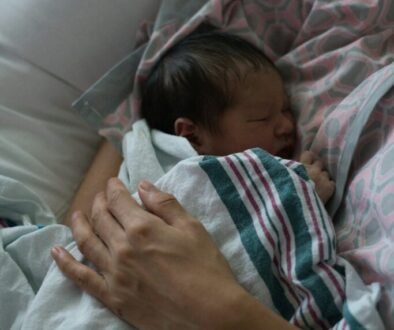
Newborn umbilical cord stump care is usually less complicated than it first feels. After the cord is cut, the small stump dries, changes color, and falls away on its own. Your job is mostly to keep the area clean and dry, protect it from rubbing, and know which changes deserve a call to your baby’s clinician.
Every newborn is different, and this guide cannot assess your baby from a distance. For a baby under 3 months old, contact the pediatrician promptly if your baby seems unwell, has a fever, or the skin around the cord looks infected.
What is normal while the stump heals?
The stump often starts shiny and yellowish, then becomes brown, gray, or nearly black as it dries. It may look smaller and a little loose before it separates. It commonly falls off within the first few weeks; the American Academy of Pediatrics says it should be dry and off by about 3 weeks.
A few drops of blood on the diaper or a small spot after the stump comes off can be normal. The area may also have a small amount of clear or slightly bloody moisture as it finishes healing. What matters is the pattern: a tiny spot that stops is different from ongoing bleeding, spreading redness, or a baby who is uncomfortable or ill.
The simple daily care routine
1. Wash your hands first
Wash your hands before touching the cord area. You do not need to handle the stump often. Looking is enough most of the time.
2. Keep the stump clean and dry
Routine newborn umbilical cord stump care does not usually require alcohol, ointment, powder, or a bandage. The AAP recommends keeping the stump clean and letting it dry naturally. If urine or stool gets on it, gently clean the area with plain water and pat it dry. Follow any different instructions from your maternity team if they gave you a specific plan.
3. Fold the diaper below the stump
Turn the front edge of the diaper down so air can reach the stump and the diaper does not rub or soak it with urine. If a newborn diaper has a cord notch, use it. Change wet or soiled diapers promptly.
4. Choose loose, breathable clothing
A loose bodysuit or clean diaper is usually enough. Avoid tight waistbands that scrape the area. Do not cover the stump with a coin, tape, belly band, or any home-made dressing.
5. Let it fall off by itself
Do not pull, twist, or pick at the stump, even when it is hanging by a thread. Let it separate on its own. After it comes off, keep the navel clean and dry while the skin finishes healing.
Bathing while the stump is attached
A sponge bath can make it easier to keep the stump dry until it falls off. Clean your baby’s face, neck folds, hands, diaper area, and skin with a soft cloth and warm water, then pat dry. If the stump gets wet accidentally, gently pat it dry rather than scrubbing it.
Ask your baby’s clinician if you received different bathing guidance because of your baby’s birth, medical history, or local hospital practice.
When to call the pediatrician
Umbilical cord infection is uncommon, but it needs medical treatment. Contact your baby’s clinician promptly if you notice:
- redness that spreads from the base of the cord onto the surrounding skin;
- foul-smelling yellow discharge, pus, or a growing amount of drainage;
- swelling, tenderness, or your baby crying when the area is touched;
- active bleeding that does not stop with gentle direct pressure;
- a red streak moving away from the navel;
- a fever of 100.4°F (38°C) or higher in a baby younger than 3 months; or
- a baby who is feeding poorly, unusually sleepy, difficult to wake, or seems unwell.
For severe symptoms, rapidly spreading redness, significant bleeding, or a newborn who looks very ill, seek urgent medical care. Do not wait for the stump to fall off or try to treat a possible infection at home.
What if the stump is still there?
If the stump has not fallen off by about 3 weeks, call the pediatrician for advice. It may still be harmless, but the clinician can decide whether your baby needs an examination. After the cord falls off, a small moist red bump in the navel can be an umbilical granuloma. It is not something to treat yourself; a pediatric clinician can tell you whether it needs care.
What not to use
- No routine alcohol or peroxide: these can interfere with natural drying unless your clinician specifically says to use them.
- No powders, herbs, oils, or ointments: they can irritate the skin or make it harder to notice drainage.
- No bandages or belly wraps: the stump needs air and should not be pulled.
- No tugging: even a nearly detached stump should come away on its own.
A quick checklist for the first weeks
- Look at the stump during diaper changes.
- Keep it clean and dry; use plain water only if it gets soiled.
- Fold the diaper down and use loose clothing.
- Let the stump fall off without pulling it.
- Watch for spreading redness, bad-smelling discharge, tenderness, fever, or ongoing bleeding.
- Call the pediatrician if the stump remains after about 3 weeks or if anything seems wrong.
The bottom line
Newborn umbilical cord stump care is mostly dry cord care: clean hands, a folded diaper, air, and patience. Color changes and a few tiny blood spots around separation can be normal. Spreading redness, foul-smelling discharge, tenderness, active bleeding, fever, or a baby who seems unwell are not wait-and-see signs—contact your baby’s clinician promptly.