A newly licensed teen may be eager to help by driving younger siblings. That wish can be generous—and it can also add a demanding passenger to the least-experienced driver in the family. The safest answer is not an automatic yes or no. First confirm what the teen’s license allows where you live, then make a short, written plan that earns the privilege in small steps.
This guide is general education, not a substitute for local law, insurance terms, or individualized driving instruction. Passenger restrictions, nighttime rules, and minimum licensing ages vary by jurisdiction. A parent should check the teen’s actual license class and the current rules before any sibling ride.
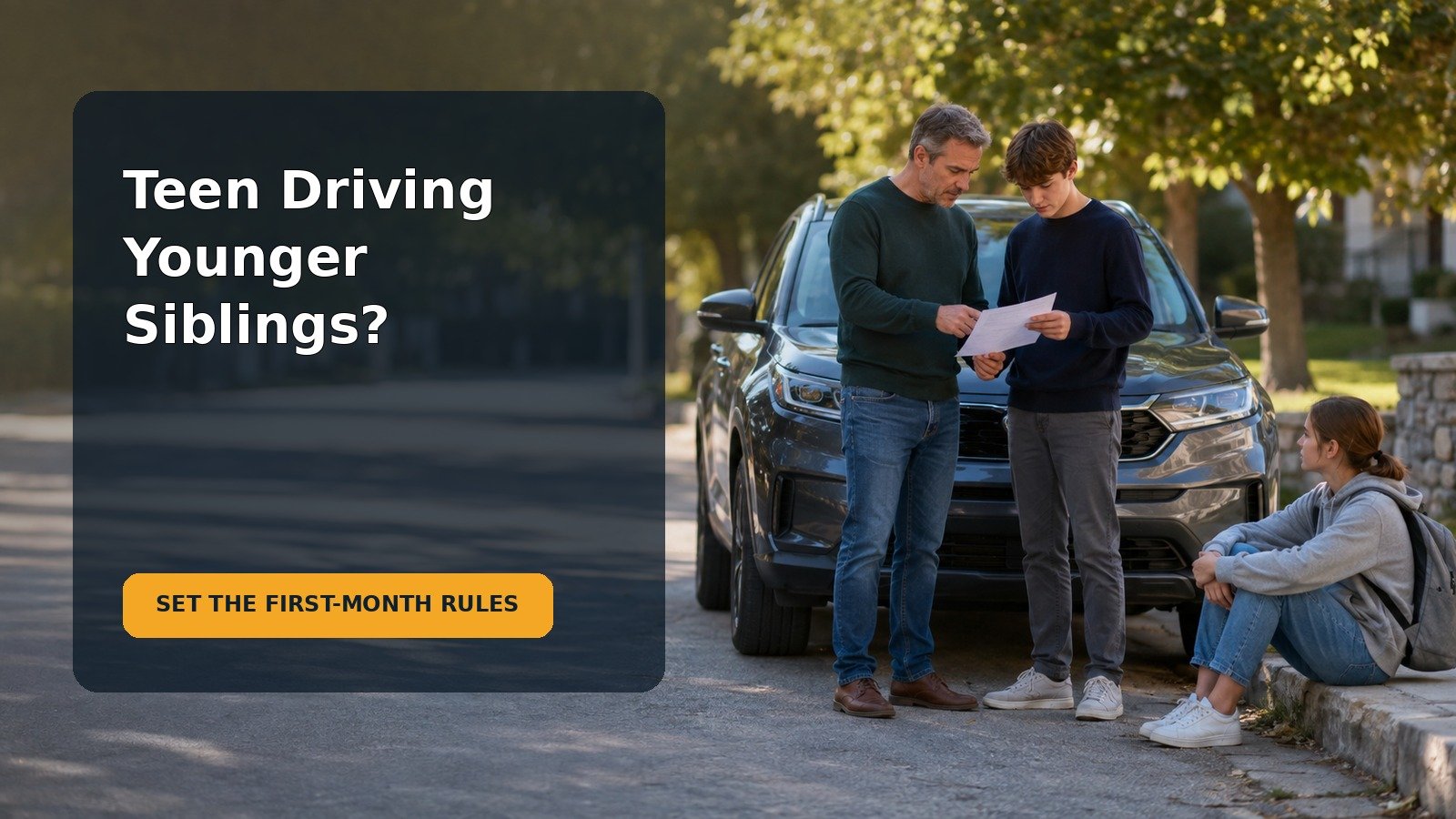
Start with the immediate safety question
New drivers are still building the routines that make driving safer: scanning ahead, judging gaps, managing speed, and responding without panic. A younger passenger can add noise, questions, conflict, or a last-minute distraction. That does not mean a teen is irresponsible; it means the driving task deserves a gradual approach.
Before agreeing, confirm four basics: the teen has the right license for the trip; local graduated-driver licensing rules permit younger passengers; the vehicle is insured and has a working seat belt for every rider; and each younger child can use the correct restraint for their size and age. If any answer is unclear, pause the plan and check with the licensing authority, insurer, pediatrician, or certified child-passenger-safety technician as appropriate.
What changes the answer for your family
Consider the teen’s actual solo-driving experience, not only the date on the license. Night driving, rain, unfamiliar routes, school pickup traffic, a large vehicle, and multiple passengers all raise the difficulty. So can a sibling who is very young, needs a car seat, has a medical need, or is likely to unbuckle or distract the driver. A family may reasonably decide that sibling rides wait until these conditions are simpler.
A calm first-step check
Look at the law and the license together
Graduated-driver licensing laws often limit who a new driver may carry and when they may drive. Those limits can change with age, months licensed, supervision, and the relationship of the passenger. Do not rely on a friend’s rule, a social-media post, or an old handbook. Read your state or provincial licensing page and the restrictions printed with the teen’s license.
Check the ride, not just the driver
- Is the route familiar, short, and mainly daytime?
- Will every passenger have an individual seat belt or the correct child restraint?
- Will the teen drive a vehicle they have practiced in?
- Is the weather calm and is there enough time to avoid rushing?
- Is an adult available by phone and able to collect everyone if plans change?
If the trip begins with a rushed pickup, an argument, low fuel, bad weather, or a tired driver, the agreement should make the answer easy: use another ride today.
The first-month passenger-safety agreement
Put the agreement in writing and keep it brief enough to use. The goal is clarity, not surveillance. Review it with the teen, invite questions, and adjust it only after safe practice—not after pressure from a schedule.
Step 1: Begin with low-distraction practice
For the first two weeks, limit sibling rides to one younger sibling at a time, daylight, dry conditions, and a familiar route. A parent or another qualified adult can ride along for initial trips if local rules allow. Start with a five- to ten-minute errand rather than a busy school pickup or highway drive.
Practice the passenger routine before the car moves: everyone buckles up, bags stay on the floor or in the cargo area, the driver sets navigation and music before shifting into gear, and phones are put away. The driver does not troubleshoot a device, answer a text, or turn around to manage a sibling while moving.
Step 2: Set non-negotiable boundaries
- Seat belts and restraints: The car does not move until every rider is correctly secured. A teen should not install or adjust an unfamiliar child restraint without adult instruction.
- Phones: No handheld phone use by the driver. Put the phone on Do Not Disturb or out of reach before departure.
- Passengers: No extra friends, horseplay, shouting, or front-seat exceptions that conflict with the law, vehicle manual, or a child’s restraint needs.
- Impairment: No driving after alcohol, cannabis, illegal drugs, or any medicine that may impair driving. A parent should review prescription warnings with a clinician or pharmacist.
- Conditions: No sibling rides in severe weather, when the driver is overly tired, or on routes the family has not yet approved.
Step 3: Give the teen a no-penalty exit
A safety agreement works only if the teen can use it. Try this script: “If the car feels too busy, the weather changes, or you make a wrong turn, call us. We will help you solve the ride home. Calling is the safe choice, not a reason to get in trouble.”
Plan for a practical response: pull into a safe, legal place; keep the younger passenger with the teen in the locked vehicle if that is safer than leaving them alone; and call the designated adult. For a crash, injury, immediate danger, or an unsafe person nearby, call local emergency services first.
Review after every ride
For the first month, use a two-minute check-in: What went smoothly? Was the passenger settled and buckled? Did the route feel manageable? Was there any moment the teen felt rushed or distracted? A calm debrief helps the teen notice risk without feeling shamed.
Advance only one factor at a time. After several smooth daytime rides, a family might add a slightly longer familiar route. Keep nighttime, poor-weather, highway, and multi-passenger trips separate decisions. More freedom should follow demonstrated safe habits and local-law compliance, not a birthday or a sibling’s request.
Common mistakes and better alternatives
“They are family, so the passenger rule does not matter.”
Family status does not automatically change a licensing restriction. Check the current rule and follow the stricter interpretation until you receive reliable confirmation.
Using the teen as the default backup caregiver
Driving a younger sibling can be a voluntary privilege, not an obligation. Avoid making the teen responsible for regular childcare, complex pickups, or a sibling’s behavior while they are still learning to drive.
Focusing only on the teen’s behavior
Prepare younger siblings too. Explain that the driver needs a quiet car, that seat belts stay fastened, and that they should ask for help after the vehicle is parked. For a young child, an adult may need to decide that the ride is not yet appropriate.
When to pause and get more help
Pause sibling rides after any near miss, speeding citation, seat-belt refusal, distracted-driving incident, crash, or repeated rule-breaking. A pause is a chance to rebuild skills with a qualified instructor or a parent—not a label that the teen is “bad at driving.”
Ask a driving instructor about extra practice when the teen is anxious, avoids certain conditions, or has difficulty with scanning, merging, parking, or managing distractions. For child-restraint questions, seek a certified child-passenger-safety technician. For questions about licensing or insurance, use the relevant agency or insurer rather than guessing.
First-month checklist
- Verify the teen’s license, passenger limits, curfew, and supervision rules.
- Confirm insurance coverage and the vehicle’s maintenance, fuel, and tire condition.
- Check every passenger’s seat belt or age- and size-appropriate restraint.
- Start with one sibling, daylight, good weather, and a familiar short route.
- Set phones, navigation, and music before the vehicle moves.
- Choose an adult contact and a no-penalty call-for-help plan.
- Debrief after each trip and add difficulty only after safe practice.
Frequently asked questions
Can a teen drive younger siblings as soon as they are licensed?
Possibly, but only if local rules permit it and the family believes the specific trip is safe. A license is not a universal permission for every passenger, route, or condition.
What if my teen says the younger sibling is distracting?
Take that report seriously. Reduce the task: postpone the ride, use an adult driver, or return to short supervised practice. A teen who asks for help is showing good judgment.
Should siblings ride in the front seat?
Follow local law, the vehicle manual, and child-passenger-safety guidance. Younger children often belong in the back seat, and the right position depends on their age, size, restraint, and the vehicle.
Sources
- National Highway Traffic Safety Administration: Teen Driving
- NHTSA: Parents—Talk With Your Teen Driver About Safe Driving
- Insurance Institute for Highway Safety: Teenagers
Safety note: This article offers general information. Licensing, passenger, restraint, and insurance requirements vary. Check the current rules that apply to your driver, vehicle, and location before the trip.