A tween who asks to babysit a younger sibling may be showing care, confidence or a wish for more responsibility. That interest is worth taking seriously—but it is not, by itself, a readiness test. Tween babysitting a younger sibling is safest when parents make a decision based on the younger child’s needs, the tween’s skills, the setting, and the laws or guidance that apply where the family lives.
This article offers general family-safety education, not individualized legal, medical or childcare advice. A short, supervised practice period is usually a more useful first step than an immediate yes or no. If a younger child has health, behavior, communication or safety needs, ask the child’s clinician or another qualified local professional what support is appropriate.
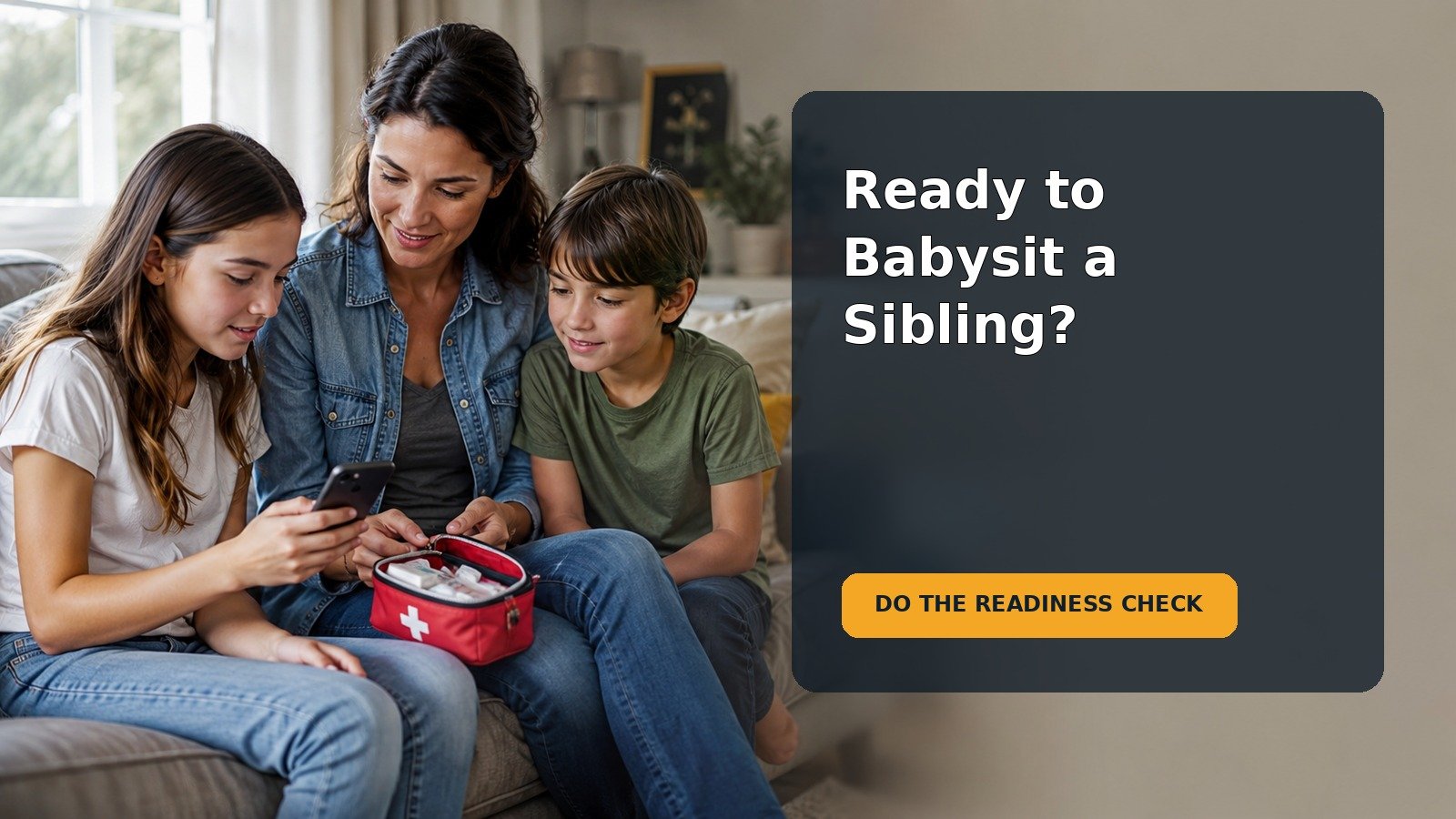
Start with the parent’s immediate question
The useful question is not “What age is old enough?” There is no single age that makes sibling care safe in every home. Instead ask: Can this tween follow a plan under mild pressure? Can they get help quickly? Is the younger sibling likely to accept their direction? And does the proposed arrangement meet local rules and the family’s insurance, building or program requirements?
What may be typical at ages 10–12
Many tweens can learn household routines, basic first-aid awareness, safe phone use and how to get an adult. They are still developing judgment, attention and their ability to handle surprises. That is why a parent should remain close, start with brief practice, and avoid giving a tween responsibility for emergencies, medication, bathing, cooking with heat, transportation, or a child whose needs exceed the tween’s training.
What changes the answer
Consider the younger sibling’s age, sleep and toileting needs, ability to communicate, history of bolting or aggression, allergies, medical needs, and response to the tween’s direction. Also consider the tween’s own comfort, reliability, ability to stay calm, willingness to call for help and whether they can focus without a device. A reluctant tween should not be persuaded to take on care to solve an adult scheduling problem.
A calm first-step check
Observe a normal routine together
Before leaving siblings alone, watch the tween complete one ordinary task while you are nearby: setting up a snack that requires no heat, reading a book, helping with toys, or guiding a tidy-up. Notice whether they use a calm voice, respect the younger child’s cues and seek help rather than guessing. Treat this as practice, not a test they can fail.
Write down what must be true
- An adult is reachable by phone and can return quickly.
- The tween knows the home address, trusted neighbor or backup adult, and how to call emergency services.
- Doors, windows, pools, pets, medications, firearms, alcohol, cleaning products and other hazards are secured as appropriate.
- The plan does not include driving, bathing, administering medicine, cooking on a stove, or other higher-risk tasks.
- The family has checked applicable local laws, childcare rules and any landlord, camp or program policies.
The practical plan: supervised practice first
Step 1: Prepare the environment and expectations
Pick a low-demand time at home. Put away hazards, choose one calm activity and set a short time limit. Tell both children what the tween is responsible for and what remains the adult’s job. A simple script can help: “You are in charge of the game and letting me know if you need help. I am still in charge of safety and decisions.”
Step 2: Try the lowest-pressure action
Stay in the home at first. Then try being in the yard, with a neighbor, or on a short nearby errand only if the children managed the earlier step comfortably and a responsible adult can return promptly. Use a check-in plan: the tween sends one message at a set time and calls immediately for any worry. Do not ask them to “handle it” alone to prove maturity.
Step 3: Review and adjust
Afterward, ask each child separately: What felt easy? What felt confusing? Did anyone feel scared, ignored or bossed around? Praise specific safe choices, such as asking for help early. If there was conflict, shorten the next practice or return to adult-present care. Readiness can grow, pause or change as the younger child’s needs change.
Build an emergency and boundaries plan
Give the tween clear permission to interrupt an adult. Keep emergency numbers visible, make sure the phone is charged, and identify exactly which adult to contact first and second. Explain that secrets about injuries, unsafe visitors, online contact, fire, water, weapons, medication or a child leaving the home are never part of babysitting.
A conversation that protects dignity
Try: “I can see you want to be trusted with your sibling. Trust grows through practice, not through being perfect. We will try short shifts while I am close by, and you can call me anytime. If something feels too big, getting help is the responsible choice.”
Common mistakes and better alternatives
- Choosing by age alone: Use observed skills, sibling dynamics and the actual setting.
- Making the tween responsible for adult logistics: Keep the adult accountable for safety and backup care.
- Starting with a long shift: Build from short, supervised practice.
- Adding high-risk tasks: Keep food, bathing, medication, transportation and emergencies with adults unless qualified local guidance says otherwise.
- Using shame after a hard moment: Review calmly and change the plan rather than labeling either child irresponsible.
When to involve a professional or local authority
Ask a pediatric clinician, school nurse, childcare professional or other qualified local resource if the younger child has a medical, developmental, communication or behavior need that affects supervision. Check local government or child-welfare guidance for rules about children being left without adult supervision; these rules vary by location. Seek emergency help immediately for fire, a serious injury, a missing child, suspected poisoning, trouble breathing, unsafe violence, or any situation in which the tween cannot keep everyone safe.
A one-page parent checklist
- Have I considered both children’s needs, not just the tween’s age?
- Can the tween explain the safety plan and show how to call for help?
- Is a trusted adult reachable and able to return quickly?
- Have I removed high-risk tasks and secured hazards?
- Did we begin with a short, supervised practice?
- Did both children get a chance to say how it went?
- Have I checked the local rules that apply to our situation?
The bottom line
For tween babysitting a younger sibling, a gradual practice plan gives families better information than a blanket rule. Keep the first steps brief, low-risk and adult-supported. The goal is not independence at any cost; it is a safe experience that lets both children build confidence and lets adults remain responsible for the decisions that require adult judgment.