Starting solids is an exciting milestone, but the calendar is only one part of the decision. Most babies begin exploring food at about 6 months, when several developmental skills come together. The most useful signs baby is ready for solid foods are about posture, head control, coordination and swallowing—not how interested relatives are in offering a first bite.
This guide explains eight practical readiness signs, how to prepare a safe first meal and when to ask your pediatrician for individual advice. Development varies, especially for babies born prematurely, so use corrected age and your baby’s abilities rather than comparing them with another child.
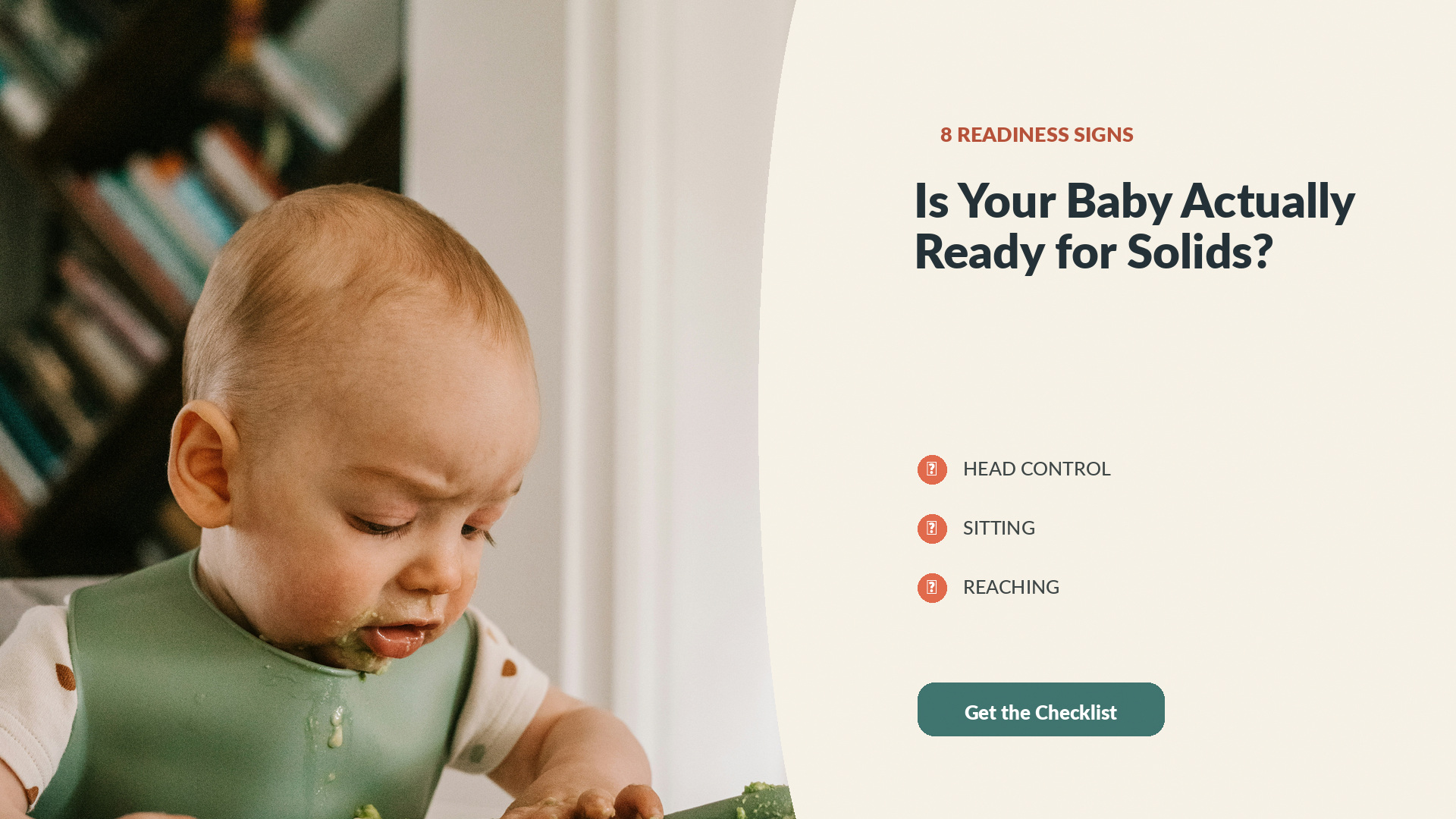
Why readiness matters more than an exact date
Solid foods require a different set of skills from drinking breast milk or infant formula. A baby needs enough stability to sit safely, coordinate reaching and bringing food to the mouth, and move food backward to swallow. Starting before those skills develop can make feeding harder and less safe.
The American Academy of Pediatrics’ HealthyChildren guidance describes beginning foods other than breast milk or formula at around 6 months and not before 4 months. “Around 6 months” is not a deadline. A healthy baby who is not quite ready may simply need more time and a conversation with their pediatrician.
Readiness also does not mean breast milk or formula suddenly becomes unimportant. During the first year, it remains the main source of nutrition while solids gradually add iron, energy, texture practice and the experience of family meals.
8 signs your baby may be ready for solid foods
Look for the following signs together. One behavior by itself—such as watching you eat—is not enough to confirm readiness.
1. Steady head and neck control
Your baby can hold their head upright and steady while seated. If the head frequently flops forward or to the side, wait and keep practicing developmentally appropriate floor play. Stable head control helps a baby manage food and maintain an open airway.
2. Sitting upright with support
Your baby does not need to sit independently on the floor, but they should remain upright in a properly adjusted high chair with appropriate support. They should not slump, recline or slide down during a meal. Check that the chair is stable and use its harness according to the manufacturer’s instructions.
3. Reaching for and grasping objects
Reaching shows growing coordination. A ready baby may deliberately reach for a spoon or a safe piece of food rather than only making random arm movements. This skill is especially useful for self-feeding, but it also supports participation during spoon-feeding.
4. Bringing objects accurately to the mouth
Babies explore with their mouths for months, so mouthing alone is not proof of readiness. What you are looking for is increasingly controlled hand-to-mouth movement: grasping an object, guiding it to the mouth and adjusting the movement when needed.
5. Less automatic pushing of food out
Young infants commonly push a spoon or food out with the tongue. As oral coordination develops, they become better able to keep a small amount of food in the mouth and move it backward. Some dribbling and mess are normal; repeated automatic pushing with no swallowing may mean your baby needs more time.
6. Swallowing a small amount instead of repeatedly coughing
With a tiny taste of smooth or appropriately soft food, a ready baby can begin coordinating the mouth and swallow. Stop if your baby is persistently coughing, appears distressed or cannot manage the texture. Never place food deep in a baby’s mouth to “help.” If feeding skills worry you, ask your pediatrician rather than continuing to test them at home.
7. Interest in participating in meals
Your baby may watch food move from plate to mouth, lean toward the table or open their mouth when a spoon approaches. Interest is encouraging, but it must be paired with the physical skills above. A 3-month-old may stare at your lunch without being developmentally ready to eat it.
8. Enough endurance for a brief, calm taste
Your baby can stay upright and engaged for a few minutes without becoming exhausted or overwhelmed. The first meal is practice, not a nutrition target. A baby who is very hungry, sleepy or upset will have a harder time learning, even when otherwise ready.
How to offer the first foods
Choose a time when your baby is alert and comfortable. Seat them upright, stay within arm’s reach and offer a very small amount. You can use a spoon, safe finger foods or a responsive combination. Follow your baby’s cues: leaning in, opening the mouth or reaching can signal interest; turning away, closing the mouth or becoming upset means it is time to pause.
Early choices can include iron-rich foods such as iron-fortified infant cereal, smoothly prepared meat, beans or lentils, alongside soft vegetables, fruits and other family foods prepared without choking hazards. Texture should match your baby’s current skill: smooth, mashed, lumpy-soft or finger-shaped pieces soft enough to break apart easily. Variety can grow gradually.
A simple first-week rhythm is one calm opportunity a day, a small taste and no pressure to finish. Continue normal breast milk or formula feeds. Appetite changes from day to day, and tasting, touching or smelling food are all part of learning.
Choking prevention must come first
Always supervise eating and keep your baby upright. The CDC’s choking-hazard guidance recommends preparing food in shapes, sizes and textures appropriate to a child’s development. Avoid hard, round or sticky foods that can block the airway, including whole grapes, whole nuts, popcorn, spoonfuls of nut butter, hard raw vegetable pieces and coin-shaped sausage or hot dog slices. Modify foods safely rather than relying on close supervision alone.
Gagging can be noisy and may include coughing, watery eyes or bringing food forward. Choking may be quiet because the airway is blocked, and a baby may be unable to cry, cough effectively or breathe. Learn infant choking first aid and CPR from a qualified course before you need it. If a baby cannot breathe, treat it as an emergency and contact your local emergency service while beginning the appropriate first-aid response.
Introducing common allergens thoughtfully
Once a baby is developmentally ready for solids, allergenic foods do not automatically need to be delayed. Offer them in an age-safe form, one at a time when practical, and watch for a reaction. For example, thin smooth peanut butter with water or familiar puree; never offer whole peanuts or a thick spoonful.
Ask your pediatrician before introducing peanut or other allergens if your baby has severe eczema, a known food allergy or another reason they may be at higher risk. Seek urgent medical help for breathing difficulty, swelling of the lips or tongue, widespread hives with other symptoms, repeated vomiting with weakness, or collapse after eating. This article cannot provide an individual allergy plan.
A safe first-meal checklist
- Your baby shows the readiness signs as a group and is about 6 months old.
- The high chair is stable, upright and used with its harness.
- An attentive adult stays within arm’s reach for the entire meal.
- The food is soft and prepared in a developmentally safe shape and texture.
- Your baby controls whether and how much to eat; there is no pressure or distraction feeding.
- Breast milk or infant formula continues as the primary nutrition during the first year.
- Caregivers know the difference between gagging and choking and have access to infant first-aid training.
When to ask a pediatric professional
Talk with your baby’s pediatrician if your baby was born prematurely and you are unsure how to use corrected age, has poor growth, struggles to sit with support, repeatedly coughs or chokes during feeds, has difficulty swallowing, shows little progress with textures, or has severe eczema or a known food allergy. A pediatrician may recommend support from a registered dietitian or feeding specialist when appropriate.
Also ask for guidance if your baby is approaching 7 months without the expected readiness skills. This does not necessarily mean something is wrong, but an individualized review is safer than forcing practice.
Frequently asked questions
Can I start solids before 6 months?
Most babies are ready at about 6 months. The AAP advises not starting before 4 months. If you are considering an earlier start, discuss your baby’s development and health with their pediatrician rather than using age alone.
What is the difference between gagging and choking?
Gagging is often noisy because air is still moving; a baby may cough and bring food forward. Choking can be silent and prevents effective breathing or crying. Preparation, upright seating, direct supervision and infant first-aid knowledge are essential.
Which food should I offer first?
There is no single required first food. An iron-rich, soft option is a practical choice. Offer a tiny amount in a safe texture and let your baby decide whether to taste it.
Should I give water with solids?
Small sips from an open cup can be part of learning once solids begin, but water should not replace breast milk or formula. Ask your pediatrician about an appropriate amount for your baby, climate and health needs.
The bottom line
The clearest signs baby is ready for solid foods appear as a group: stable head control, upright supported sitting, purposeful reaching, coordinated hand-to-mouth movement, emerging swallowing ability and interest with enough endurance for a short meal. Start slowly, prepare every texture for safety and respond to your baby’s cues. The goal is not to complete a bowl—it is to build safe, positive feeding skills one small taste at a time.