Wondering how to wean a toddler from bottle without turning every drink or bedtime into a battle? You are not behind, and you do not have to make the change overnight. For many families, a gradual plan works best: help your child learn a new cup routine while keeping meals, comfort and sleep predictable.
The timing and pace are individual. The American Academy of Pediatrics encourages a transition away from bottles around 12 to 18 months, and advises discussing a slower plan with the child’s clinician when feeding, growth, oral-motor or medical needs are involved. This guide is general education, not a substitute for personalized feeding or dental advice.
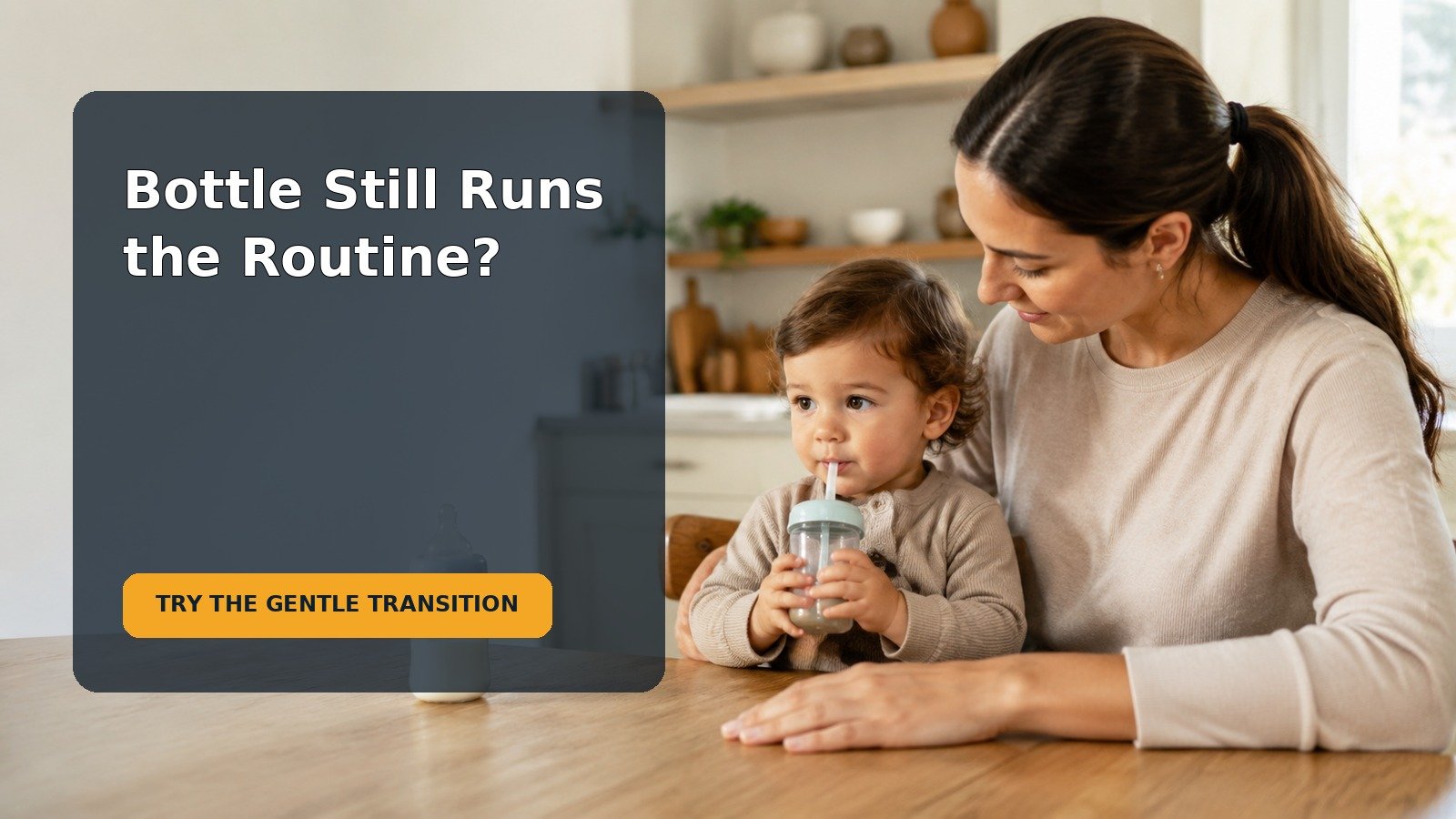
Start with a calm, practical check
A bottle can be more than a way to drink. It may signal waking up, coming home, being held, or settling for sleep. Before changing anything, notice which bottle matters most and what it provides: thirst, calories, familiarity, connection or a transition cue. That information lets you replace the routine rather than simply removing it.
What is typical at 12 to 24 months
Toddlers are learning to drink from cups, eat a broader range of foods and tolerate small changes in routine. Some move quickly; others need repeated, low-pressure practice. A child who can use a straw cup, open cup with help or another clinician-recommended cup may be ready to start with one predictable bottle of the day.
When to pause and ask for individual advice
Talk with your pediatrician, dietitian, speech-language pathologist or dentist before making a major change if your child was born prematurely, has trouble chewing or swallowing, has poor growth, relies on prescribed feeds, coughs or chokes with drinks, or has pain in the mouth. Ask about the right cup and the right milk or alternative for your child. Do not dilute feeds or substitute drinks without professional guidance.
Why a gradual bottle transition can help
Frequent bottles can make it easy for milk or other caloric drinks to crowd out meals and snacks. Sipping sweetened drinks or milk over a long period can also keep teeth exposed to sugars. The goal is not to shame a comfort habit. It is to build a safer, more flexible drinking pattern: drinks at planned times, water between meals when appropriate, and brushing as part of the bedtime routine.
For a practical overview of the transition, see the American Academy of Pediatrics’ guidance on discontinuing the bottle. For age-specific information about milk and alternatives, the CDC offers guidance on cow’s milk and milk alternatives. Recommendations can change based on health history, allergy, diet and where you live.
A gentle daytime-and-bedtime plan
Step 1: Choose one easy bottle to replace
Start with the bottle your toddler is least attached to—often a daytime bottle rather than the bedtime one. Offer the preferred cup at the same time each day, with your child sitting down if possible. Keep the amount and drink type consistent with the plan you already use, unless a clinician recommends a change.
Use a simple sentence: “Milk is in your cup. You can have it with me at the table.” If your child refuses, stay calm. You can offer again at the next planned opportunity instead of turning the moment into a long negotiation.
Step 2: Make the cup familiar before it has to replace anything
Let your toddler explore the cup at meals when they are not very thirsty or tired. A straw cup, small open cup or other option may be easier for one child than another. Offer small amounts at first, expect spills and keep a towel nearby. The skill matters more than finishing a certain amount on day one.
Give limited choices that do not change the boundary: “Blue cup or green cup?” “Straw or little open cup?” This lets your child have some control while the routine stays clear.
Step 3: Pair the new drink routine with connection
If the bottle is a cuddle cue, keep the cuddle. Sit together for a short book, song or chat after the cup. If it happens after child care, try a snack and a few minutes of reconnecting. Replacing the relationship part of the routine is often more useful than arguing about the container.
Step 4: Move through daytime bottles one at a time
When the first replacement feels routine for several days, choose the next daytime bottle. There is no prize for rushing. A slower plan can be easier to sustain, especially during travel, illness, a new child-care schedule or another family transition. If a day goes badly, return to the last successful step rather than declaring the plan failed.
Step 5: Separate the bedtime bottle from falling asleep
The bedtime bottle is often the hardest because it is tied to sleep. Begin by moving it earlier in the routine: drink, then teeth brushing, pajamas, books and bed. Avoid putting a bottle in the crib or bed. Once the order is familiar, offer the drink in the cup and keep the same calming steps afterward. A caregiver can say, “Your drink is finished. Now we brush teeth, read two books and snuggle goodnight.”
If your toddler becomes very upset, shorten the change rather than adding a new bottle back at every waking. Offer reassurance, stay nearby if that is your family’s plan, and repeat the routine. Persistent sleep problems deserve a conversation with your child’s clinician.
Common stumbling blocks—and kinder alternatives
“My child only drinks from the bottle”
Practice cups when there is no pressure to replace a bottle. Check that the cup is clean, comfortable and not too difficult to use. If drinking skills seem unusually hard or your child has coughing, choking or poor intake, seek professional advice rather than forcing repeated attempts.
“They ask for a bottle when they are upset”
Name the feeling and offer connection: “You wanted the bottle. It is hard when routines change. I can hold you, and your water is here.” Comfort does not require giving in to every request. Consistent warmth helps a toddler learn what will happen next.
“They drink lots of milk but eat little”
Do not use the bottle transition as a reason to restrict nutrition without advice. Instead, record what and when your child drinks and eats for a few days, then bring that pattern to the pediatrician or dietitian. They can help you decide whether timing, portions or another issue needs attention.
When to call a professional
Arrange routine guidance if bottle use is affecting meals, sleep, dental care or family stress; if you are unsure what your toddler should drink; or if the transition has stalled despite a gentle, consistent plan. Seek prompt medical advice for choking, repeated coughing with drinks, signs of dehydration, marked changes in intake, weight or energy, or any concern that your child is not safe while eating or drinking.
A one-page checklist for this week
- Pick one daytime bottle to replace first.
- Offer a familiar cup at a planned meal or snack.
- Keep the drink routine seated and unhurried when possible.
- Use one short, repeatable phrase instead of bargaining.
- Keep cuddles, stories or another connection ritual.
- Move bedtime drinks before tooth brushing and the rest of the bedtime routine.
- Write down questions about milk, cup skills, growth or dental care for the child’s clinician.
Frequently asked questions
Should I take every bottle away at once?
Some children manage a quick change, but a one-at-a-time plan is often easier for toddlers and caregivers. If a clinician has given you a specific timeline, follow that individualized guidance.
What cup should my toddler use?
There is no single best cup for every child. Choose a safe, manageable option and ask the pediatrician, dentist or feeding specialist if your child has developmental, dental or swallowing concerns.
What if we need to pause the plan?
Pausing for illness, travel or a major family change is not failure. Return to the most recent successful step when life is steadier. If you are repeatedly stuck, ask for personalized support rather than escalating pressure.
The bottom line: To wean a toddler from bottle, keep the change small, predictable and connected. Replace one routine at a time, protect bedtime tooth brushing, and get individual guidance whenever nutrition, development or feeding safety is in question.