A 10-year-old who arrives home saying, “I’m starving,” before soccer practice is giving you useful information—not being dramatic. Lunch may have been several hours ago, the school day uses energy, and practice adds another demand. A good after school snack before soccer practice for a 10 year old should take the edge off hunger, feel comfortable during running, and fit the time you actually have.
You do not need sports powders, supplements, or a perfectly measured menu. For most children, familiar food plus water is enough. The practical formula is simple: choose an easy-to-digest carbohydrate for readily available energy, add a modest protein or fat when there is enough time to digest it, and adjust the amount to your child’s hunger, tolerance, and practice schedule.
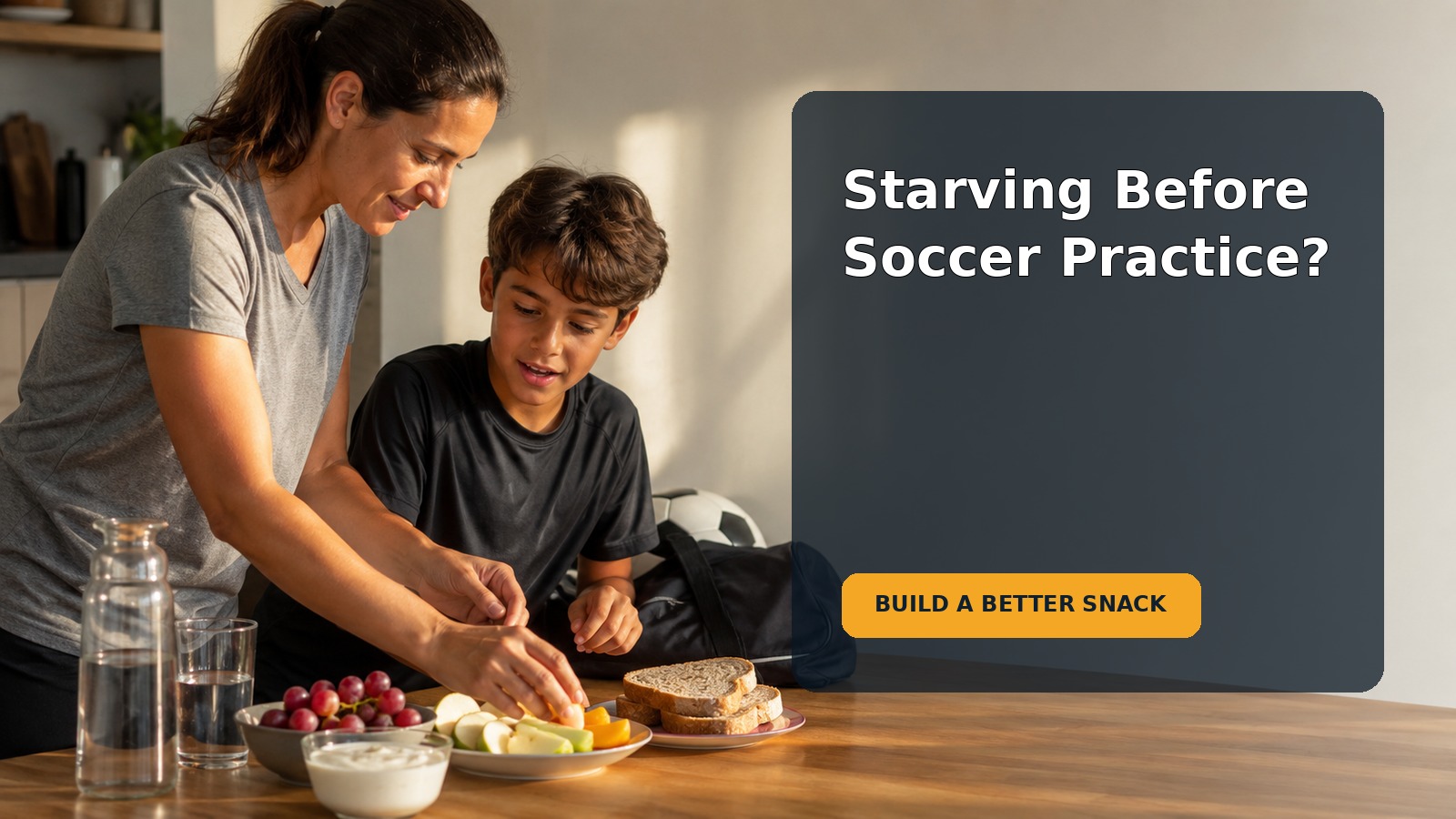
Start with the immediate question: what makes a good pre-soccer snack?
A useful snack is one your child will eat, can digest comfortably, and can carry into the afternoon without stress. It does not need to look like a miniature dinner. Think of it as a bridge between lunch and the next meal.
Start with a carbohydrate-rich food such as fruit, bread, crackers, cereal, a tortilla, oatmeal, rice, or yogurt with fruit. Carbohydrate is the main fuel for active muscles. If practice is not starting immediately, pair it with a moderate amount of protein or fat—for example, yogurt, milk, cheese, egg, hummus, seed butter, or nut butter when allergies and team rules allow. This pairing can make the snack more satisfying without turning it into a heavy meal.
What is common at age 10?
Appetite can vary widely at this age. Growth, lunch timing, school activity, practice intensity, sleep, and what was actually eaten at lunch all matter. One child may do well with a banana and water; another may need toast with sunflower-seed butter and fruit. Hunger is not a character flaw, and a larger appetite does not automatically mean overeating.
What changes the answer for your child?
Consider food allergies, diabetes, reflux, frequent stomachaches, dental appliances, medication effects, sensory preferences, and any clinician-directed eating plan. The length and intensity of practice matter too. A relaxed skills session is different from a long, hot tournament day. Children with individualized medical or nutrition needs should follow their own care plan rather than a general snack formula.
Use the time-to-practice check
Before choosing food, ask one question: How long until active warm-up begins? Digestion comfort usually improves when the snack gets smaller and simpler as practice gets closer. There is no single clock that works for every child, so treat these as practical starting points and use your child’s experience to adjust.
If practice starts in 90 minutes or more
There is room for a more substantial snack with carbohydrate plus protein. Try:
- A turkey or hummus half-sandwich with fruit
- Yogurt with berries and a small handful of cereal
- Oatmeal made with milk and sliced banana
- A tortilla with beans and a little cheese
- Toast with nut or seed butter and applesauce
If practice starts in 45–90 minutes
Keep the portion moderate and familiar. Good options include:
- Banana with a small yogurt
- Crackers with cheese
- Toast with a thin layer of seed or nut butter
- A fruit-and-yogurt smoothie that is not oversized
- Applesauce plus a simple oat bar your child already tolerates
If practice starts in less than 45 minutes
Favor a small, mostly carbohydrate snack that is easy for your child to digest: a banana, applesauce pouch, a slice of toast, a few crackers, dry cereal, or a small piece of fruit. Large portions, very fatty foods, and unfamiliar high-fiber foods right before sprinting may cause discomfort for some children.
A three-step after-school snack routine
Step 1: create a two-minute landing zone
Have your child put down the school bag, use the bathroom, and take a few sips of water. Then ask a neutral question: “Is your stomach a little hungry, medium hungry, or very hungry?” This is not a test. It helps your child notice body signals before grabbing the first available food.
If the lunchbox comes home nearly full, address that separately and without blame. Our guide to a child not eating school lunch offers a practical way to look at timing, access, distractions, and food preferences. Do not try to “fix” a missed lunch by restricting the after-school snack.
Step 2: offer two workable choices
Instead of asking an exhausted child, “What do you want?” offer two options that both fit the schedule:
“Practice starts in an hour. Would you like yogurt with banana, or toast with sunflower-seed butter and applesauce?”
Choice supports independence without making the child design a nutrition plan. Keep several reliable foods visible and ready. A labeled practice bin in the pantry and a refrigerator shelf can reduce daily negotiation.
Step 3: review comfort after practice
Later, ask three short questions: “Did you have enough energy? Did your stomach feel comfortable? Were you very hungry halfway through?” Use the answers to change one variable next time—the amount, timing, or food—not everything at once.
Hydration: keep it simple
For an ordinary youth soccer practice, water is generally the default drink. Encourage regular drinking across the day rather than asking a child to gulp a large amount immediately before running. Send a clearly labeled bottle and check that the coach permits drink breaks, especially in warm weather.
Do not use thirst alone as the only plan on hot days, but do not force a rigid volume either. Practice duration, weather, clothing, and the child’s individual needs change the picture. Sports drinks may sometimes have a role during prolonged, vigorous activity or heavy sweating, but they are not automatically necessary for routine practice. Energy drinks are not sports drinks and are not appropriate for children; they can contain high levels of caffeine and other stimulants.
Stop activity and seek prompt help if a child becomes confused, faints, has trouble breathing, develops severe weakness, or seems seriously unwell. Follow the team’s heat and emergency plan.
Seven realistic snack combinations
- Banana + yogurt: portable, familiar, and easy to scale.
- Toast + seed butter + applesauce: useful when nut restrictions apply, after checking the seed-butter label.
- Crackers + cheese + grapes: cut grapes appropriately if needed and pack perishables safely.
- Half sandwich + fruit: best when there is more digestion time.
- Dry cereal + milk: quick at home; choose a portion that feels comfortable before running.
- Hummus + pita + cucumber: a good savory choice if your child tolerates it before activity.
- Oatmeal + banana: helpful on cool days or when practice begins later.
These are templates, not rules. Cultural family foods can work just as well: rice with egg, a small bean tortilla, idli with yogurt, bread with labneh, or another familiar carbohydrate-plus-protein combination. The best snack is safe, available, affordable, and acceptable to your child.
Common mistakes and better alternatives
Mistake: making the snack enormous because the child says “starving”
Better: begin with a reasonable portion and make more available if the child remains hungry. A very large meal just before running may feel uncomfortable, while too little may leave them distracted by hunger.
Mistake: introducing a “healthy” new food on practice day
Better: test new foods at a low-pressure time. Before soccer, prioritize options the child has already eaten without stomach trouble.
Mistake: using sweets as a reward for effort
Better: serve food to meet hunger and recovery needs, not as payment for performance. Avoid moral labels such as “clean,” “bad,” or “cheat food.”
Mistake: buying supplements marketed to athletes
Better: use ordinary food and water unless a qualified clinician recommends something specific. Supplements can contain unnecessary ingredients, and children do not need adult sports-marketing messages to play well.
Mistake: ignoring the next meal
Better: if dinner will be late, pack a post-practice option as well. If dinner is soon after practice, the pre-practice snack can remain a bridge rather than becoming a full meal.
A one-page parent checklist
- Check how long it is until active practice begins.
- Ask about hunger without judgment.
- Choose a familiar carbohydrate-rich base.
- Add a modest protein or fat when time and tolerance allow.
- Make the portion smaller and simpler as practice gets closer.
- Offer water and send a labeled bottle.
- Check allergy rules and safe food storage.
- Avoid energy drinks and routine supplement use.
- Ask about energy and stomach comfort after practice.
- Change one part of the plan at a time.
When to involve a professional
Talk with your child’s pediatrician or a registered dietitian if hunger comes with unexplained weight change, poor growth, repeated dizziness or fainting, ongoing fatigue, frequent abdominal pain, vomiting, diarrhea, persistent food restriction, distress about body shape, secretive eating, or a noticeable decline in sports performance. Excessive thirst and urination also deserve medical attention.
Seek individualized advice for diabetes, severe allergies, eating disorders, gastrointestinal disease, or another condition that affects food, fluids, or exercise. A coach can explain practice logistics, but should not diagnose a health problem or prescribe a restrictive diet.
Frequently asked questions
Should my 10-year-old eat protein before soccer?
A modest protein food can make a snack more satisfying when there is enough time to digest it, but the snack does not need to be protein-heavy. A familiar carbohydrate source is the practical foundation before active play.
Is fruit enough?
Fruit may be enough for a short wait before practice or for a child who ate a substantial lunch. If there is more time and your child is very hungry, pair fruit with yogurt, cheese, milk, hummus, egg, or a nut or seed butter that is safe for them.
What if my child refuses the options?
Stay neutral. Offer two safe, familiar choices and let your child decide whether and how much to eat. Review the pantry together on a non-practice day so they can help choose several acceptable staples.
Do they need a sports drink?
Usually not for an ordinary practice; water is the standard starting point. Longer, more intense sessions in heat can change hydration needs, so follow qualified pediatric guidance and the team’s heat plan rather than sports-drink advertising.
The practical takeaway
A good after-school snack before soccer practice for a 10-year-old is not a perfect recipe. It is a repeatable decision: match the snack to the time available, start with familiar carbohydrate-rich food, add a modest partner food when useful, offer water, and listen to your child’s hunger and stomach comfort. Keep the process calm and collaborative. Over a few practices, your child can learn what helps them arrive fueled, comfortable, and ready to play.
Sources
- American Academy of Pediatrics / HealthyChildren.org: Sports Nutrition for Busy Families and Busy Lifestyles
- USDA MyPlate: Kids
- American Academy of Pediatrics / HealthyChildren.org: Energy Drinks and Food Bars—Power or Hype?
This article provides general education, not individualized medical or nutrition advice. Ask your child’s pediatrician or a registered dietitian about medical conditions, growth concerns, allergies, or specialized sports nutrition needs.