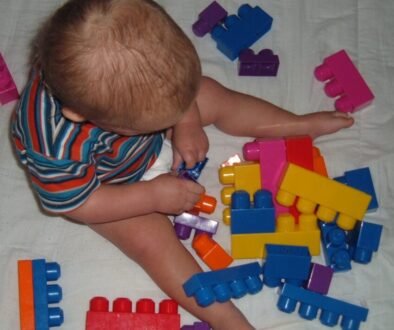
When your child introduces an invisible guest at dinner, asks you to save a seat, or explains that a made-up companion has very firm opinions, it can be surprising. In most cases, a preschooler imaginary friend is a normal form of imaginative play—not proof that a child is lonely or that something is wrong.
Young children use play to try out ideas, feelings, roles, and relationships. You do not need to make the friend disappear or turn every mention into a lesson. A warm, curious response and a few clear household limits are usually enough.
What an imaginary friend can look like
An imaginary friend may be a person, animal, creature, toy with a voice, or an invented group. The details can change quickly. One day the friend may be a superhero; the next, a tiny animal who rides in a pocket. Your child may speak for the friend, make room for them in play, or use the friend in a story.
That flexibility is part of the point. The American Academy of Pediatrics notes that imaginary friendships are commonly part of childhood and can give children a safe way to practice social situations, communication, and different points of view. The CDC also lists pretending to be something else during play as a social and emotional milestone that many children show by age four. Milestones describe what many children do; they are not a diagnosis or a test.
How to respond without taking over
Follow your child’s lead. You can acknowledge the friend without pretending that you see exactly the same thing: “It sounds like Luna wants to play shop,” or “Tell me what your dinosaur friend is doing.” Let your child decide how much of the story to share.
- Be interested, not interrogating. One or two open questions are enough. A long interview can make play feel like work.
- Join the game when invited. Accepting pretend tea, taking a turn as a customer, or helping find a blanket for a stuffed animal shows that you value your child’s ideas.
- Make space for solo play. You do not have to participate every time. Independent make-believe is valuable too.
- Use everyday props. Blocks, recycled boxes, dolls, toy animals, dress-up clothes, and books can support open-ended stories without needing a special toy.
Keep real-life limits clear
An imaginary friend does not get a separate set of rules. If your child says, “Bear threw the blocks,” respond calmly to the behavior: “Blocks stay on the floor. Please help me pick them up.” Avoid arguing about whether Bear is real. The useful message is that everyone in the home follows the same safety and kindness rules.
You can also offer language that separates feelings from blame: “Maybe Bear is frustrated. You look frustrated too. We can take a breath and try again.” This keeps the story welcome while helping your child name what is happening in the real moment.
Ways to join the play
Try a short role-play
Let your child choose roles for a simple scene: a café, vet clinic, bus stop, school, or rescue mission. Ask, “What happens first?” Then follow the answer. The goal is connection, not making the story logical.
Use books as a launch point
After reading together, invite your child to act out a small part of the story with toys or drawings. You might ask what a character would do next, then let the answer become a new game.
Make a feelings check-in
If the friend appears after a busy preschool day or during a big change, a gentle check-in can help: “You and your friend had a hard day. Was anything at school tricky?” Accept a short answer or no answer. Play may be your child’s way of processing before they can explain it directly.
What not to worry about on its own
Having an imaginary friend does not automatically mean a child lacks real friends, needs more social contact, or is confused about reality. Children can move between make-believe and real life. They may have one friend for months, change friends often, or never invent one at all. All of these can be within the wide range of typical preschool play.
It is also fine if you do not want to set an extra place at the table or speak to the friend all day. You can be respectful and still practical: “There is room for you at the table, and we have four chairs.”
When to check in with a professional
Talk with your child’s clinician if you have concerns beyond the pretend play itself. The AAP suggests discussing it when the imaginary friend seems threatening, encourages harm to your child or others, never seems to go away or is always talking, or comes with sudden changes in speech, social interaction, hygiene, concentration, or daily functioning. Bring specific examples and any broader developmental questions.
Seek urgent local help if your child is at immediate risk of harming themselves or someone else. For everyday uncertainty, your child’s pediatric clinician can help you decide whether developmental screening or another evaluation would be useful.
The bottom line
A preschooler imaginary friend is usually an invitation into imaginative play. Stay curious, let your child lead, keep the same real-world limits, and pay attention to the whole child rather than the friend alone. In most families, a calm response leaves room for creativity and connection.