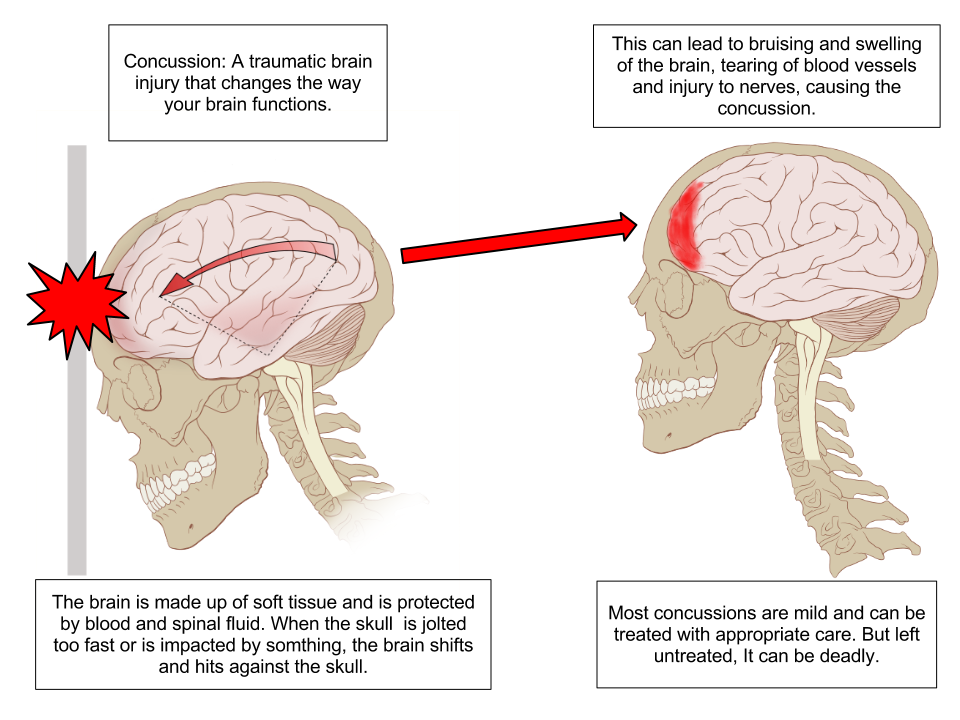
When a teen has had a concussion, getting back to a sport can feel urgent—especially during a season. But teen return to sports after concussion is not a “feel better, play again” decision. A concussion is a brain injury, and return should be approved and supervised by the teen’s healthcare provider. The plan also needs input from the school and, when available, the team’s athletic trainer.
The usual return-to-play framework has six steps. It is gradual on purpose: each step gives the teen, family and care team a chance to notice symptoms before activity becomes more demanding. This article explains the framework for general education. It cannot decide whether a particular young athlete is ready; follow the treating clinician’s instructions and your local team or school rules.
First: make sure the concussion has been evaluated
Any athlete with a suspected concussion should be removed from play right away and assessed by a healthcare professional. Do not use a normal-looking moment, a strong desire to play, or an important game as evidence that the brain has recovered. A concussion may affect thinking, balance, sleep, mood, vision or sensitivity to light and noise, and symptoms can change over time.
Seek urgent medical care for danger signs after a head injury, such as a worsening headache, repeated vomiting, increasing confusion, unusual behavior, a seizure, weakness or numbness, slurred speech, unequal pupils, or trouble waking the child. These are not symptoms to manage with a return-to-sport checklist.
School comes before sports progression
CDC’s return-to-sports guidance begins after the athlete is back to regular activities, such as school, and has the provider’s green light to start the sports progression. A teen may need short-term school supports—extra time, rest breaks, a quieter setting, help with bright light or crowded transitions—while recovering. Ask the clinician what the school should know and who will coordinate the plan.
The six-step return-to-play progression
Each step typically takes at least 24 hours. That makes the fastest possible route longer than a weekend, and it may take longer for many teens. The provider sets the pace; the examples below show the general purpose of each stage.
Step 1: Return to regular activities
The teen has returned to everyday non-sport activities, including school as advised, and the healthcare provider has cleared the start of the sports progression. This is not a conditioning workout or a return to practice. It is the foundation for the next steps.
Step 2: Light aerobic activity
Light activity raises the heart rate without a meaningful risk of contact or a hard fall. Depending on the provider’s plan, this can include a short walk, easy stationary cycling or a light jog. No weights, sport drills, scrimmage or contact yet.
Step 3: Moderate activity
Activity becomes more demanding, with moderate jogging, brief running, moderate stationary biking or lighter resistance work than usual. The goal is to test a higher activity level while continuing to avoid contact and high-risk sport situations.
Step 4: Heavy, non-contact activity
At this stage, the teen may do harder non-contact training such as more intense running, sport-specific drills and heavier—but still planned—conditioning. Contact, collision drills and competition remain off limits unless and until the clinician’s progression allows them.
Step 5: Practice and full contact
For sports where contact is part of normal participation, this is controlled full practice. It should happen only after the treating provider has approved it. Coaches and an athletic trainer should know the plan so they can monitor the athlete rather than treating the return as a private family decision.
Step 6: Competition
Competition comes last. A return to games, meets or matches should follow successful completion of the prior steps and the provider’s direction. Being cleared for school, gym class or a light workout is not automatically clearance for a competitive event.
What to do if symptoms return
Tell the teen to report symptoms honestly. Headache, dizziness, nausea, vision trouble, unusual fatigue, feeling slowed down, difficulty concentrating, irritability or sleep changes matter. If symptoms appear or worsen during a step, stop that activity and contact the healthcare provider. CDC advises returning to the previous step only after additional rest and no symptoms, under the provider’s plan. Do not push through symptoms, add an extra workout to “catch up,” or let a tournament schedule decide the pace.
A parent-and-teen tracking routine
- Write down the provider’s name, follow-up date and the exact activity restrictions.
- Use one shared log for the date, step, activity, duration and any symptoms during or afterward.
- Ask the teen privately how they feel; fear of losing a position can make symptoms harder to report.
- Share the current step with the coach and athletic trainer, not only a teammate.
- Keep school, sleep, meals and hydration steady enough to notice meaningful changes.
- Bring the log to follow-up if symptoms linger or the plan stalls.
Questions to ask before a teen goes back
- Has a healthcare provider cleared the next step—not merely said the teen can be active?
- What symptoms mean we should stop and call?
- Does the school need temporary learning or physical-education adjustments?
- Who will supervise non-contact drills and any later contact practice?
- Does the sport or state association require a written clearance form?
- What should change if this is not the teen’s first concussion or recovery is taking longer than expected?
Common mistakes that can slow a safe return
A common mistake is treating the six steps as six calendar days regardless of symptoms. Another is confusing a teen’s motivation with medical readiness. It also helps to avoid a mixed message—telling a young athlete to be honest while praising them for playing through pain. The better message is simple: reporting symptoms protects the next season as well as this one.
Helmets and other equipment are important for preventing some injuries, but they do not make it safe to return before recovery. They are not a substitute for removal from play, evaluation, and a supervised progression.
The bottom line
A teen return to sports after concussion should be clinician-led, step-by-step and symptom-aware. Back to regular activities comes first; competition comes last. If symptoms return, stop and get direction instead of trying to outrun the timeline.