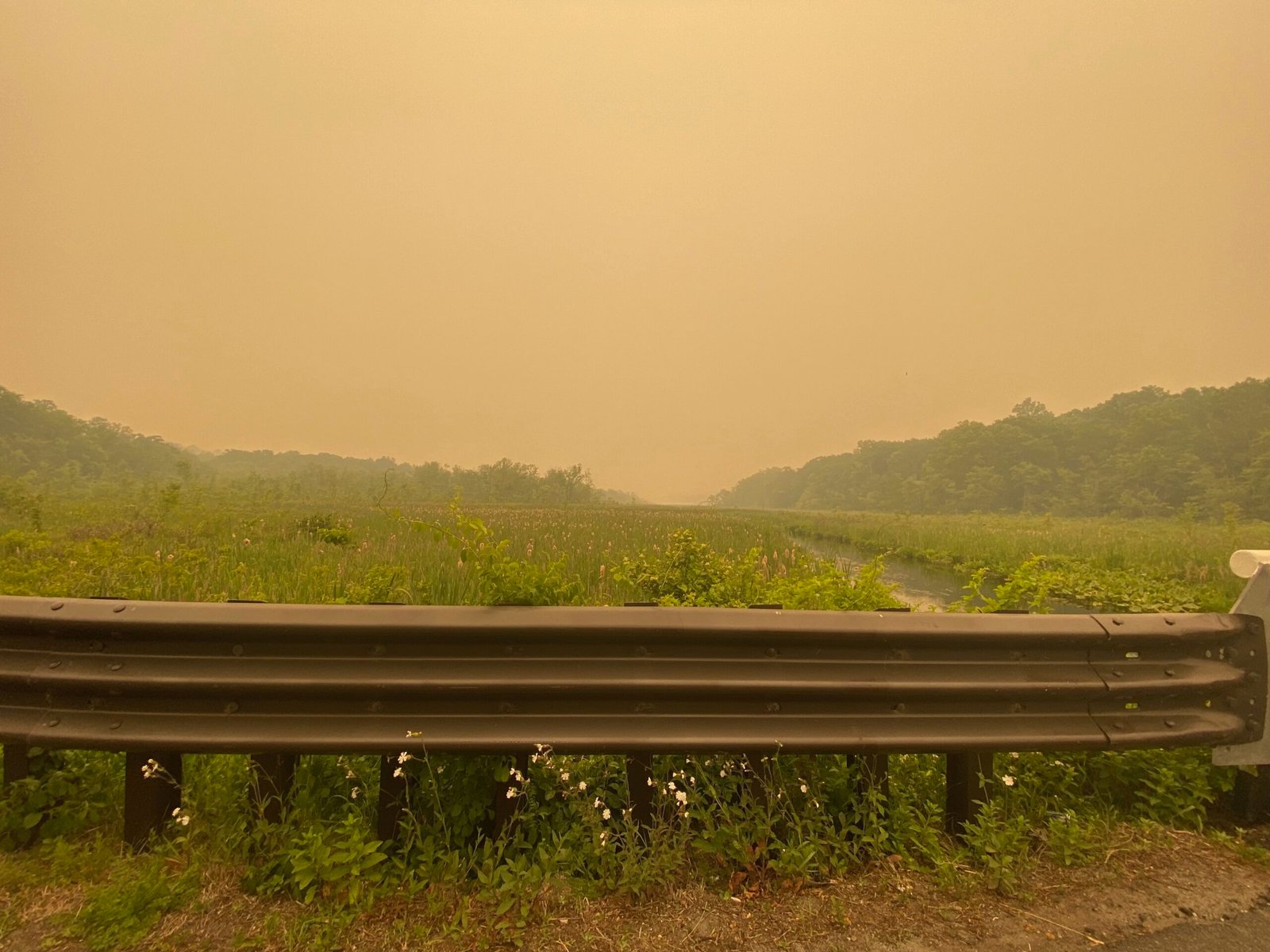
When wildfire smoke pushes the local Air Quality Index (AQI) up, the question is usually not just “Is school open?” It is “What does today’s air mean for my child’s walk, bus ride, recess, asthma plan and trip home?” A child school wildfire smoke AQI decision works best when families use the local air-quality report and the school’s instructions, rather than relying on how smoky the sky looks.
This is general safety information, not a substitute for a child’s clinician or local public-health guidance. Smoke conditions and school procedures can change quickly. If officials close school, move activities indoors or issue an emergency message, follow that direction first.
Start with the local AQI, not a universal number
The AQI is a public scale used to describe outdoor air pollution. During a smoke event, the pollutant of concern is often fine particle pollution, called PM2.5. Check AirNow, your local air-quality agency, or the alert source your school uses. Look at the forecast as well as the current reading: an okay morning can become a poor-air afternoon.
AQI guidance is local and may be more protective for children, especially during sustained smoke. Do not turn one number into a private rule that overrides the school, public-health department or your child’s clinician. Instead, use it as a prompt to ask practical questions: Is outdoor recess modified today? Will physical education move indoors? Is the bus loading area changing? What happens if the forecast worsens before dismissal?
Why children may need extra protection
Children breathe more air for their body size than adults and are still developing. The CDC notes that children with asthma or chronic health conditions may have more symptoms when smoke or ash is present. That does not mean every child will become ill, but it does mean caregivers should take smoke alerts seriously and have a plan before a rushed school morning.
For a child with asthma or another respiratory condition
Follow the written asthma action plan or other clinician-provided plan. Make sure the school has current medication authorization, the right medicines and current contact details. Ask the school nurse or designated staff how they handle symptoms, outdoor activity and rescue medication on smoke days. Do not start, stop or change medication based on an AQI app alone; contact the child’s clinician for individualized advice.
A five-question school-morning check
1. What does the official local air report say?
Use a local, official source rather than a social post or a distant regional headline. Check the location where your child will be, not only the location of the fire. Note whether the forecast is improving, stable or worsening during school and commute times.
2. What has the school communicated?
Read messages from the district, school, transportation office and after-school program. Schools may keep children inside, change outdoor sports, adjust arrival procedures or close. If there is no message and conditions look poor, call or use the school’s usual contact channel rather than assuming the plan.
3. What outdoor time is on the schedule?
Ask about recess, physical education, athletics, walking field trips and waiting outdoors for buses or pickup. A day with indoor instruction may still include a long outdoor activity. Ask whether there is an indoor alternative and whether your child can take part safely.
4. Does your child have symptoms today?
Notice coughing that will not stop, wheezing, shortness of breath, chest tightness, unusual fatigue, headache or eye irritation. These symptoms have many causes, so avoid self-diagnosing. But new or worsening breathing symptoms during smoke deserve prompt attention under the child’s health plan.
5. Can your child explain how to get help?
Use age-appropriate language: “If it is hard to breathe, your chest hurts, or you feel dizzy or scared, tell an adult right away.” Make sure they know the teacher, nurse, coach or bus driver they can approach. This is especially useful for children who try to push through discomfort to avoid missing an activity.
Practical steps that do help
- Keep school contacts current. Confirm who receives emergency and health messages.
- Prepare needed medication correctly. Follow the school’s storage and authorization rules; do not send medication in a way the school prohibits.
- Reduce extra outdoor exposure when officials advise it. Skip optional outdoor practices or errands when local guidance says conditions are unhealthy.
- Keep indoor air cleaner when possible. CDC advises keeping windows and doors closed during poor air and using an HVAC filter or portable air cleaner if available.
- Plan the commute. Ask about bus delays or an indoor waiting arrangement; avoid idling vehicles near children when possible.
- Check after-school care separately. Its outdoor-play policy may differ from the school day.
Masks, respirators and children
Do not assume any face covering gives the same protection. CDC notes that children age 2 and older can wear respirators and masks, but properly fitting NIOSH-approved respirators are not made in suitable sizes for very young children. A poor fit or a mask a child repeatedly removes provides less intended benefit. Follow local public-health advice and speak with a clinician for a child with respiratory needs; a face covering should not be used to keep a child outside longer than official guidance recommends.
When to keep a child home or seek care
School attendance decisions should follow local closures, public-health instructions and your child’s individual plan. Contact a clinician promptly if your child has breathing trouble, shortness of breath, a persistent cough or symptoms that do not improve after reducing smoke exposure. Seek emergency help immediately for severe trouble breathing, extreme sleepiness, or a child who will not eat or drink, as the CDC advises. If your child has a known condition and the plan is unclear, call the clinician before the next smoke day rather than waiting for symptoms.
A calm message to send the school
“We saw the local smoke advisory and want to follow the school plan. Could you confirm today’s recess, PE and dismissal arrangements? Our child has [a health plan/asthma], and we want to make sure the nurse and teacher have the current instructions.” Keep medical details limited to the staff who need them, and use the school’s approved health process for documents and medication.
Bottom line
Wildfire smoke does not require parents to guess alone. Check the official local AQI and forecast, read the school’s plan, consider your child’s health needs and ask early about outdoor time. A simple plan can make a smoky school morning less stressful while keeping decisions tied to the people and information closest to the situation.
Sources
- Centers for Disease Control and Prevention: Wildfire Smoke and Children
- AirNow: Air Quality Index and local alerts
- U.S. Environmental Protection Agency: Disasters, Emergencies and Schools
This article is educational and cannot replace local emergency directions or individualized medical advice.