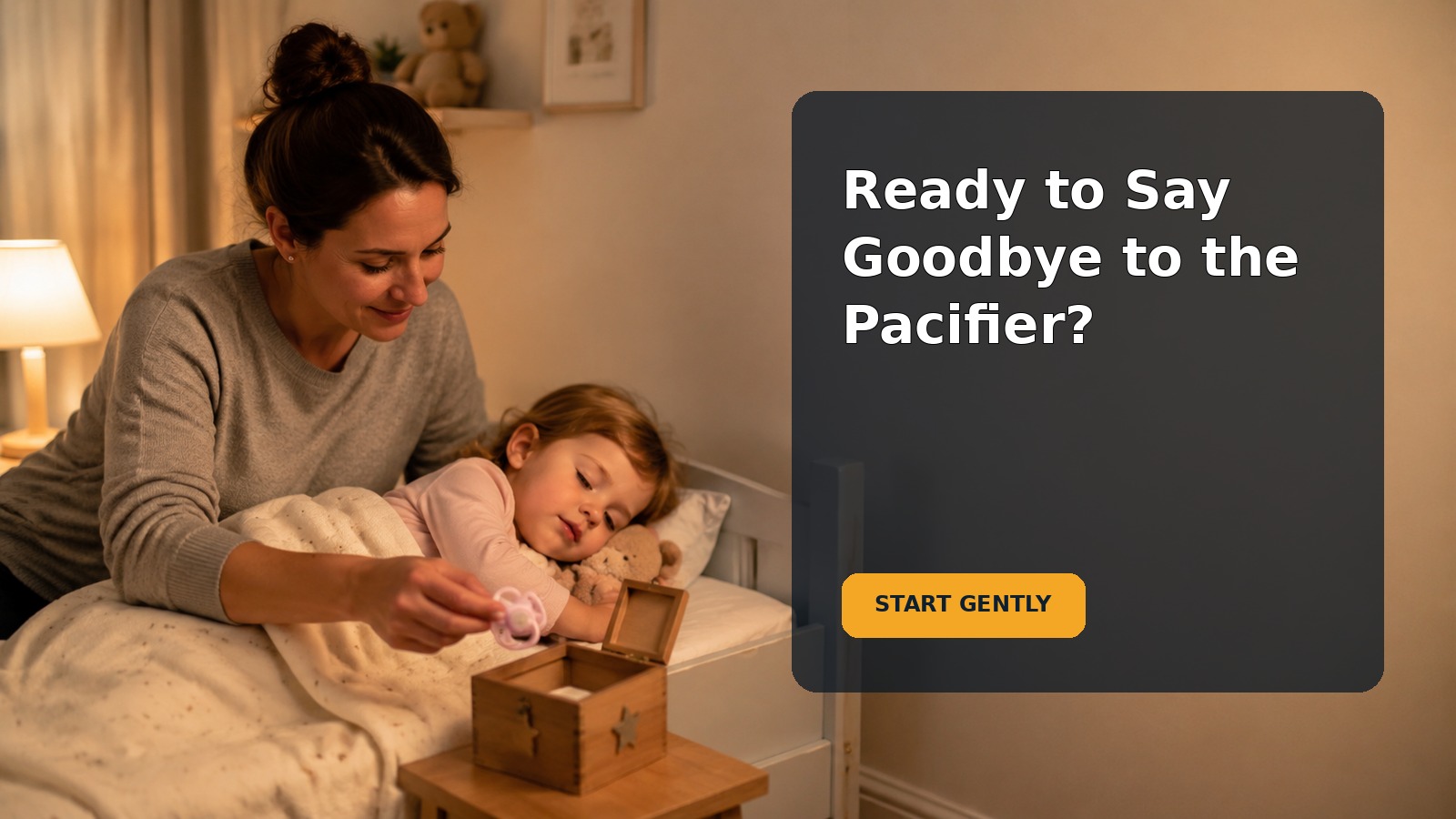
If your 2-year-old still needs a pacifier to fall asleep, you have not failed and your child is not being difficult. The pacifier has become a familiar sleep cue: sucking helps your toddler settle, and repeating the same cue every night makes it feel dependable. At the same time, age 2 is a reasonable time to plan a gentle change rather than waiting for the habit to disappear on its own.
A practical 2 year old pacifier sleep weaning plan does not have to mean taking it away without warning. You can prepare your child, keep the rest of bedtime predictable, reduce access in small steps and offer another form of comfort. The aim is not a tear-free night at any cost. It is a clear, kind boundary that your family can hold consistently.
Start with the immediate question: does the pacifier need to go tonight?
Usually, no. For a healthy toddler with an intact pacifier and no urgent dental or medical concern, families can choose a calm preparation period. However, “not tonight” should not become “never.” The American Academy of Pediatric Dentistry (AAPD) encourages stopping non-nutritive sucking habits by 36 months. Its policy also notes that pacifier use after 12 months may raise the risk of acute ear infections, while use beyond 18 months can affect the developing mouth and bite.
That does not mean every 2-year-old who uses a pacifier has damage. Duration, frequency, sucking intensity and the individual child all matter. A toddler who uses it only to fall asleep has a different pattern from one who keeps it in for much of the day. Your pediatric dentist can look at your child’s teeth, palate and bite rather than asking you to guess.
What is typical at 24–35 months?
Many toddlers still use sucking to calm down or fall asleep. They also understand far more than they can always express, want control over familiar routines and can have strong reactions to change. Those developmental facts make preparation and repetition useful. They do not mean your toddler gets to decide whether the family ever changes the habit.
The American Academy of Pediatrics’ parent resource, HealthyChildren.org, advises against harsh words, teasing and punishment. It recommends gentle reminders, praise and rewards for times when a child does not use the pacifier. That is a good foundation: treat this as learning a new sleep skill, not correcting bad behavior.
What changes the answer for your child?
Speak with your pediatrician or pediatric dentist before or during the plan if your child has visible changes in how the teeth meet, concerns about the roof of the mouth, repeated ear infections, pain, feeding or speech concerns, or a developmental or sensory need that makes the pacifier an important regulation tool. Professional input can help you choose the pace and replacement supports.
If your toddler is in the middle of a major disruption—such as a new sibling, a move, illness or starting childcare—you may decide to prepare now and set the final goodbye for a more stable week. Avoid postponing indefinitely; choose a specific review date.
A calm first-step check
Observe before acting
For three ordinary days, notice when the pacifier appears and what happens immediately before it. Keep the notes simple:
- Is it used only in the crib or also during the day?
- Does your child need it to fall asleep, after every waking, or both?
- What other cues already help—rocking, a song, a blanket, back rubbing or a parent sitting nearby?
- Does the pacifier fall out after sleep begins?
- Which situations make the request strongest: tiredness, separation, boredom, pain or a change in routine?
This small record tells you whether you are changing one bedtime cue or a round-the-clock habit. It also helps you choose a replacement that meets the same need.
Do a quick safety and dental check
Inspect the pacifier before every use. Replace it if it is cracked, torn, sticky, swollen or otherwise damaged, and follow the manufacturer’s age and replacement instructions. Do not cut, puncture or deliberately damage the nipple to make it less appealing. Do not tie it around your child’s neck, hand, crib or clothing for sleep. These shortcuts can create choking or strangulation risks.
At the next dental visit—or sooner if you see a change—ask: “Do you see any effect from the pacifier on the bite or palate, and what timeline do you recommend for this child?” The AAPD recommends establishing a dental home by 12 months, so a 2-year-old who has not yet seen a dentist should be scheduled for routine care.
A gentle pacifier-weaning plan
Step 1: prepare the environment and expectations
Choose a calm seven- to fourteen-day window. Tell your child what will happen in short, concrete language. Avoid a long negotiation.
“Your pacifier has helped you sleep. Soon we will sleep without it. We will still have stories, your bear, our song and cuddles. I will help you.”
Keep one safe pacifier in one known place rather than leaving extras around the house. Make the rest of bedtime especially predictable: bath or wash, pajamas, two books, a song, cuddle, bed. If your routine needs work, Nappot’s guide to establishing a daily routine for toddlers can help you make the sequence easier to anticipate.
Choose one replacement comfort item that is already safe and familiar, such as a small stuffed toy or blanket appropriate for your child’s sleep space. Add connection rather than a new complicated dependency: a repeated phrase, brief back rub or the same quiet song.
Step 2: try the lowest-pressure action
Begin by limiting the pacifier to sleep if it is currently used during the day. Use one consistent sentence: “The pacifier stays in bed. You can have a cuddle or carry your bear.” Praise the specific skill when your toddler manages a stretch without it: “You were upset and you held my hand. You found another way to calm your body.”
Once daytime use has been limited for several days, choose one of these bedtime approaches:
- Gradual presence: Allow it during the routine, then place it in a special cup before your child gets into bed. Stay close and use the replacement comfort.
- Bedtime-only countdown: Mark three to seven nights on a simple picture chart. On the final night, say goodbye and remove all pacifiers from reach.
- Direct goodbye: For a child who handles clear transitions better than gradual limits, choose a date, complete a small goodbye ritual and stop offering it from that bedtime onward.
Pick one method and follow it consistently. Repeatedly returning the pacifier after a long protest can unintentionally teach your child that escalating is the route to getting it back. Consistency can still be warm: stay nearby, name the feeling and offer the replacement without reopening the decision.
“You want your pacifier. It is hard to sleep in a new way. The pacifier is all done, and I am here. Do you want the song or a back rub?”
Step 3: review the result and adjust
Expect bedtime to take longer for a few nights. Some children also wake and ask for the pacifier. Respond with the same brief words and the same comfort choice. Keep lights low and avoid adding screens, snacks or exciting play as substitutes.
Review after three nights, then again after one week. Look for direction, not perfection: Is settling gradually shorter? Can your child accept comfort another way? Is daytime mood manageable? If the plan is getting harder each night, check whether bedtime is too late, the routine changes from day to day, or different caregivers are following different rules.
A brief pause can be appropriate during fever, significant pain or a family emergency, but make it explicit: “We are pausing while you are sick, and we will try again on Saturday.” If you have already completed the goodbye, it is often less confusing to provide more parental comfort rather than reintroducing the pacifier.
Common mistakes and better alternatives
Avoid shame, secrecy and all-or-nothing threats
Calling the pacifier “babyish,” comparing siblings or pretending it vanished can turn a manageable transition into a trust struggle. Do not let a character “steal” it or pressure your toddler to donate a used pacifier to a baby. Instead, acknowledge that it mattered and state the plan honestly.
A reward can recognize effort without becoming a bribe for suppressing feelings. Try a sticker for completing the pacifier-free bedtime routine, followed by a small shared activity after several stickers. Give praise even if your child cried: “You missed it and still finished bedtime. That was hard work.”
Keep the plan collaborative but keep the boundary clear
Offer choices about how, not whether, the change happens: which bedtime story, where the pacifier waits during the countdown, which song or which comfort toy. Too many questions at bedtime invite negotiation when your child is least able to cope.
Do not replace the pacifier with unlimited bottles, sweet drinks, food in bed or a screen. Those substitutions can create new sleep, dental or safety problems. Preserve the familiar routine and add calm connection instead.
When to involve a professional
Routine questions to raise
Schedule advice from your pediatrician or pediatric dentist if you are uncertain about timing, your child still relies heavily on the pacifier as age 3 approaches, or you notice changes in the bite or palate. Ask about repeated ear infections, speech or feeding concerns, and whether developmental, sensory or anxiety needs call for a more individualized plan.
If sleep remains severely disrupted for more than one to two weeks despite a consistent routine, discuss the whole sleep picture rather than assuming the pacifier is the only cause. Snoring, breathing pauses, persistent mouth breathing, pain or frequent waking deserve medical attention.
Urgent safety concerns
Seek urgent help if your child is choking, struggling to breathe, turns blue or gray, or may have inhaled or swallowed part of a damaged pacifier. Remove broken products from use. For a non-urgent damaged pacifier with no symptoms, call your clinician or local poison/safety service if you are unsure what to do.
One-page parent checklist
Before, during and after
- Before: Observe use for three days; check the pacifier for damage; choose a stable week; agree on one plan with every caregiver; prepare one safe comfort alternative.
- During: Use one short script; keep the bedtime sequence unchanged; offer two comfort choices; validate feelings; avoid punishment, teasing and prolonged debate.
- After: Remove spare pacifiers; keep providing calm connection; track settling for one week; praise effort; ask a pediatric dentist about any oral changes.
What success should look like
Success is not a toddler who never protests. It is a child who learns, with reliable support, that bedtime remains safe and connected without the old sucking cue. Progress may look like less daytime use, accepting a song instead, settling five minutes faster than the night before or waking once instead of three times.
If your plan is kind, safe and consistent, you can move toward stopping before age 3 without turning the pacifier into a source of shame. Adjust the pace when your child’s health or development requires it, but keep the destination clear.
Frequently asked questions
Is pacifier use at age 2 common?
It is not unusual, especially for sleep or calming. However, professional dental guidance supports ending non-nutritive sucking habits by 36 months, and effects on the developing mouth can begin earlier. Use age 2 as a planning window rather than a reason to panic.
How long should gentle pacifier weaning take?
Many families use several days to two weeks of preparation and transition. The right pace depends on how often the pacifier is used and how your child responds. Avoid an open-ended plan; choose review dates and seek advice if progress stalls.
What if my toddler becomes very upset?
Stay calm, keep the limit brief and offer closeness. Feelings do not mean the boundary is harmful. If distress intensifies night after night, sleep deteriorates significantly, or you suspect pain, anxiety, sensory needs or developmental concerns, pause to get individualized guidance.
Should I cut the pacifier tip?
No. Deliberately damaging a pacifier can create a choking hazard. Use an intact, age-appropriate product until the planned goodbye, then remove it completely.
Sources
- American Academy of Pediatric Dentistry: Policy on Pacifiers (revised 2024)
- HealthyChildren.org: Pacifiers and Thumb Sucking, American Academy of Pediatrics
This article offers general education, not a diagnosis or individualized medical or dental advice. Ask your child’s pediatrician or pediatric dentist about concerns specific to their health, development, teeth or sleep.