When a child refuses school, the morning can quickly become a contest of pleading, bargaining, and rising fear. Start by slowing the conflict. School refusal is usually a sign that something feels unmanageable—not proof that a child is lazy, defiant, or trying to control the family.
Your first job is to check safety and health, understand what may be driving the distress, and contact the school early. The longer-term goal is generally a supported return to learning, but the right plan depends on the child’s needs and the reason attendance feels impossible.
First, decide whether this is an urgent health or safety problem
Before discussing attendance, check the child’s immediate condition. Ask about pain, fever, vomiting, breathing trouble, an injury, medication problems, or other symptoms that may need medical attention. Follow your school’s illness rules and contact a qualified health professional when symptoms are concerning or unclear.
Also ask directly about safety in calm, age-appropriate language: “Are you worried that someone will hurt you?” “Do you feel safe on the bus, in class, at lunch, and online?” “Are you thinking about hurting yourself or someone else?” A disclosure of abuse, a credible threat, self-harm, severe panic, or immediate danger needs prompt local emergency, safeguarding, school-safety, or clinical support. Do not send a child into a setting you reasonably believe is immediately unsafe while adults investigate.
If there is no emergency, lower your voice and reduce the audience. A regulated adult can gather more useful information than an adult arguing against every fear.
Listen for the reason beneath “I won’t go”
School refusal describes a pattern; it is not a diagnosis. The reason may be obvious, but often several pressures overlap. Possibilities include:
- separation anxiety or fear that something will happen to a caregiver;
- bullying, exclusion, harassment, or conflict with a peer;
- academic work that feels confusing, overwhelming, or embarrassing;
- an unrecognized learning, attention, communication, or developmental need;
- sensory overload from noise, crowds, clothing, transitions, or the classroom environment;
- fear of using the bathroom, eating at school, riding transportation, or speaking in front of others;
- a difficult relationship with an adult;
- sleep loss, depression, anxiety, physical illness, or medication effects;
- a recent move, loss, family change, absence, or return after a holiday or illness.
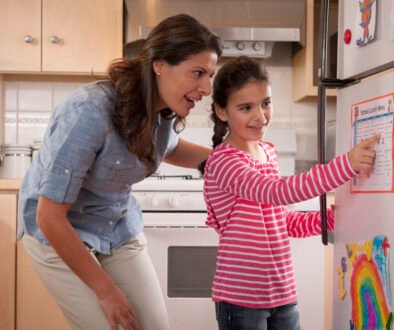
Avoid firing the entire list at your child. Ask about specific slices of the day: “Which part feels hardest—the trip, the doorway, class, lunch, recess, or coming home?” “When did it start feeling different?” “What would make the first ten minutes easier?” A younger child may communicate more clearly through drawing the school day, pointing to a simple schedule, or talking while walking rather than sitting face to face.
Validate the experience without confirming an untested conclusion. You might say, “I believe that this feels very hard. We are going to understand what is happening and get help.” That is different from promising that the child never has to return.
What to do on the first difficult morning
1. Use one calm script
Keep the message short: “I can see you are distressed. First I will check that you are safe and well. Then I will contact the school so we can make a plan.” Repeat the core message instead of inventing new rewards or threats.
2. Avoid a long courtroom debate
Do not demand that a frightened child prove the case while the clock is running. Avoid shaming statements, comparisons, physical intimidation, or threats about permanent consequences. At the same time, do not negotiate every step for an hour. Pause, gather the essential facts, and move communication to the adults who can help.
3. Contact the school early
Call or message the attendance contact, teacher, counselor, nurse, special-education contact, or another appropriate staff member. Share observable facts rather than a diagnosis: when the resistance began, what the child said, physical symptoms, recent changes, days or classes affected, and what helped or worsened the distress.
4. Record the pattern
Write down the date, sleep, symptoms, trigger, words used, attendance outcome, and school feedback. A short record can reveal whether difficulty clusters around Mondays, tests, transportation, one class, lunch, transitions, or time away from a caregiver.
A first-response checklist
| Check | Question | Next action |
|---|---|---|
| Health | Is there acute illness, pain, injury, or a medication concern? | Follow illness guidance and seek appropriate medical advice |
| Safety | Is there bullying, abuse, self-harm risk, or immediate danger? | Use urgent safeguarding, clinical, school-safety, or emergency support |
| Trigger | Which place, person, task, or transition feels hardest? | Ask specific, neutral questions and document the answer |
| School | What do staff observe before, during, and after arrival? | Contact the school early and compare observations |
| Return | What support would make arrival possible and safe? | Agree on a concrete plan, owner, and review date |
Build a return plan with the school
The American Academy of Pediatrics notes that school avoidance should be addressed promptly and that families may need help from school staff and health professionals. A return plan should be specific enough that the child knows what will happen at the hardest point.
Useful elements may include:
- one trusted adult: name the person who will meet or check in with the child;
- a clear arrival route: decide where the handoff happens and what the child does first;
- support for the actual barrier: address missed work, peer safety, transportation, sensory needs, bathroom access, or learning support rather than offering generic reassurance;
- a brief coping option: agree on where the child can regulate and how the child returns to class;
- manageable catch-up: prioritize essential work so absence does not create an impossible backlog;
- a review point: identify who will update the family and when the plan will be adjusted.
Accommodations should have a purpose and be reviewed. A quiet arrival, reduced first-day workload, check-in, or supported transition can act as a bridge. It should not quietly become an indefinite arrangement that leaves the underlying problem untouched.
If a transition into school is the main difficulty, the predictable handoff ideas in Nappot’s starting-kindergarten confidence plan can be adapted for an older child without making the routine feel babyish.
What not to accidentally reinforce
Staying home can bring immediate relief, which may make the next morning feel even harder. That does not mean the distress is fake. It means adults should avoid turning an absence into an unusually rewarding day filled with special treats, unrestricted gaming, or a holiday atmosphere.
If the child remains home, keep the day calm, supervised, and reasonably connected to ordinary routines, health needs, and school expectations. Do not use isolation or humiliation. The purpose is not punishment; it is to avoid making avoidance the only reliable route to relief.
Also avoid promising, “You can return when the anxiety is completely gone.” Children can learn coping while still feeling some worry, provided the setting is safe and the support matches the need. If bedtime worry or poor sleep is amplifying the morning, Nappot’s short wind-down routine for school-age worries may help with one part of the pattern.
A simple school contact template
“My child had significant difficulty attending today. The distress began at [time/place] and included [observable words, behavior, or symptoms]. My child identified [possible trigger, if known]. There is/is not an immediate health or safety concern that I know of. What have staff observed, and who can help us make a supported arrival and return plan? Please let us agree on the next step and a time to review it.”
Keep sensitive details in appropriate private channels rather than a broad group message. Ask how the school documents attendance, bullying or safety concerns, disability-related support, and health information.
When to involve professional support
Seek timely help when refusal repeats, distress is intense, attendance is declining, physical complaints recur, the child cannot participate after arrival, or the problem affects sleep, eating, family functioning, or activities beyond school. A pediatrician or primary-care clinician can assess health contributors and help coordinate care. A qualified mental-health professional can evaluate anxiety, mood, trauma, or other concerns. The school team can assess learning, peer, environmental, and support needs within its role.
The American Academy of Child and Adolescent Psychiatry advises seeking professional help for persistent school refusal in older children and adolescents because it may be linked with peer, social, or mental-health concerns. Ask providers and school staff to communicate—with appropriate consent—so the child is not carrying competing plans between adults.
This article cannot determine whether a particular child should stay home, return immediately, receive accommodations, or receive a diagnosis. Local attendance requirements and school procedures vary. Use the child’s actual health, safety, developmental, and educational needs to guide the plan.
The useful first step
When a child refuses school, do not begin by trying to win the morning. Begin with safety, health, and a calm effort to identify the hardest part of the day. Contact the school early, document patterns, and turn vague reassurance into a specific arrival and support plan.
The message to the child can be both compassionate and steady: “I believe this is hard. You do not have to solve it alone. The adults will work together on the next safe step.”
Sources
- American Academy of Pediatrics: School Avoidance—Tips for Concerned Parents
- American Academy of Child and Adolescent Psychiatry: School Refusal
- National Institute of Mental Health: Children and Mental Health
This article provides general parenting education, not medical, mental-health, legal, or school-policy advice. Seek qualified local help for persistent distress or any health or safety concern.