If you are planning for children sharing a bedroom, the goal is not to make them enjoy every minute together. It is to create a room where each child can sleep, change clothes, keep a few belongings private and tell you when something feels uncomfortable. A shared room can work well, but it usually works because adults build clear routines—not because siblings simply “figure it out.”
Start with a quick check tonight: Does each child have a safe sleep space, a small personal zone and a way to reach you? If yes, you can improve the arrangement gradually. If one child is frightened, repeatedly kept awake, threatened, touched against their wishes or unable to use the room safely, separate them for the night if possible and address the safety concern before discussing fairness.
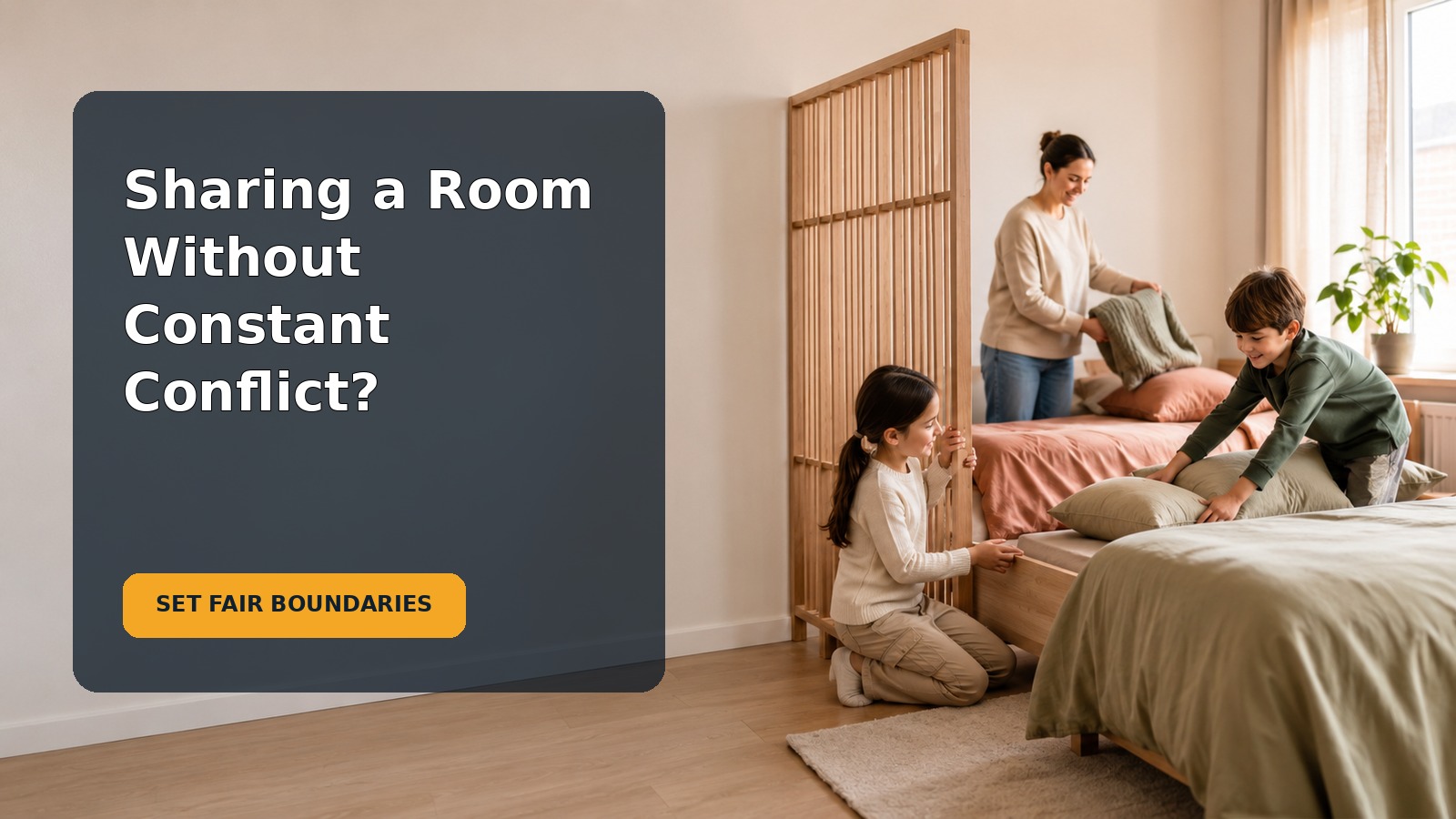
Is Sharing a Bedroom Reasonable for Children Ages 4 to 12?
For many families, sharing is a practical and ordinary arrangement. The important question is not whether every family should provide a separate bedroom. It is whether this particular setup supports both children’s safety, sleep, development and dignity.
Age alone does not settle the question. Consider the children’s maturity, sleep schedules, sensory needs, health, mobility, relationship and comfort. A four-year-old who sleeps deeply and a seven-year-old who reads quietly may manage well. Two children who wake each other repeatedly may need different bedtimes, a room divider or a temporary alternative. As puberty approaches, changing and body privacy usually need more deliberate planning.
Fair does not always mean identical
A younger child may need an earlier lights-out. An older child may need a reading light outside the bedroom. A child with asthma, nighttime medication, disability or frequent waking may need a different setup. Explain the reason without revealing private medical details: “Everyone gets what helps their body sleep safely. The plan may not look exactly the same.”
Privacy is a family rule, not a luxury item
Children can have privacy without having separate rooms. Privacy can mean changing behind a closed bathroom door, asking before entering a curtained area, not reading a sibling’s journal, and keeping hands off another person’s bed and body. The American Academy of Pediatrics notes that sibling disagreements change with age and may involve ignored privacy as children get older. It recommends clear family ground rules and calm adult involvement when physical or emotional well-being is at risk.
Do a Calm Shared-Room Check Before Changing Everything
Ask each child separately
Talk one-to-one so one sibling does not answer for the other. Keep the questions neutral:
- “What helps you sleep in this room?”
- “What makes sleep harder?”
- “Which things should nobody touch without asking?”
- “Where would you like to change clothes?”
- “Has anything happened here that made you feel scared, embarrassed or unsafe?”
- “What is one change that would make the room work better?”
Do not promise that every preference will be granted. Promise to listen, protect safety and explain the final plan.
Observe the practical pressure points
For three to five nights, note bedtime, actual settling time, waking, morning mood and the conflicts that occur. Look at the room itself. Can both children reach the door? Are walkways clear? Are heavy dressers and televisions secured according to their instructions? Are cords, medications, small choking hazards and age-inappropriate items out of reach of the younger child? Does one child control the only lamp, storage area or usable floor space?
Patterns make the solution clearer. If arguments begin when the older child wants to read, move reading out of the room rather than creating a broad “no one may do anything” rule. If borrowing causes conflict, labeled bins may solve more than another lecture.
A Practical Shared-Bedroom Routine
Step 1: Divide the room into shared, personal and adult-only zones
Use furniture placement, different colored baskets, shelf labels or a curtain that does not block ventilation or exits. Each child needs a modest personal area—a bed, drawer, shelf or bin—that the other child may not enter or use without permission. Keep truly unsafe, fragile or developmentally inappropriate items somewhere an adult controls.
You do not need to split every inch equally. Aim for usable access. If one bed has the window, perhaps the other child chooses a shelf or the first bedtime story. Rotate desirable choices when practical, but do not rotate safety needs.
Step 2: Set five short rules
- Bodies belong to each person. No touching, tickling, photographing or entering a changing area without permission.
- Beds are personal zones. Ask before sitting, climbing or borrowing bedding.
- Sleep is protected. After lights-out, use quiet voices and the agreed night routine.
- Private belongings stay private. Ask before borrowing; return items to their place.
- Anyone can call an adult. A child never has to keep a room secret or handle a frightening problem alone.
Post the rules where both children can see them. Use pictures for a preschooler. Review them during the day, not in the middle of a bedtime argument.
Step 3: Stagger the parts of bedtime that cause friction
The AAP recommends a regular daily routine and a consistent bedtime sequence. It also advises keeping screens out of children’s bedrooms, especially at night. In a shared room, consistency matters because one child’s stimulation becomes the other child’s disruption.
Try a 20-minute handoff:
| Time | Younger child | Older child |
|---|---|---|
| First 10 minutes | Bathroom, pajamas and one quiet book in the bedroom | Quiet activity with an adult outside the room |
| Next 5 minutes | Lights dim; brief goodnight | Bathroom and preparation outside the room |
| Final 5 minutes | Settling in bed | Enter quietly; use a shielded reading light only if it does not disturb sleep |
Adjust the sequence to your home. The key is that both children know what happens next. Nappot’s 15-minute wind-down routine for school-age children offers a useful structure when worry, rather than sibling noise, is delaying sleep.
Step 4: Create a brief morning reset
Spend two minutes restoring the room: bedding straightened, borrowed items returned and dirty clothes placed in a hamper. Do not demand a perfect bedroom before school. The purpose is to prevent last night’s small mess from becoming tonight’s argument.
Step 5: Review after one week
Meet with each child separately, then together. Ask what improved and what remains difficult. Change one part at a time. Success may be fewer wake-ups, less borrowing, quicker repair after conflict or a child feeling able to speak up—not complete silence or constant friendship.
Use a Script That Protects Both Children
“We share this room, but we do not share bodies or every belonging. Your bed and blue drawer are your personal spaces. Ask before touching your sibling’s things. Change clothes in the bathroom or behind the screen. After lights-out, sleep comes first. If you feel uncomfortable, come to me—you will not be in trouble for telling.”
If one child objects, acknowledge the loss of control: “I hear that you wish you had your own room. We cannot change that today. We can make this room more private and fair, and I want your help choosing the first change.” Empathy does not require pretending that a separate bedroom is available.
Common Mistakes and Better Alternatives
Do not make the older child a nighttime parent
An older sibling can be considerate, but should not be responsible for fears, toileting, medication or repeated waking. Children need a reliable way to reach an adult. If the younger child’s needs repeatedly destroy the older child’s sleep, adults need a different nighttime plan.
Do not force children to share every possession
Shared toys can have turn-taking rules; personal comfort items, gifts and journals can remain private. Clear ownership reduces sneaking and retaliation. For conflicts that still escalate, use the calm safety-and-repair approach in Nappot’s guide to teaching siblings to repair without forced apologies.
Do not punish disclosure
A rule such as “What happens in the room stays in the room” is unsafe. Children should know they can report unwanted touching, threats, sexual behavior, bullying, frightening content or anything else that feels wrong. Respond calmly, separate children as needed and seek qualified guidance rather than conducting a pressured interrogation.
Do not solve a sleep problem with more bedroom entertainment
Adding a television or unrestricted tablet may reduce complaints briefly while making sleep harder. Keep the bedroom low-stimulation. If schedules differ widely, move late reading, gaming and calls to another area.
When to Change the Arrangement or Ask for Help
Schedule a conversation with your pediatrician when either child has ongoing insomnia, loud snoring, breathing pauses, unusual nighttime behavior, severe anxiety, frequent daytime sleepiness or a health or developmental need that makes the plan difficult. A clinician can help separate a room-sharing problem from a sleep or health problem.
Seek prompt safeguarding or mental-health guidance if a child reports unwanted sexual behavior, coercion, threats, repeated physical aggression, deliberate exposure during changing, secret recording or fear of being alone with the sibling. Separate sleeping spaces while the concern is assessed if you can do so safely. If a child is in immediate danger, use local emergency services.
Housing rules vary by location and program. Avoid relying on broad claims that children of a certain age or gender “must” have separate rooms. If a lease, custody order, foster-care standard or housing program applies, check the actual current rule with the responsible local agency or a qualified adviser.
One-Page Parent Checklist
Before bedtime
- Give each child a defined personal space.
- Provide a private place to change.
- Remove hazards and keep the exit clear.
- Review the five shared-room rules.
- Choose separate quiet activities when bedtimes differ.
During the night
- Protect sleep rather than deciding who is “right.”
- Move an awake or distressed child to an adult-supported space when possible.
- Let either child contact an adult without punishment.
- Separate children immediately if safety or consent is in question.
After one week
- Compare settling, waking and morning mood.
- Ask each child privately what feels better or worse.
- Adjust one pressure point at a time.
- Get professional input for persistent sleep, health or safety concerns.
Frequently Asked Questions
How long should we try a new shared-bedroom routine?
Try a safe, workable plan for about one week, then review it. Some sleep routines need longer to settle, but do not “wait and see” when a child feels unsafe or sleep is seriously impaired.
What if the children have very different bedtimes?
Let the earlier sleeper complete the bedroom routine first. Keep the later child’s light, conversation and entertainment outside the room until their own bedtime. A quiet entry should be part of the agreement.
Should siblings of different genders share?
There is no single developmental rule that fits every family. Focus on each child’s comfort, changing privacy, puberty, safety and any local housing requirements. Reassess as children grow rather than treating one old decision as permanent.
What if one child refuses the plan?
Keep safety, consent and sleep rules firm while offering choices within them: which shelf is theirs, which bedtime phrase to use or which divider color they prefer. A child can dislike sharing and still participate in a respectful routine.
Sources
- American Academy of Pediatrics: Sibling Rivalry and Building Stronger Bonds
- American Academy of Pediatrics: Healthy Sleep Habits
This article provides general parenting and safety education, not individualized medical, legal or safeguarding advice. Seek qualified local guidance when health, housing rules or a child’s safety may affect the sleeping arrangement.