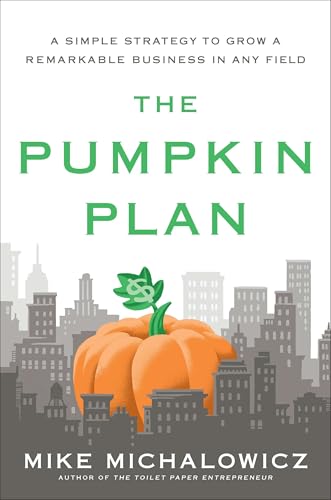
The Pumpkin Plan by Mike Michalowicz turns an unusual farming story into a practical business lesson: remarkable growth does not come from trying to serve everybody. It comes from choosing the right customers, nurturing them deliberately, and removing the work that keeps a company ordinary, scattered, and exhausted.
That idea matters to anyone building wealth through a business. Revenue alone is not the goal. A healthy company should create valuable outcomes, produce dependable profit, and become less dependent on frantic effort. Michalowicz’s framework gives owners a way to move from “say yes to every opportunity” toward focused, repeatable growth.
The central metaphor: grow one giant pumpkin
Serious pumpkin growers do not scatter their attention across every plant. They select promising seeds, provide consistent care, remove competing growth, and concentrate resources on the strongest pumpkin. In the book, the business equivalent is to find the customers and offerings with the best potential, then build the company around serving them exceptionally well.
This is not a suggestion to abandon every customer who is difficult or every product that is still developing. It is an invitation to look at the economics and the fit of the business honestly. Some work generates cash but drains capacity. Some customers pay but create constant rework. Other relationships are profitable, loyal, enjoyable, and likely to recommend you. Those “giant pumpkins” deserve disproportionate attention.
Five practical lessons from The Pumpkin Plan
1. Start with the customers you can serve best
Many owners begin with a list of services and then search for anyone willing to buy. Michalowicz reverses the order. Study the customers who already receive the best results from your work. What do they have in common? Which problems do they value solving? Why did they choose you, stay with you, or refer someone else?
Create a simple customer scorecard. Rate each account on profitability, ease of service, repeat potential, enthusiasm, strategic fit, and referral likelihood. The exact numbers matter less than making the comparison visible. Patterns often reveal a niche that was already present in the business but hidden by the pressure to accept every sale.
2. Narrow your offer until it becomes distinctive
Specialization can feel risky because a broad menu appears to create more opportunities. In practice, a general offer can be difficult to explain and easy to compare on price. A focused offer tells a particular group, “This is what we do, and we understand your situation.”
Choose a customer type and a meaningful outcome. Then remove features, services, or markets that do not support that promise. A narrower offer can improve delivery quality, shorten training time, sharpen marketing, and make premium pricing more credible. You are not charging more because the offer is fancy; you are charging for relevance and results.
3. Water the relationship consistently
The book’s “water, water, water” lesson is about deliberate nurturing. Once you know whom you serve best, keep showing up for that community. Learn its language, publish useful guidance, ask better questions, and create a service experience that makes customers feel understood.
Make this operational. Schedule a weekly customer touchpoint, a monthly feedback conversation, or a quarterly review of outcomes. Track follow-up rather than relying on memory. Consistency compounds: one helpful message may do little, but a reliable pattern builds trust, insight, referrals, and repeat demand.
4. Kill the weeds
Growth often requires subtraction. Low-margin work, chronic scope creep, poorly matched clients, and products that consume attention without creating value can crowd out the work that makes the business strong. Michalowicz uses “kill the weeds” as a forceful reminder that protecting the best part of the business may require saying no.
Start carefully. Identify the bottom 10 to 20 percent of customers or offerings by profit and fit. Before ending anything, review contracts, obligations, and transition needs. You might raise the price, simplify the scope, refer the work elsewhere, or stop accepting new engagements. The point is not to be careless; it is to reclaim capacity for better service.
5. Feed the giant pumpkin with overdelivery
After choosing a niche, become difficult to replace within it. Study the customer’s desired outcome and improve the experience around it. Keep promises precise. Fix problems before they become complaints. Build checklists, templates, education, and follow-up that help customers get more value from what they bought.
Overdelivery does not mean giving away unlimited labor. It means designing a result that is more complete, reliable, or thoughtful than the customer expected. When the promise is clear and the process is repeatable, excellence can be profitable instead of exhausting.
A step-by-step Pumpkin Plan for your business
- Gather twelve months of evidence. Review revenue, direct costs, time, repeat purchases, refunds, referrals, and complaints by customer and offering.
- Find your best customers. Look for the overlap between profit, fit, loyalty, strong outcomes, and the kind of work you want more of.
- Interview five of them. Ask what they valued, what nearly stopped them from buying, and what result they would pay to improve next.
- Write a focused promise. State who you help, what problem you solve, and what measurable or observable outcome you deliver.
- Design a flagship offer. Remove unnecessary variations. Give the offer a clear scope, price, timeline, and definition of success.
- Build a nurture rhythm. Set recurring actions for education, follow-up, customer feedback, and referral requests.
- Prune responsibly. Stop taking poor-fit work first. Then transition or redesign existing relationships with honesty and adequate notice.
- Measure the crop. Track gross margin, customer retention, average value, delivery time, referrals, and owner workload every month.
How this connects to wealth building
A focused business can create wealth in several ways. It can raise profit by reducing waste and improving pricing. It can create more predictable cash flow through repeat customers. It can increase the owner’s time by replacing custom chaos with a teachable process. And it can become more valuable when its reputation, systems, and customer relationships are not dependent on one person improvising every day.
None of this makes wealth automatic. Owners still need cash reserves, sound accounting, appropriate taxes and insurance, and a plan for investing profits. The Pumpkin Plan is best understood as a business-growth framework, not a substitute for financial advice or careful risk management.
What to question
The book’s language is intentionally energetic, and “kill the weeds” can sound harsher than the responsible business decision it represents. Do not treat customers as disposable numbers or confuse high revenue with high value. A customer who is temporarily unprofitable may become an excellent fit after a process change; a profitable customer may still be unethical to serve.
Use the framework with judgment. Protect people, honor commitments, and make changes based on evidence. Focus should make a business more humane and sustainable, not merely more aggressive.
Bottom line
The Pumpkin Plan teaches a memorable discipline: identify the customers and work that are already strongest, specialize around them, nurture the relationship, remove distractions, and keep improving the result. For an entrepreneur, the next step is not necessarily “find more leads.” It may be to serve fewer people better. That kind of focus can turn scattered activity into a remarkable, profitable business—and give the owner more freedom to build lasting wealth.