Most money advice teaches you how to accumulate more: earn, save, invest, repeat. Bill Perkins’s Die With Zero asks a different question: what is the money for? His answer is not reckless spending. It is intentional use of money while your health, time, relationships, and curiosity can still turn it into a meaningful life. The book challenges the habit of postponing every good experience until an uncertain “someday.”
That makes this a useful book for anyone building wealth. Financial security matters, but a growing net worth is only a means. The real goal is to create freedom, memories, generosity, and experiences that fit the season of life you are actually living.
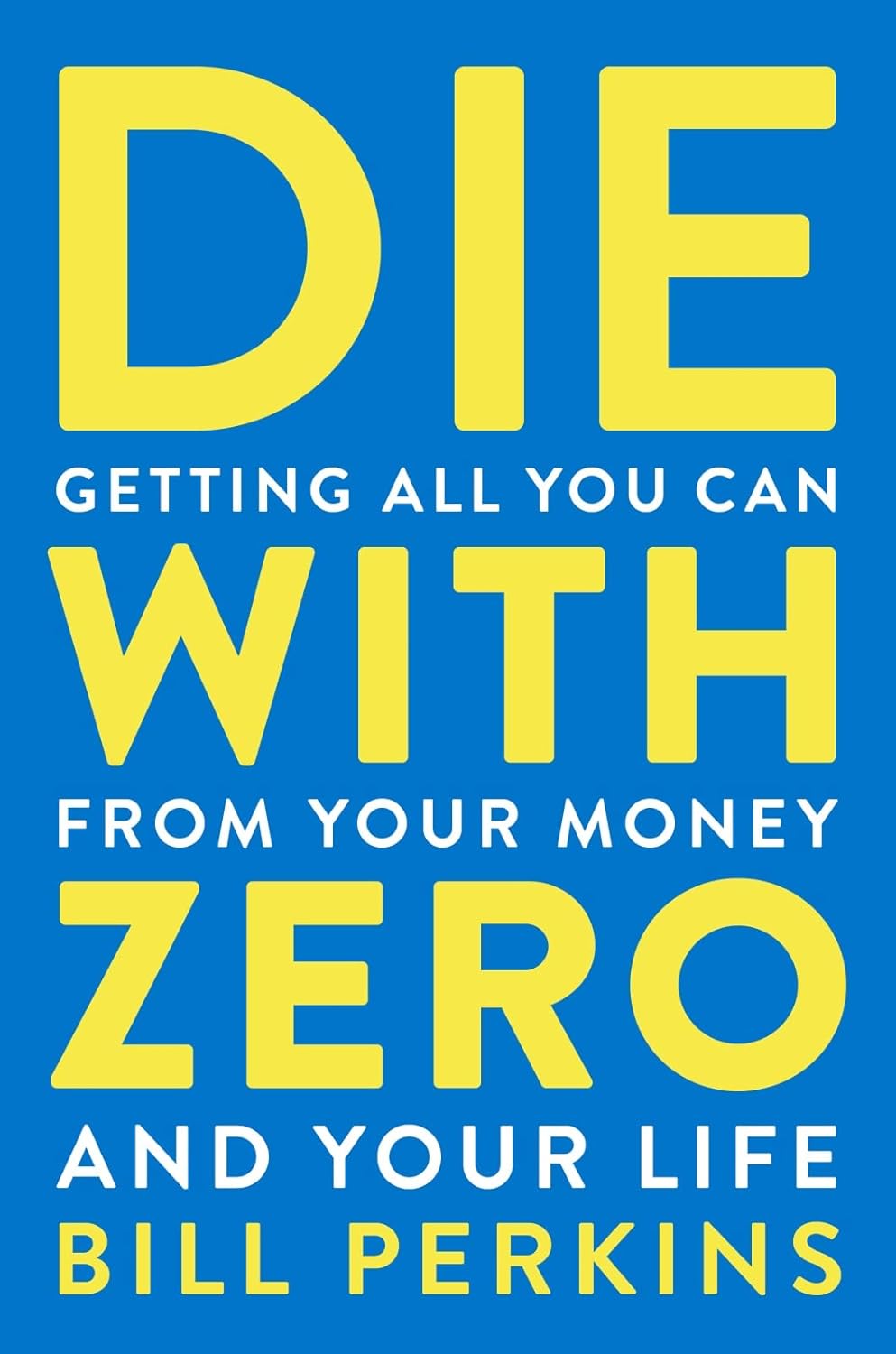
Book facts
Author: Bill Perkins
First published: 2020
Core subjects: Personal finance, time, experiences, spending, giving, and life planning
Central idea: Use money to maximize meaningful life experiences instead of treating accumulation as the finish line.
The goal is not to spend without thinking. The goal is to think clearly about what your money is meant to make possible.
What “die with zero” really means
The title is deliberately provocative. Perkins does not expect anyone to predict the exact day they will die or empty every account beforehand. “Zero” works better as a direction than as a literal target: do not sacrifice your entire life to accumulating a pile of money you never use.
Money has a changing ability to create happiness. A family trip may be easier with young children than when everyone is older. A physically demanding adventure may be possible at 35 but not at 75. Time with parents, friends, or a partner may be valuable precisely because a particular season will not last. Saving is powerful, but waiting has an opportunity cost too.
The practical balance is security first, then intentional enjoyment. Keep a reasonable emergency reserve, handle expensive debt, protect people who depend on you, and invest for the future. After those foundations are covered, ask whether additional accumulation is actually improving your life—or merely soothing fear.
Four practical lessons from the book
1. Put experiences on the financial plan
Many budgets contain bills, savings, and investments but no line for living. Perkins encourages readers to treat experiences as legitimate uses of money. Make a list of activities that matter to you: visiting family, learning a skill, taking a trip, attending a cultural event, or creating unhurried time together. Give those priorities a place in the plan instead of hoping they happen accidentally.
2. Think in time buckets
Divide your life into broad stages and match experiences to the stage in which they are most enjoyable. Some plans belong now, some belong in midlife, and some can wait for later. This prevents a common mistake: saving for everything at once while missing opportunities that are age-sensitive. A time bucket can be as simple as “this year,” “the next five years,” and “later.”
3. Count the memory dividend
A good experience can pay you twice: once when it happens and again when you remember it. Photos, stories, shared jokes, and the confidence gained from trying something new can continue providing value. When comparing purchases, consider not only the momentary price but also the lasting meaning. A cheaper object may be forgotten; a carefully chosen experience may keep enriching your relationships for decades.
4. Give while it helps
Perkins also discusses transferring wealth during the recipient’s useful years, rather than automatically waiting until the end of life. Help can have greater impact when a child is starting a business, buying a first home, paying for education, or raising a young family. Giving should never endanger your own security, but thoughtful timing can make generosity more useful and more joyful.
A step-by-step way to apply the ideas
- Set your safety floor. Write down the amount you need for essential spending, emergency cash, insurance, debt payments, and long-term obligations. This is the foundation you do not casually spend.
- Define “enough” for this season. Decide what level of saving and investing supports your goals without requiring every nonessential desire to be postponed.
- Build an experience inventory. List ten meaningful experiences, relationships, or forms of time you want to protect. Mark which are age-, health-, or relationship-sensitive.
- Assign a modest budget. Create a monthly or annual “life now” amount. Automate it if necessary, just as you automate investing. Spending money intentionally is easier when it is planned rather than debated every time.
- Schedule the first action. Book the visit, reserve the class, plan the weekend, or arrange the conversation. A goal that is not on a calendar remains a wish.
- Review annually. Revisit your health, family responsibilities, income, and priorities. Increase saving when your foundation is weak; increase meaningful spending when you are safe but chronically postponing life.
What to question—and what not to copy blindly
The book’s strongest contribution is its reminder that over-saving is possible. Its weakest interpretation would be using the title as permission for impulsive consumption. “Spend more” is not automatically wise if you have high-interest debt, no emergency fund, inadequate insurance, or dependents who need protection. Nor does a luxury purchase become meaningful merely because it is expensive.
Readers should also remember that life expectancy, health, family structure, culture, and risk tolerance differ. A good plan may involve more saving for one person and more present-day spending for another. The test is whether the trade-off is conscious and aligned with values—not whether it follows a universal percentage.
Bottom line
Die With Zero reframes wealth as a resource for living rather than a score to defend forever. Perkins’s message is especially valuable for disciplined savers: build enough security to sleep well, then give your money a job that supports the life you want to remember. Wealth is not only what remains in an account. It is also the time reclaimed, the people helped, the memories created, and the courage to use resources before the opportunity passes.
Sources and credits
- HarperCollins publisher information for Die With Zero
- Open Library edition record (ISBN 9780358567097)
- Amazon.com product page for the verified Bill Perkins edition
- Cover credit: Amazon.com product imagery for the verified edition, displayed for identification and reference.
Related reading: Personal Finance Fundamentals is a useful next step for beginners who want to build a simple money system.