Starting with limited money can feel like a disadvantage, but The Power of Broke makes a provocative case for seeing constraints differently. Daymond John, founder of FUBU and a Shark Tank investor, with Daniel Paisner, argues that a tight budget can sharpen creativity, focus, and customer understanding. The book is not a promise that financial hardship is easy or desirable. It is a reminder that resourcefulness is an asset—and one that can be practiced even when resources grow.
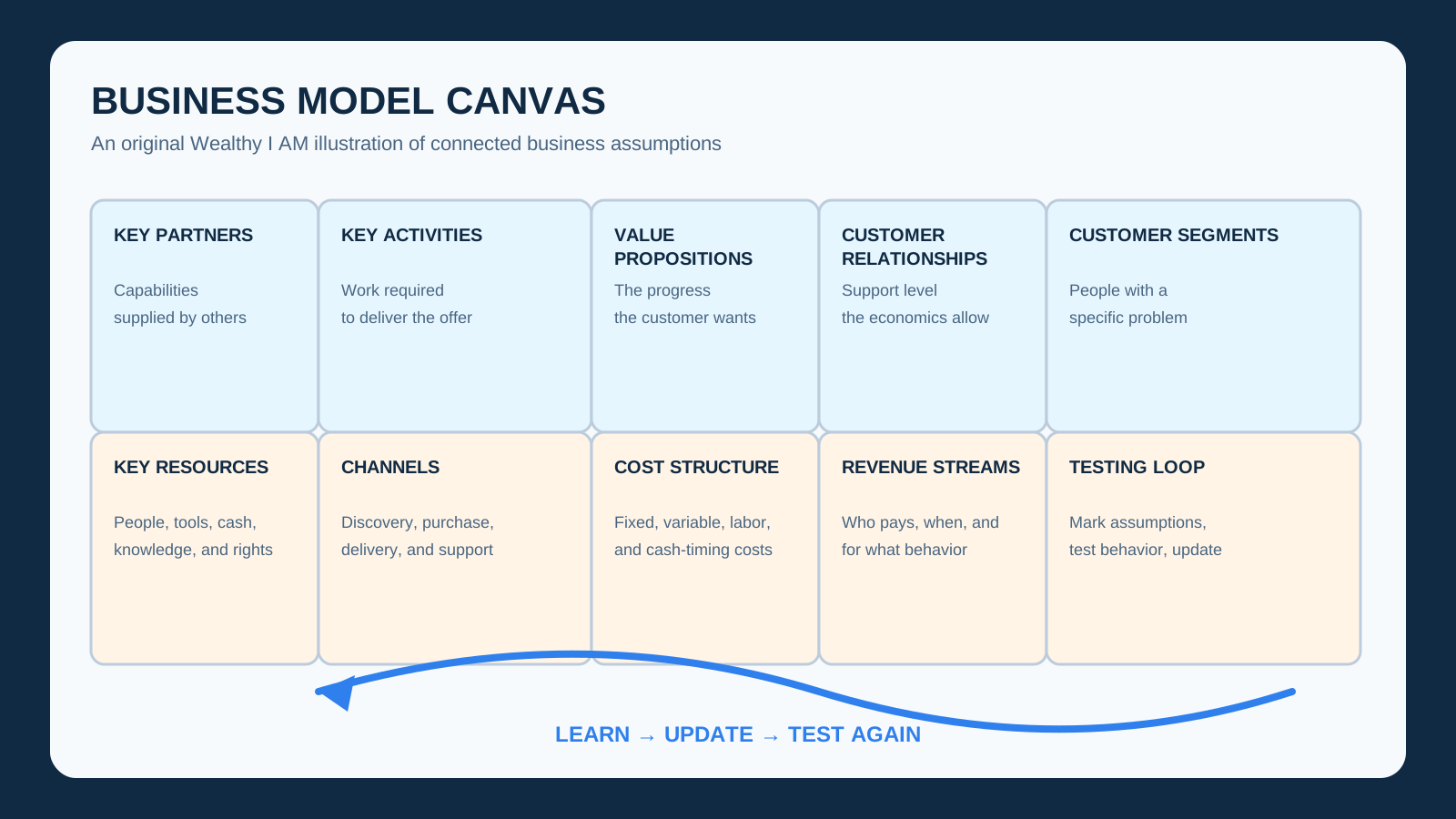
For readers interested in entrepreneurship and wealth building, the useful question is not “How do I look successful?” It is “How can I create genuine value with what I have today?” That shift moves attention away from appearances and toward customers, experiments, relationships, and disciplined execution.
Book facts
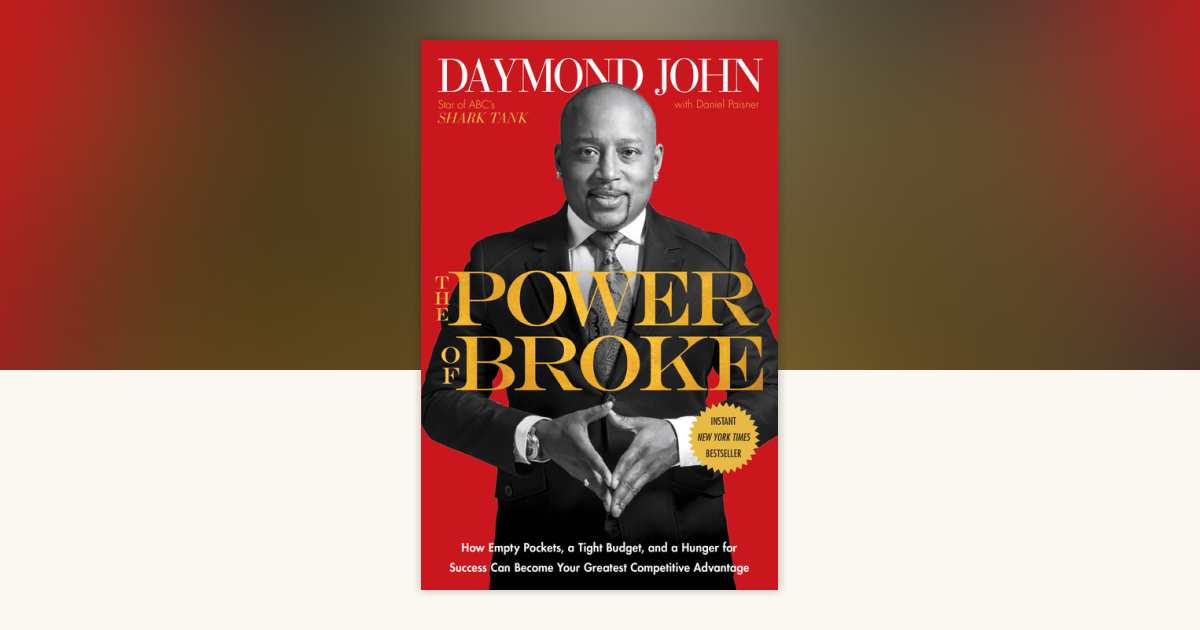
- Full title: The Power of Broke: How Empty Pockets, a Tight Budget, and a Hunger for Success Can Become Your Greatest Competitive Advantage
- Authors: Daymond John and Daniel Paisner
- Original publication: 2016
- Publisher: Currency
- Core themes: Resourcefulness, customer connection, branding, focus, innovation, and entrepreneurial persistence.
The central idea: constraints can improve decisions
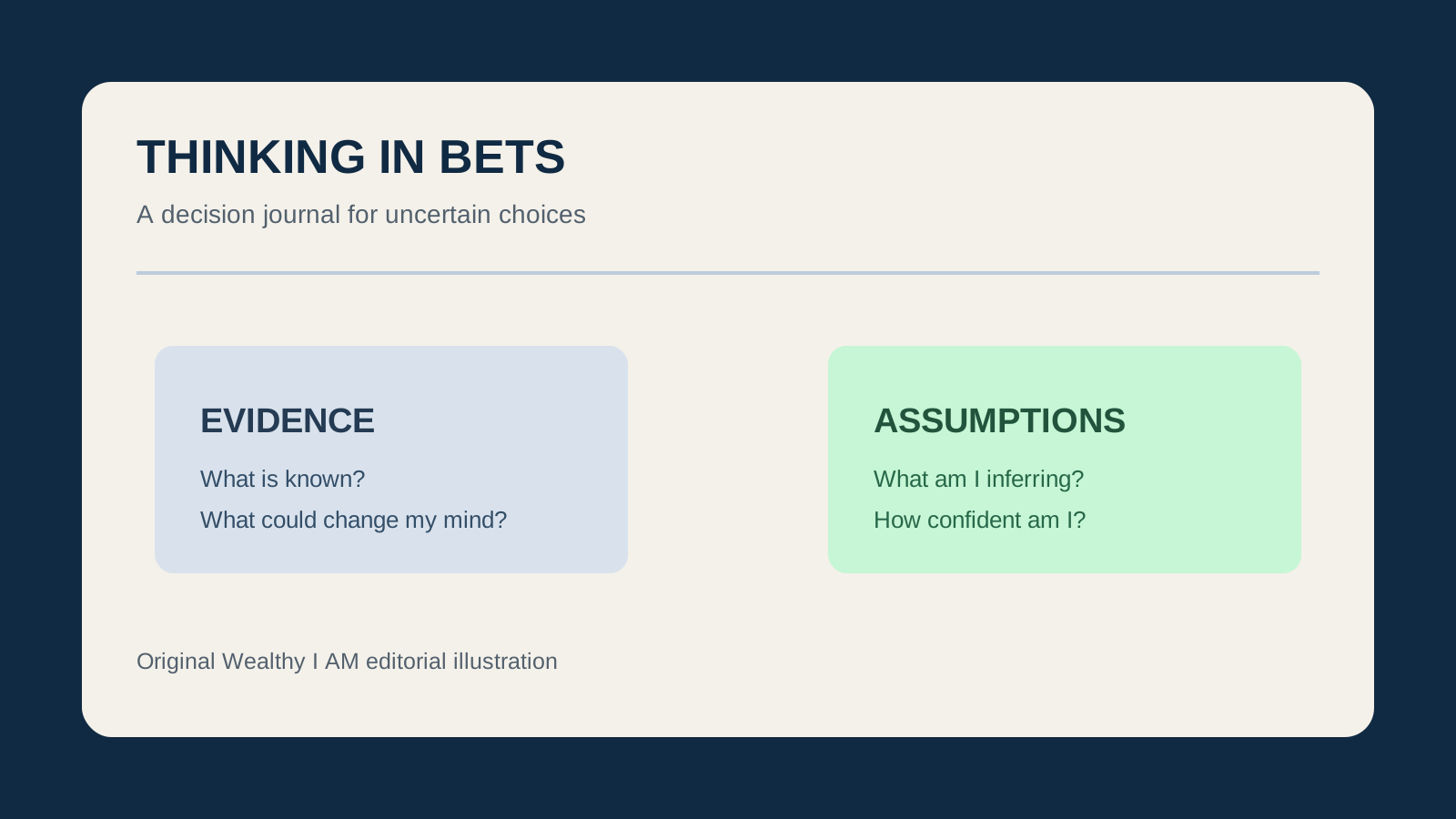
When money is abundant, it is easy to solve every problem by spending. A small business can buy more advertising, hire more help, or build more features before it knows what customers truly want. Scarcity removes those shortcuts. It encourages a founder to ask better questions: What can I test cheaply? Which customer problem matters most? What existing relationship, skill, or tool can help me move forward?
John’s own early FUBU story illustrates this principle. With limited funds, he used homemade products, direct customer knowledge, and creative promotion rather than waiting for ideal conditions. The lesson is not that every founder should imitate one campaign. It is that proximity to the customer can be more valuable than a large budget.
Seven practical lessons from the book
1. Start with the resources already in reach
Make a resource inventory before making a spending plan. Include your skills, past work, contacts, audience, equipment, knowledge, and available time. Then match one resource to one customer problem. This exercise often reveals a low-cost first step that a broad business plan hides.
2. Solve a specific problem for a specific person
“Everyone” is rarely a useful customer segment. Choose a group you understand and identify a frustration they already experience. Ask about what they did last time, what it cost, and what they tried. Specific conversations produce better evidence than compliments or hypothetical promises.
3. Let the offer prove itself
Substance beats appearance. A polished logo, expensive office, or large launch does not prove demand. Create the smallest useful version of your offer and invite real people to pay, commit, or use it. Revenue is not the only signal, but behavior is stronger evidence than enthusiasm alone.
4. Turn limitations into a creative brief
Give yourself a clear constraint: a fixed test budget, a short deadline, or one channel for reaching customers. Constraints can force sharper choices. Instead of asking how to compete with a large company everywhere, ask where your personal knowledge, speed, or authenticity gives you an edge.
5. Build attention through relevance, not noise
The book emphasizes imaginative marketing. Attention is useful only when it reaches the right audience and connects to a real benefit. Tell a clear story about whom the product is for, why it exists, and what changes for the customer. Partnerships, demonstrations, useful content, and customer referrals can outperform generic promotion when the message is specific.
6. Protect focus as carefully as cash
Scarcity can create urgency, but scattered urgency creates exhaustion. Select one primary outcome for the next season of work. Delay side projects, unnecessary features, and status spending until the core offer is working. Focus increases the chance that each hour and dollar contributes to learning or value creation.
7. Reinvest in capability and trust
Early profits should strengthen the engine of the business. Reinvest selectively in quality, customer service, systems, useful skills, and distribution. Keep promises, communicate clearly, and treat every customer interaction as reputation-building. Trust compounds: it lowers friction, creates referrals, and can become a durable business asset.
A simple 14-day “power of broke” experiment
- Days 1–2: Choose one customer group and list its three most expensive or frustrating problems.
- Days 3–4: Conduct five short conversations focused on past behavior, current alternatives, and willingness to change.
- Days 5–6: Design one small offer that produces a visible outcome. Set a price or clear commitment.
- Days 7–9: Reach out personally to ten relevant prospects or partners. Explain the problem and invite a concrete next step.
- Days 10–12: Deliver the offer manually. Observe where the process is slow, confusing, or surprisingly valuable.
- Days 13–14: Review the evidence. Keep what customers valued, remove what they ignored, and decide whether to repeat, revise, or stop.
This process protects capital while increasing learning. It also separates a real business opportunity from an idea that merely feels exciting.
What to take—and what to question
The strongest contribution of The Power of Broke is its insistence that entrepreneurial advantage can come from creativity, customer intimacy, and persistence—not only from funding. It is especially helpful for people who are waiting for permission, a perfect plan, or a large investment before beginning.
At the same time, readers should not romanticize poverty or assume hustle replaces sound financial planning. A limited budget can increase risk, and essential living needs deserve protection. Use the book’s mindset to improve experiments and resource allocation, not to ignore emergency savings, fair compensation, legal obligations, or responsible borrowing.
Bottom line
The Power of Broke offers a practical entrepreneurial question: what can you create with your current resources that solves a real problem for a real person? Start small, listen closely, market with relevance, and reinvest in what works. Those habits can turn constraint into clarity—and clarity is a foundation for sustainable wealth.
Sources & credit
- Penguin Random House publisher page — title, authors, publication details, description, and book context.
- Amazon.com product page — matched U.S. product page for ISBN 1101903597.
- Cover image — Penguin Random House high-resolution cover image; credit to the publisher/rightsholder.