What if the best chief executives were not the loudest people in the room? William N. Thorndike Jr.’s The Outsiders studies eight leaders who built remarkable long-term shareholder value by thinking differently about capital, incentives, and time.
The core lesson is practical. A leader’s job is not merely to make a company larger. It is to increase the value created for each owner over time. That requires careful choices about reinvestment, acquisitions, debt, dividends, share repurchases, and the people responsible for making decisions.

What the book is about
Thorndike profiles Warren Buffett, John Malone, Katharine Graham, Henry Singleton, Tom Murphy, Bill Anders, William Stiritz, and Dick Smith. They led companies in different industries, but they shared a distinctive operating style: rational capital allocation, low-profile leadership, frugality, decentralization, and a willingness to ignore fashionable opinion.
This is a book about decisions rather than slogans. A business can earn cash and still destroy value if management spends it on an overpriced acquisition or an unproductive project. Conversely, a modest-looking company can compound strongly when its leaders allocate every available dollar with discipline.
Seven lessons worth applying
1. Measure per-owner value
Revenue, headcount, total earnings, and market share can all rise while owners become no richer. The Outsiders emphasizes value per share because it considers both business performance and the number of claims on the business. In a small company or household, the equivalent is tracking durable profit, investable surplus, and value created—not activity for its own sake.
2. Make capital allocation a leadership habit
When cash arrives, compare its possible uses. Reinvesting in operations may be best, but sometimes debt reduction, a reserve, a carefully priced acquisition, or returning cash to owners is wiser. The important habit is to compare alternatives rather than follow a default. Every dollar has an opportunity cost.
3. Look through earnings to cash
Accounting earnings matter, but they can be affected by timing and reporting choices. Cash flow asks a more grounded question: after keeping the current operation healthy, how much economic cash is actually available? Investors can use this lens when reading a company; entrepreneurs can use it when deciding whether growth is genuinely funded.
4. Keep operations decentralized when possible
Several Outsider CEOs let capable operating leaders run their units while the center focused on capital, portfolio design, and succession. Decentralization is not a lack of control. It means decisions are made close to customers and facts, with clear reporting and accountability. A founder can begin by documenting standards and giving one person ownership of one result.
5. Be patient without becoming passive
Exceptional allocators waited for attractive opportunities and avoided deals motivated by prestige. Patience protects capital, but it should not become an excuse for indecision. Define what would make an opportunity attractive, prepare in advance, and act decisively when the evidence and price meet your standard.
6. Align incentives with durable results
People optimize what leaders reward. Incentives tied only to sales, size, or quarterly earnings can encourage fragile growth. Better measures include cash conversion, customer retention, return on invested capital, quality, and long-term per-owner value. In personal finance, automate the behaviors that serve your future self before optional spending can absorb the money.
7. Let independent judgment beat consensus
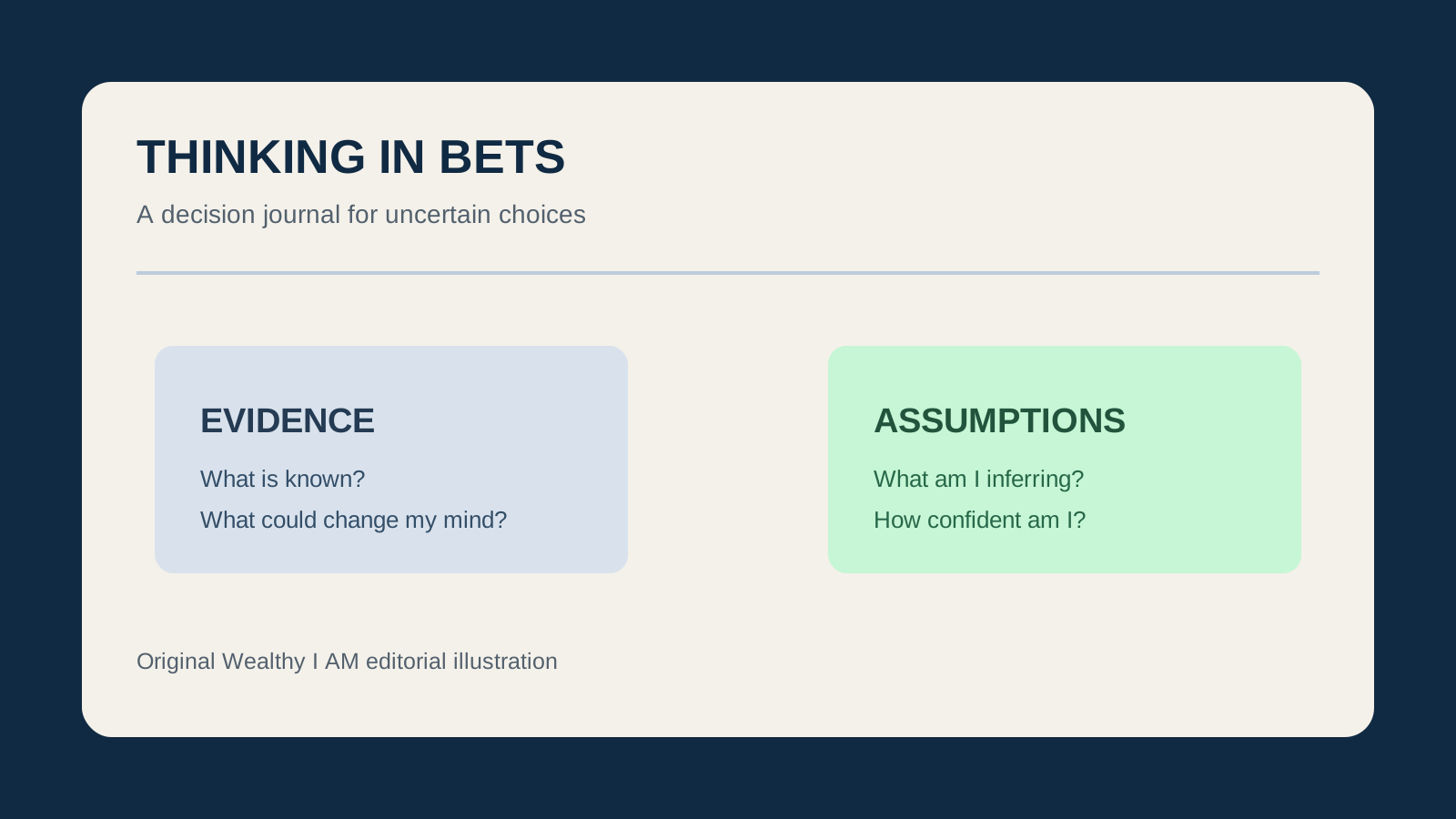
The leaders in the book were not contrarian for show. They were willing to disagree because they had a clear model of value and a long time horizon. The lesson is to write down why you believe an investment or business decision is sound, what could disprove it, and what would make you change your mind.
A practical step-by-step wealth playbook
- Choose one primary outcome. For the next twelve months, select owner profit, investable savings, recurring revenue, or another measurable result. Keep secondary metrics, but do not let them obscure the main aim.
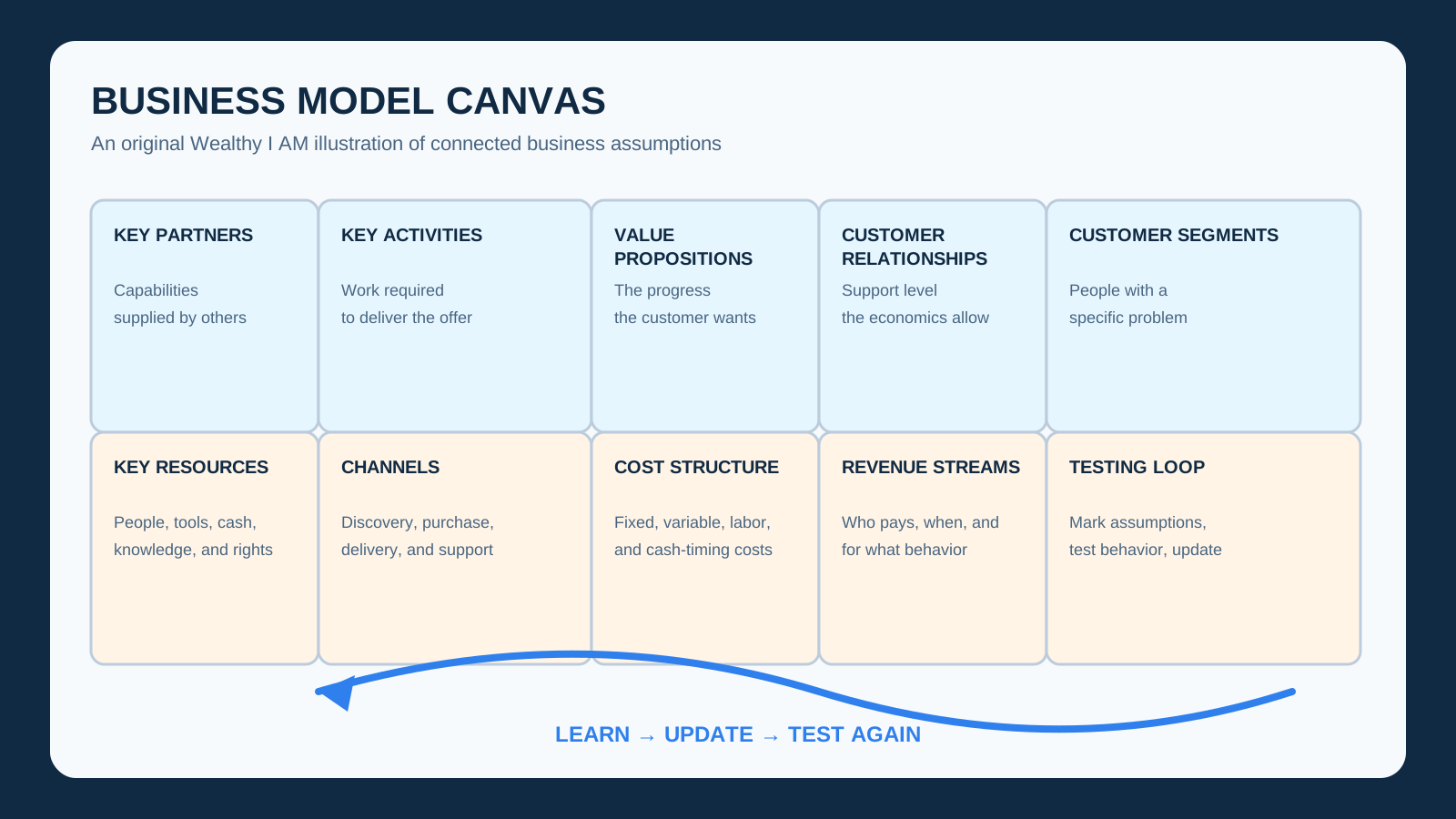
- Map your cash. List inflows, fixed costs, variable costs, maintenance needs, debt service, reserves, and growth spending. Separate what keeps life or the business running from what may improve the future.
- Rank the alternatives. Compare an extra debt payment, an emergency fund, training, equipment, marketing, a diversified investment, or a new hire. Estimate benefit, risk, reversibility, and time to payoff.
- Write an investment memo. Before committing money, record the thesis, assumptions, expected return, downside, time horizon, and reason for acting now. Review it later so you judge the process, not just the outcome.
- Remove low-value complexity. Cancel unused subscriptions, simplify accounts, close weak projects, and stop meetings that do not produce decisions. Disciplined subtraction creates attention and cash for better uses.
- Delegate a result. Give a trusted person authority over a defined outcome, the information needed to decide, and a review cadence. This develops ownership thinking instead of dependence on one central decision-maker.
- Review quarterly and think in years. Compare actual results with your assumptions. Change course when facts change, but do not abandon a sound long-term plan because of one noisy month.
What to be careful about
The book’s examples are exceptional, and that makes them inspiring but not automatically repeatable. Their results came from particular industries, eras, teams, balance sheets, and opportunities. Capital allocation always includes uncertainty; a rational decision can still produce a poor result.
Shareholder returns are also not the only measure of a healthy organization. Employees, customers, communities, and the environment matter. The useful reading is not “maximize numbers at any cost.” It is “make deliberate decisions about scarce resources, understand trade-offs, and judge progress honestly.”
Bottom line
The Outsiders shows that great leadership can look quiet. Its strongest CEOs were rational, frugal, independent-minded, and focused on the long-term economics of ownership. For everyday wealth building, the takeaway is clear: create productive cash, allocate it deliberately, avoid status-driven complexity, align incentives with durable value, and give patience enough time to compound.
Sources and credits
- Harvard Business Review Press official book page
- Google Books bibliographic record
- Amazon.com product page
- Cover credit: Harvard Business Review Press product image, used as the matched cover for this article.