Disciplined Entrepreneurship: 24 Steps to a Successful Startup by Bill Aulet is a practical guide to turning an idea into a company customers actually want. Its central message is encouraging: entrepreneurship is not reserved for people with perfect instincts. It is a craft that improves when founders work through a disciplined sequence of questions, evidence, and decisions.
Rather than treating a startup as a burst of inspiration, Aulet presents an integrated process. The early work is about choosing a customer and understanding a painful problem. The later work is about creating a solution, testing its economics, building a sales process, and designing a business that can grow. That makes the book useful for a first-time founder, an employee testing an internal venture, or anyone who wants to build wealth by creating real value.

The big idea: replace guesswork with a process
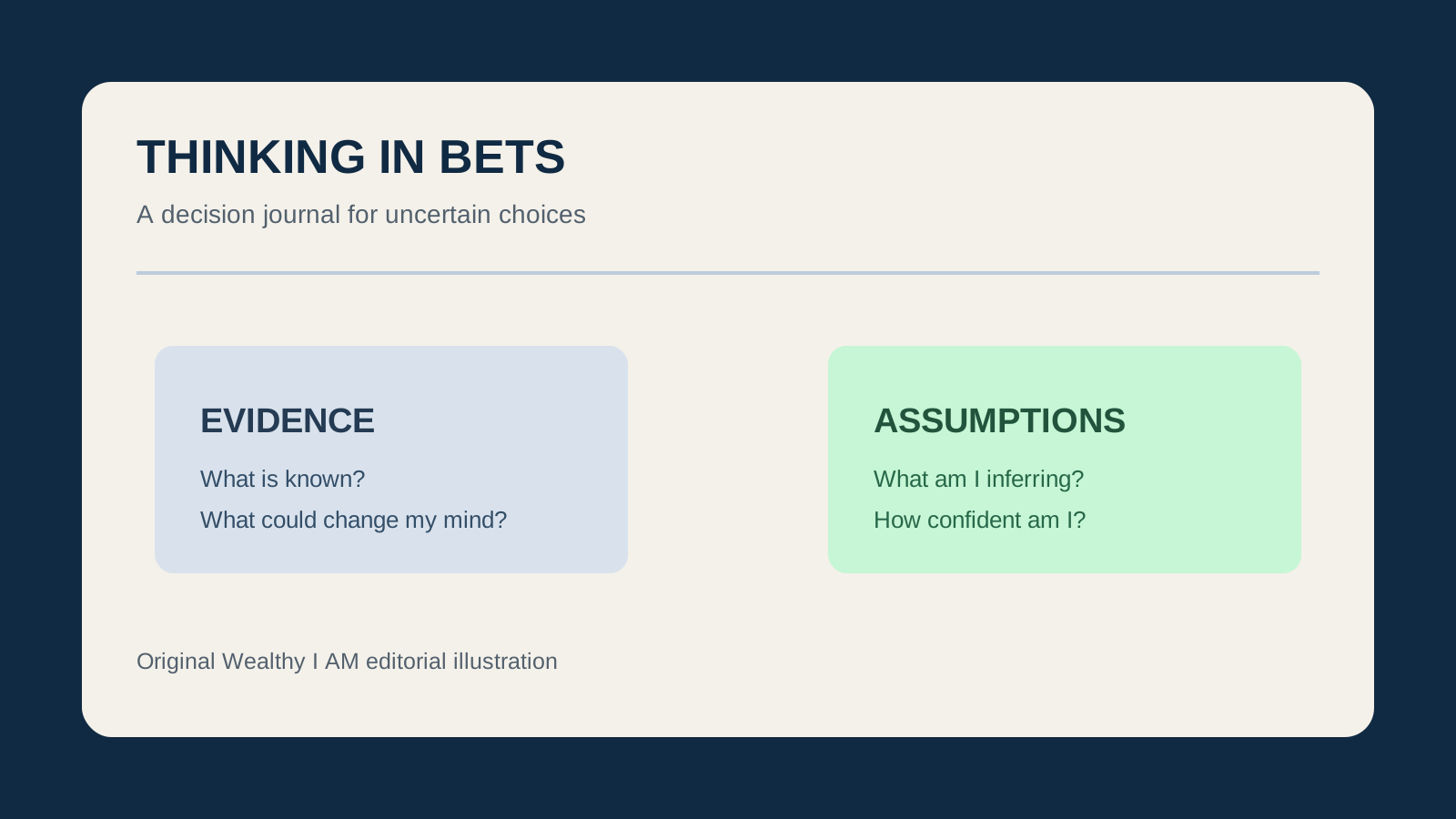
A startup begins with uncertainty. You may not know exactly who will buy, which feature matters most, what price is acceptable, or how customers prefer to purchase. The wrong response is to hide those unknowns behind a large product launch. Aulet’s approach is to make the uncertainty visible, then reduce it one decision at a time.
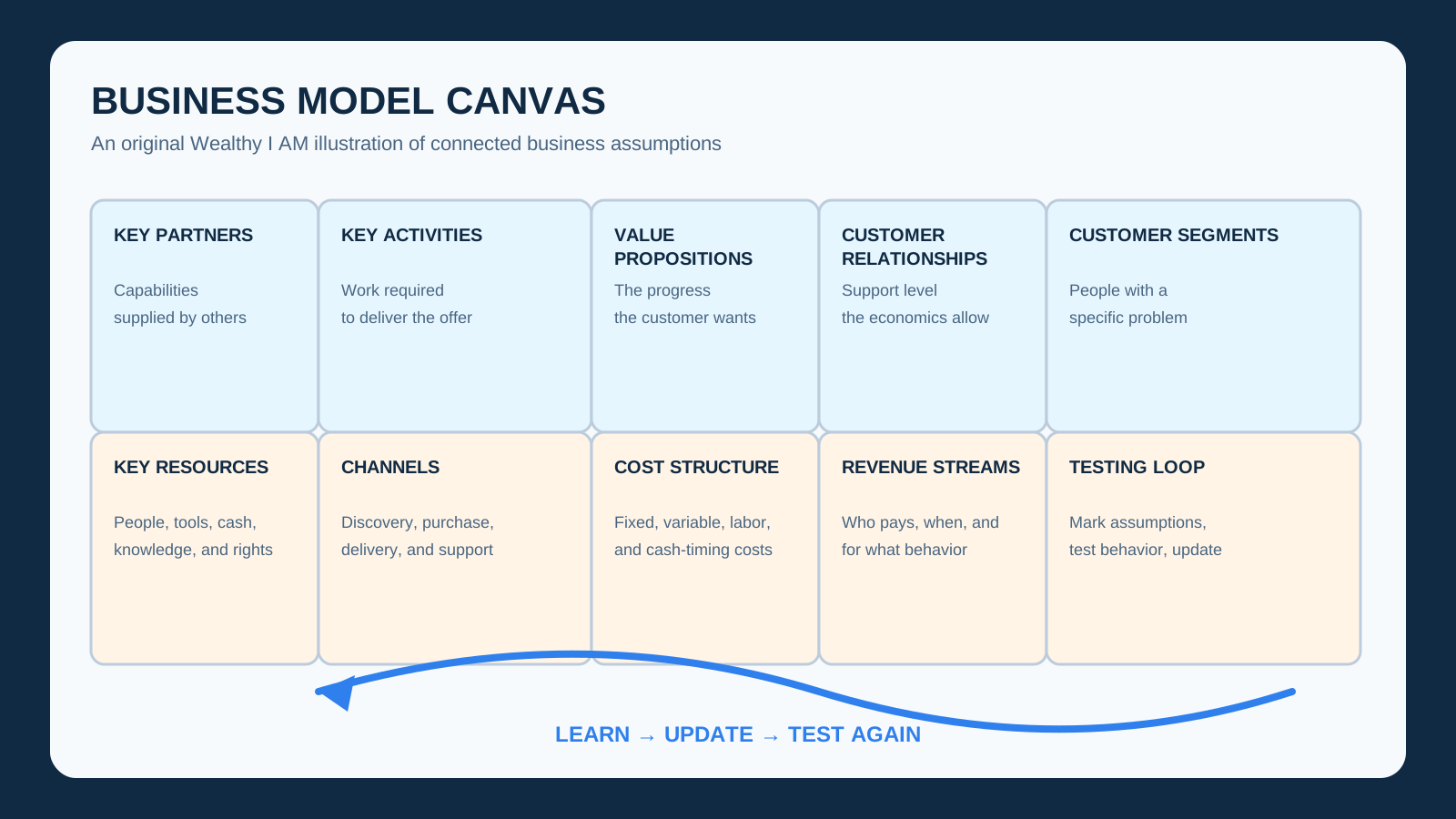
The framework moves from market selection to customer definition, value proposition, product design, pricing, sales, and scale. The steps are connected rather than a rigid checklist: new evidence can send you back to an earlier assumption. That flexibility matters because disciplined entrepreneurship is not about pretending to know the future. It is about learning quickly enough to make better bets.
Five lessons founders can apply
1. Choose a beachhead market
“Everyone” is not a useful first customer. A beachhead market is a narrow group with similar needs, buying behavior, and ways of measuring value. For example, “small businesses” is broad; “independent dental practices with two to five locations that lose appointments to manual reminders” is more actionable.
A focused starting market helps you speak the customer’s language, find useful references, and build a product that solves a meaningful problem instead of collecting random features. It does not mean you are trapped there forever. It means you are choosing a place where concentrated effort can create traction.
2. Define the end user and the decision-making unit
The person who uses a product may not be the person who approves the purchase. Aulet separates the end user from the decision-making unit: the people who influence, authorize, pay for, or block a buying decision. This distinction prevents a common mistake—designing a delightful tool for one person while ignoring the budget owner, administrator, or compliance reviewer.
Write down each role. What does the user want to accomplish? What risk worries the buyer? What proof does an influencer need? Your product, message, and sales process become sharper when these questions are answered separately.
3. Build a value proposition around a painful job
A feature is not automatically a benefit. Customers pay for a meaningful improvement: less wasted time, lower risk, more revenue, greater convenience, or a result they could not reliably achieve before. The value proposition should describe the customer, the problem, and the specific outcome your solution provides.
Use evidence instead of enthusiasm. Interview potential customers about what they do now, what the problem costs, and what they have already tried. Ask about recent behavior rather than hypothetical interest. A polite “that sounds useful” is not the same as a purchase, pilot, referral, or commitment of time.
4. Design the whole product, not just the core feature
The core product may be clever, but customers experience the whole product: onboarding, support, integrations, training, reliability, payment, security, and the surrounding workflow. A founder who solves only the technical problem can still lose because the customer cannot adopt the solution.
List everything required for the promised outcome. Then rank those elements by how strongly they affect adoption. A simple onboarding guide or reliable export may create more value than another impressive feature. Wealth is built when a useful solution becomes easy to buy, use, and recommend.
5. Treat pricing and distribution as part of the product
Pricing is not an afterthought. It signals value, determines whether the economics can support the company, and influences which customers are a good fit. Start with the value created and the alternatives available to the customer. Then test a price with real conversations, not only a spreadsheet.
Distribution is equally important. A product no one can find will not create a business. Decide whether customers will buy through direct sales, partnerships, content, communities, marketplaces, or a self-serve website. The best channel depends on the customer’s habits and the complexity of the purchase. Build a repeatable path from awareness to adoption.
A step-by-step exercise for this week
- Write three possible markets. Describe each by a specific customer type, not a demographic label alone.
- Choose one beachhead. Score each market for urgency, ability to pay, access, and similarity of needs.
- Interview five people. Ask how they solve the problem today, what it costs, and who approves a purchase.
- Draft one outcome-based promise. State who you help, what painful job you improve, and what measurable result should follow.
- Build the smallest whole product. Include the support, onboarding, and delivery pieces needed for a customer to succeed.
- Test a real commitment. Seek a paid pilot, signed letter of intent, scheduled implementation, or another action stronger than praise.
- Record what changed. Update your assumptions after every conversation. Keep a simple table of evidence, confidence, and next test.
How the framework supports wealth building
Entrepreneurial wealth does not come from calling an idea valuable. It comes from repeatedly creating an outcome customers value, capturing part of that value as revenue, and building systems that can deliver it efficiently. Aulet’s process links these pieces.
Market focus can reduce wasted spending. Customer research can prevent months of building the wrong product. A clear value proposition can improve sales. Better pricing can create healthier margins. A repeatable sales process can make revenue less dependent on a founder’s personal effort. Together, these are practical forms of leverage.
The framework also encourages a healthier relationship with risk. You do not need certainty before taking the next step. You need a defined assumption and a low-cost way to test it. That approach protects capital and turns learning into an asset.
Important cautions
Disciplined process is not a guarantee. Markets change, competitors respond, and some ideas fail even after careful work. The framework should support judgment, not replace it. Customer interviews can be biased, early adopters may not represent the mainstream, and a business can grow revenue while losing money.
Use accurate bookkeeping, respect privacy and consumer-protection rules, and avoid promising outcomes you cannot support. Test demand before making large commitments. A “fail fast” slogan is not an excuse to treat customers, employees, or investors carelessly.
Bottom line
Disciplined Entrepreneurship turns startup advice into a sequence of practical questions: Who is the customer? What painful job needs to be done? Why is this solution meaningfully better? How will people buy it? Can the economics support a durable company? Answering those questions with evidence gives founders a better chance of building something valuable—and gives wealth-minded readers a grounded model for converting skills and insight into sustainable enterprise value.