Many people approach work, business, and money as if they were races with a finish line. They chase the next promotion, the next revenue milestone, or the next market ranking. Milestones matter, but they are not the whole game. Once one target is reached, another appears. The deeper challenge is building a life and an organization that can keep creating value through changing conditions.
In The Infinite Game, Simon Sinek argues that business and leadership are better understood as an open-ended game. Finite games have known players, fixed rules, and a clear endpoint. Infinite games have changing participants, evolving rules, and no final winner. The goal is not to defeat everyone forever; it is to stay capable of playing, learning, adapting, and contributing. That shift offers an unusually practical way to think about durable wealth.
The book’s central idea
Sinek’s framework asks leaders to identify whether they are using a finite or infinite mindset. A finite-minded business focuses on beating a named competitor, hitting a short-term number, or becoming “number one.” An infinite-minded business still tracks performance, but treats those measures as feedback rather than a final verdict. It protects the organization’s ability to innovate, earn trust, serve customers, and remain healthy over time.
This matters for personal wealth too. A salary, portfolio balance, or business valuation is a snapshot. Wealth is more durable when it rests on an engine that can continue: valuable skills, sensible financial habits, strong relationships, ownership of productive assets, and the judgment to adjust when circumstances change.
Five practical lessons from The Infinite Game
1. Define a Just Cause
Sinek describes a Just Cause as a clear vision of a future worth working toward. It is broader than a quarterly objective and more motivating than a slogan. For a company, it might mean making a useful service accessible to a neglected group. For an individual, it might mean creating financial independence that gives a family security and the freedom to do meaningful work.
Try this: Write one paragraph beginning, “I am building toward a future where…” Make it specific enough to guide trade-offs. A strong cause helps you decide which opportunities deserve your time and which merely offer status.
2. Build for the long term
An infinite mindset does not mean ignoring profit or accepting poor performance. It means refusing to sacrifice the organization’s future for a temporary appearance of success. Cutting essential training to make one quarter look better, taking reckless debt to inflate growth, or damaging trust for a quick sale can produce a short-term win and a long-term loss.
Try this: Add a “second-order effects” question to major decisions: “If this works exactly as planned, what might it weaken six months or five years from now?” Then choose a way to preserve cash, trust, capability, or flexibility while pursuing the goal.
3. Welcome worthy rivals
Competitors can be useful teachers. A worthy rival reveals what excellence looks like and forces you to improve. The infinite-minded response is not obsession or imitation. It is asking what the rival’s strengths reveal about your own blind spots and what unique contribution you can make.
Try this: Study one competitor, colleague, or creator you respect. List three things they do exceptionally well and three areas where your values, knowledge, or customer understanding could produce a different advantage. Compete by becoming more useful, not merely louder.
4. Practice existential flexibility
Long-term players need the courage to make a major change when an old approach no longer serves the cause. This is not random reinvention. It is a willingness to let evidence challenge identity. A business may need to change its product, distribution, or customer segment. A professional may need to learn a new skill or leave a comfortable role.
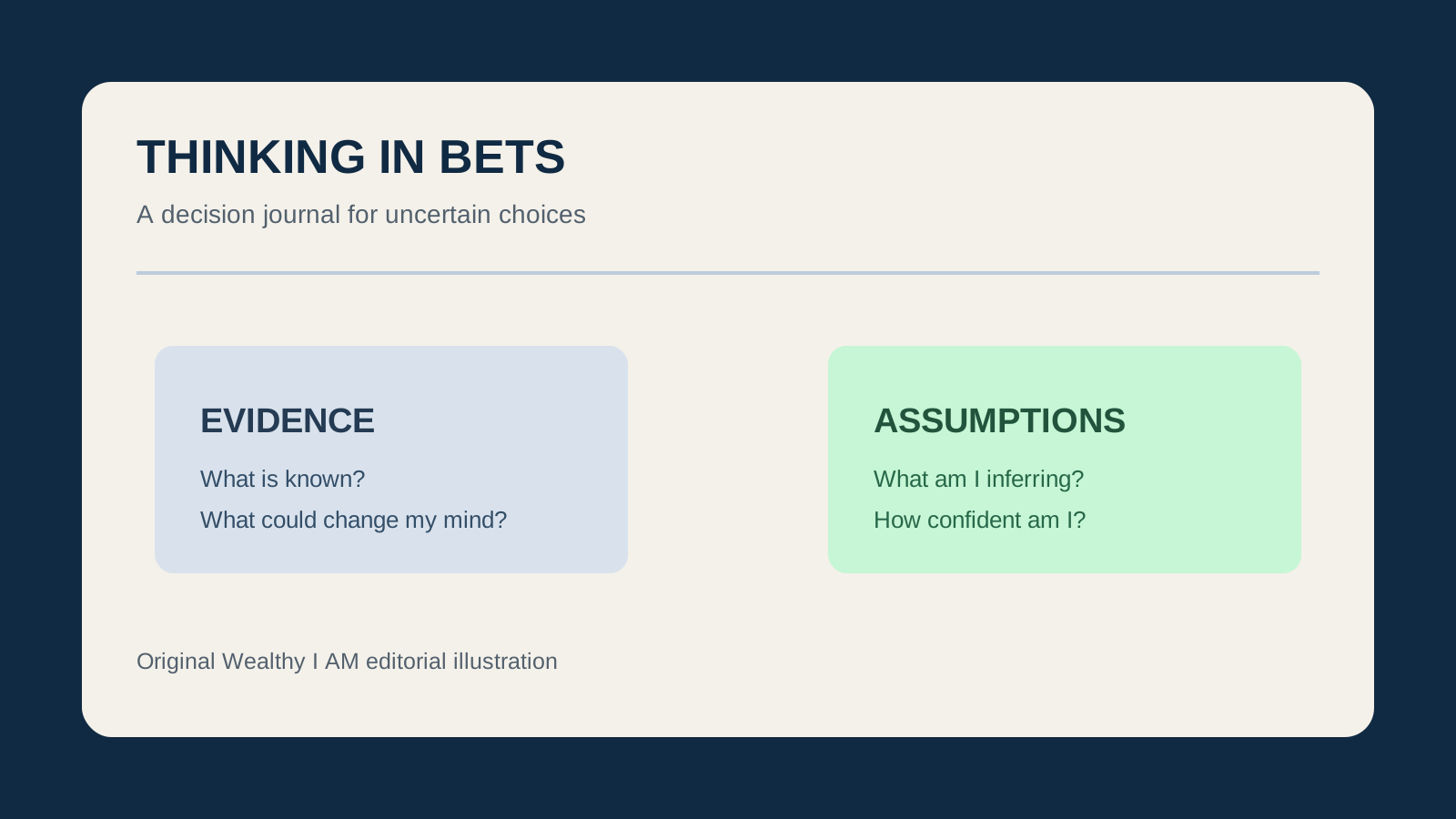
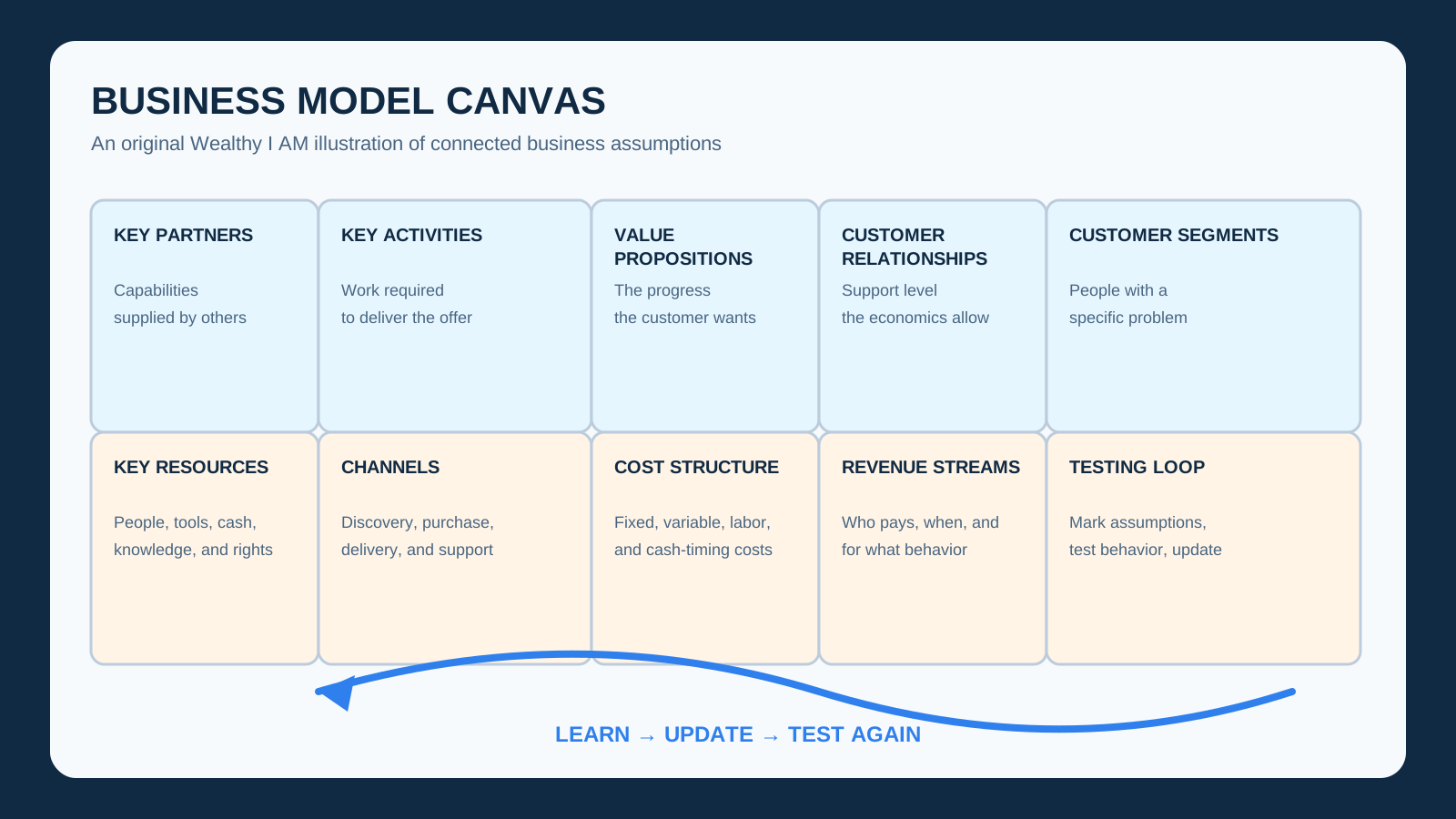
Try this: Identify one assumption your income or business depends on. Run a low-cost test within 30 days. Interview customers, build a small prototype, compare alternatives, or take a course. The purpose is not to predict perfectly; it is to make uncertainty less expensive.
5. Lead with a finite game only when it is useful
Budgets, deadlines, contests, and milestones are not the enemy. They create focus. The problem comes when a temporary score becomes the organization’s identity. A sales target should support customer value; an investment return should be evaluated alongside risk; a promotion should be a step in a career, not proof of permanent worth.
Try this: Pair every short-term metric with a durability metric. Track revenue with retention, profit with cash resilience, portfolio growth with savings behavior and diversification, or output with learning and team health.
How to apply the framework to your wealth plan
- Choose the game. Decide whether your current priority is stabilizing cash flow, increasing earning power, building a business, or investing consistently. You can pursue several goals, but name the primary game for this season.
- Write the cause. Connect money to the life it is meant to support: security, autonomy, generosity, family options, or meaningful work. This keeps financial decisions from becoming an endless scorekeeping exercise.
- Separate scoreboards from foundations. Review your income, expenses, debt, emergency reserves, skills, and productive assets. Ask which foundations make future progress possible.
- Build a 90-day experiment. Pick one action that improves your long-term engine: automate investing, raise a valuable skill, test a focused offer, reduce a recurring expense, or interview potential customers.
- Use a review rhythm. At the end of each month, record what changed, what you learned, and what should be stopped. At the end of 90 days, revise the plan without treating revision as defeat.
A simple example
Imagine a consultant who measures success only by the number of projects completed. That finite score may encourage rushed work and constant discounting. An infinite approach adds a larger purpose—helping a particular kind of client make better decisions—and builds a business that can continue. The consultant might specialize, develop a repeatable diagnostic, create a retainer option, document lessons, and invest part of the more stable cash flow. The immediate project still matters, but it now strengthens a durable system.
What to remember
The Infinite Game does not promise that long-term thinking will remove competition or uncertainty. It offers a better question: what choices help us remain capable of creating value? For wealth builders, the answer is usually less dramatic than a shortcut. Keep learning. Protect your downside. Build trust. Own productive assets. Choose work that compounds skills and relationships. Let short-term goals serve a future you actually want.
The most important victory may be continuing with strength, clarity, and integrity after the temporary scoreboard has been forgotten.
Sources and credits
- Amazon.com product page — The Infinite Game by Simon Sinek, ISBN 9780735213500
- Penguin Random House publisher page
- Simon Sinek official book information
- Cover credit: matched Amazon.com/Google Books product image for the English edition identified above.