Many new businesses fail before they learn what customers actually need. They spend months polishing a product, then discover that the market wanted something different—or did not want it at all. The Lean Entrepreneur by Brant Cooper and Patrick Vlaskovits offers a more disciplined alternative: treat entrepreneurship as a process of learning, testing, and adapting under uncertainty.
The book extends lean-startup and customer-development thinking into a practical guide for visionaries who want to create products people value. Its central challenge is to stop treating an idea as a prediction that must be defended. Instead, treat it as a hypothesis that deserves evidence. That shift can protect time, cash, and confidence while improving the odds of building a sustainable business.
Book facts
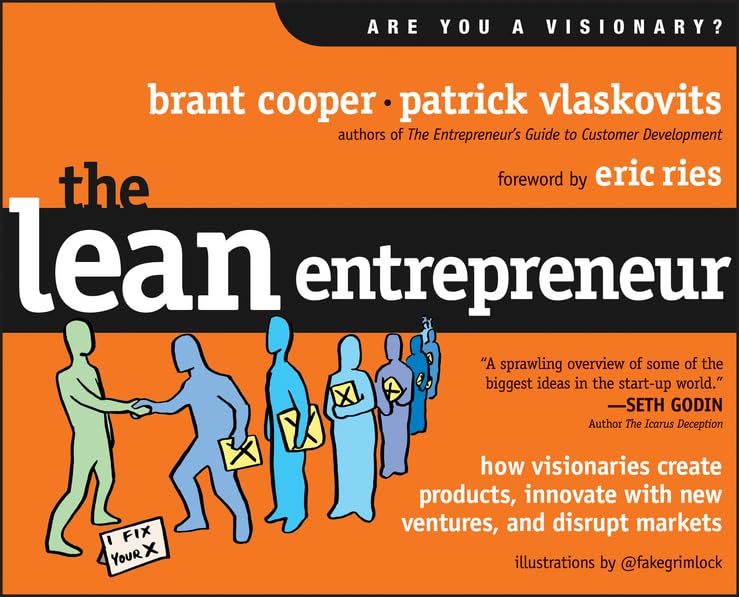
- Title: The Lean Entrepreneur: How Visionaries Create Products, Innovate with New Ventures, and Disrupt Markets
- Authors: Brant Cooper and Patrick Vlaskovits
- Publication: 2013
- Core themes: customer development, experimentation, innovation, value creation, and responsible use of capital
The core idea: vision needs a learning loop
Cooper and Vlaskovits do not dismiss vision. A founder still needs a meaningful problem to pursue and a picture of a better future. But vision becomes useful only when it meets reality. The customer, not the founder’s enthusiasm, decides whether an assumed problem is urgent and whether a proposed solution is valuable.
This creates a repeating loop: identify an important assumption, design the smallest credible test, observe behavior, and use the result to decide what to change. A test is not merely a survey that produces flattering opinions. It should create an opportunity for a real commitment—time, money, data, a pre-order, or repeated use. Evidence is strongest when it reveals what people do rather than what they say they might do.
Five practical lessons for building wealth through entrepreneurship
1. Start with a painful, specific problem
Revenue begins with value. Before building features, describe the customer and the costly frustration in one sentence. “Everyone needs this” is too broad to guide action. A stronger statement names a group, a situation, and the consequence of leaving the problem unsolved.
Action: Write three problem statements. Interview five people who fit the customer profile. Ask about the last time the problem occurred, what they tried, and what it cost them. Do not pitch your solution until you understand the current behavior.
2. Turn assumptions into testable hypotheses
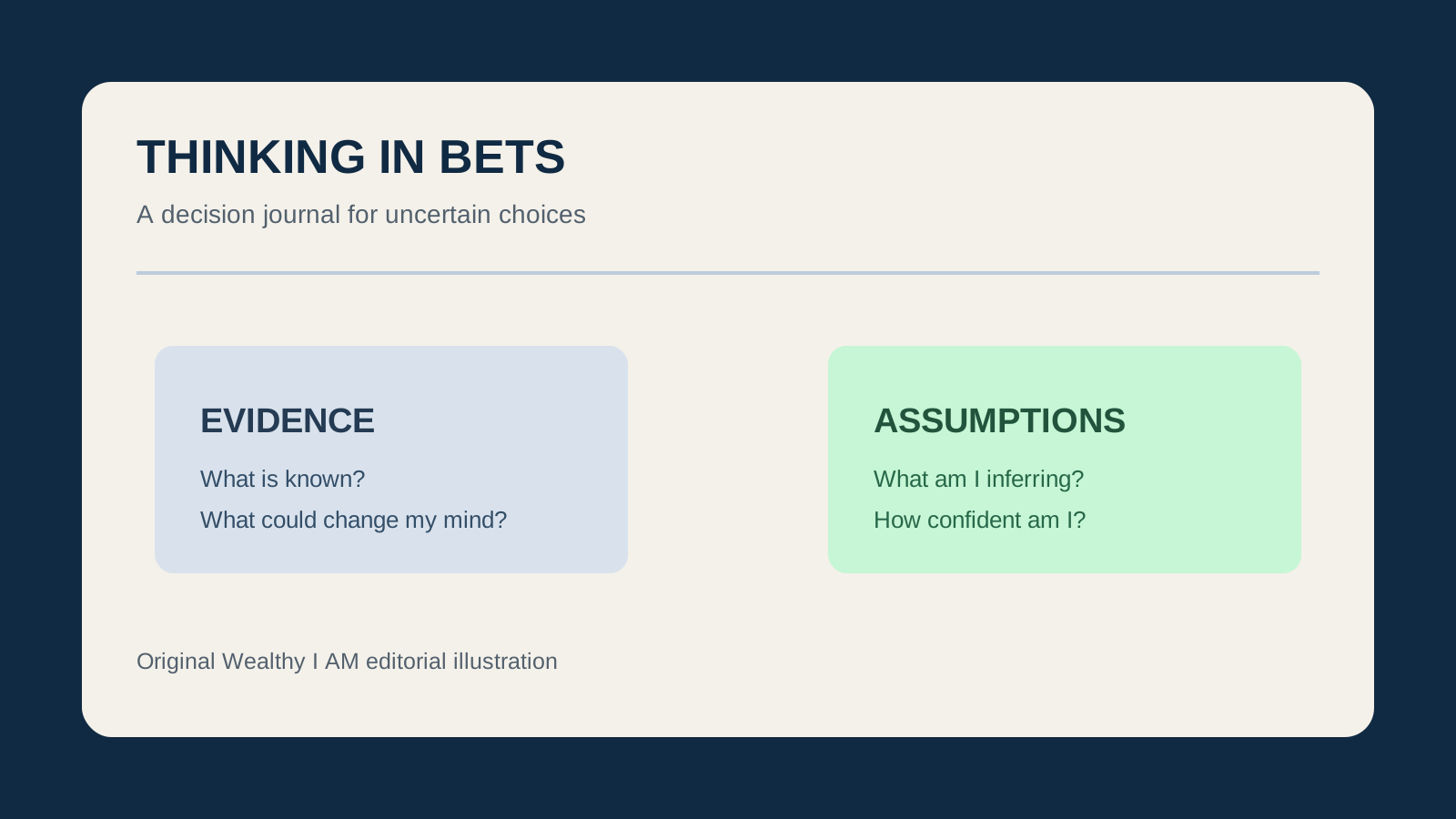
A business model is a collection of guesses: who will buy, why they will buy, how much they will pay, and how you will reach them profitably. Naming those guesses makes them manageable. Rank them by risk. A wrong assumption about customer urgency is usually more dangerous than a minor design preference.
Action: Create a one-page assumption map. For each belief, write the evidence that would support it, the evidence that would disprove it, and the cheapest experiment that could produce either result. This prevents vague optimism from consuming a budget.
3. Build the smallest useful experiment
“Minimum viable product” does not mean careless or broken. It means the smallest experience that can test the most important learning question. A landing page, concierge service, prototype, paid pilot, or manual workflow can reveal demand before software and overhead become expensive.
Action: Choose one measurable outcome for the next experiment: a qualified sign-up, a paid deposit, a completed task, or a second use. Set a deadline and a threshold before you begin. Pre-committed criteria make it easier to learn from disappointing results.
4. Measure progress by learning and economics
Activity can look like progress. A large email list, many meetings, or impressive feature counts may have little connection to a healthy business. The useful question is whether each cycle improves understanding and moves the economics in the right direction.
Track a small set of decision metrics: activation, retention, conversion, acquisition cost, gross margin, and cash runway. A metric matters when a change in it would alter your next decision. If it would not, it is probably a report rather than a learning tool.
5. Pivot without abandoning the mission
When evidence contradicts the original model, changing direction is not automatically failure. The mission can remain stable while the customer segment, channel, pricing, or product changes. The discipline is to distinguish a thoughtful pivot from random motion. A pivot should be based on a clear lesson and a new hypothesis worth testing.
Action: Hold a weekly evidence review. List what you expected, what happened, what you learned, and what you will test next. If the same assumption fails repeatedly, change the model rather than merely increasing effort.
A 30-day lean entrepreneur plan
- Days 1–5: Choose one customer group and document its highest-cost problem. Complete conversations with people who have experienced it recently.
- Days 6–10: Write a concise value proposition and list the five assumptions that could invalidate it.
- Days 11–18: Run a low-cost experiment with a real commitment. Collect behavior and objections, not just compliments.
- Days 19–24: Review conversion, retention, cost, and qualitative feedback. Decide whether to persevere, refine, or pivot.
- Days 25–30: Repeat the experiment with one meaningful improvement. Document the result and protect enough cash for another learning cycle.
This approach connects entrepreneurship with wealth building in a practical way. Capital lasts longer when it funds evidence instead of vanity. Skills improve faster when feedback is frequent. And a business becomes more valuable when it repeatedly solves a real problem for a defined group.
What to remember
The Lean Entrepreneur is not a promise that every startup will succeed. Its value is more honest: it gives founders a way to reduce avoidable waste and make better decisions while the answer is still uncertain. Vision supplies direction; customer evidence supplies correction; disciplined experiments protect resources.
For a reader building a side business, product, or service, the first step is not to make the idea louder. It is to make the next assumption testable. Learn quickly, charge attention to real behavior, and let the business earn the right to grow.
Sources and credit
- Amazon.com product page: The Lean Entrepreneur
- Wiley author and publication information
- Google Books bibliographic record
- Cover image credit: Amazon.com product image for ISBN 111829534X; used here to identify the featured edition.