Quick answer
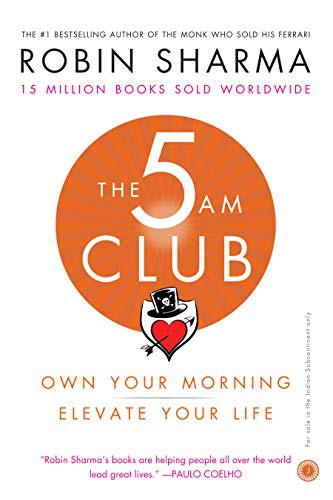
The 5 AM Club: Own Your Morning. Elevate Your Life., by Robin Sharma, presents early rising as a way to protect time for exercise, reflection, learning, creativity, and personal renewal. Its public description also frames the idea through a story, a formula for waking early, and tactics for defending attention from digital distraction.
Waking at 5:00 a.m. does not guarantee wealth or success. The practical question is whether a protected block can help you do meaningful work without reducing sleep, harming health, or turning another person’s schedule into a moral test.
Who this is for: Readers who want a source-bounded overview of Sharma’s public premise and a cautious way to experiment with a morning routine. This is not a chapter-by-chapter summary, medical recommendation, or promise of financial results.
Scope note: what the public description supports
Google Books’ public description presents The 5 AM Club as a narrative about two struggling strangers who meet an eccentric tycoon and receive a morning-routine framework. It names early rising, exercise, self-renewal, personal growth, creativity, focused thinking, and protection from digital distraction. It also describes the method as step by step and characterizes it as neuroscience-based.
Those details support the book’s public positioning, not every chapter, research citation, health claim, or implementation detail. The explanations and experiment below are Wealthy I AM’s editorial application, not verified instructions from the full text.
The central idea: protect valuable attention before the day claims it
Sharma’s public premise treats the first part of the day as protected space. Before messages, meetings, errands, and algorithmic feeds take over, a reader is invited to use quiet time deliberately. The implied mechanism is simple: fewer interruptions may make it easier to exercise, think, learn, create, and decide what deserves attention.
This matters to wealth because wealth-building work depends on capabilities and repeated execution. A routine may create time, but the routine is not the asset; the useful activity is.
Getting up early does not make an activity valuable, and a late-day schedule can work just as well for someone who works nights, cares for others, has a different chronotype, or cannot control their mornings.
Four themes in the book’s public framing
1. Begin with a protected block, not an oversized promise
The public description emphasizes early hours for exercise, self-renewal, personal growth, creativity, and focused thought. That is a menu, not evidence that one person should complete every item each morning.
Select one high-value outcome first: learning a skill, moving or planning, or creating before checking messages.
Reader application: Write one sentence answering: “If I had a quiet hour, what action would most improve my next season of work or money?” This is an editorial choice, not a verified prescription from Sharma.
2. Use consistency to reduce daily negotiation
A routine can reduce decisions before important work begins. Choosing the time, materials, and first task in advance may make starting easier. But consistency is not forcing a fixed hour under every circumstance. Sleep deprivation, illness, caregiving, shift work, and other constraints matter more than the symbolism of a clock.
The public description calls the approach a formula and step-by-step method. Without the full text, this article should not reconstruct it or attribute a sequence to Sharma. We can still test a narrower hypothesis: does a repeatable start make one valuable task easier to begin?
3. Defend attention from digital distraction
The public description mentions tactics for protecting gifts, talents, and dreams from digital distraction. If the first action of the day is reactive scrolling, other people’s priorities can occupy your attention.
Technology is not universally harmful; messages, calendars, news, and online tools can be essential. The relevant question is sequence and purpose: are you choosing when to open them, or are they choosing your first task?
Reader application: Before beginning your protected block, place the phone out of reach, silence nonessential alerts, and define the first task on paper. These are Wealthy I AM extensions, not verified book instructions. If your work requires immediate availability, test a smaller boundary.
4. Connect renewal with useful output
The public description links exercise, self-renewal, learning, creativity, and achievement. That framing is broader than a productivity hack: it suggests that energy and attention are inputs into the work a person does.
For wealth-building purposes, the connection is indirect. Better health, learning, and focus may support decisions and execution, but do not guarantee income, business growth, or investment returns. Outcomes also depend on opportunity, markets, resources, skills, luck, and decision quality.
Judge a morning block by whether it supports a sustainable life and meaningful work—not by whether it produces an impressive wake-up story.
Step by Step: a low-risk seven-day experiment
This is a Wealthy I AM editorial experiment, not Sharma’s method or a medical or financial program.
- Choose a realistic start time. Do not sacrifice the sleep you need. If 5:00 a.m. is incompatible with your schedule, choose a time that creates quiet without creating harm.
- Name one outcome. Pick one task connected to health, learning, creative work, career value, or a business priority. Avoid a vague goal such as “be more successful.”
- Prepare the night before. Put out the materials, write the first action, and decide which notifications can wait. Preparation reduces friction; it does not prove discipline.
- Protect a short block. Start with an amount of time you can repeat. A routine that survives ordinary life provides better information than a dramatic routine abandoned after one attempt.
- Record observations. Note the start time, sleep quality, task, distractions, and whether the block helped. These are personal observations, not scientific proof.
- Review the trade-off. After seven days, ask whether the routine improved focus and output without damaging sleep, mood, health, relationships, or work obligations.
- Keep, modify, or stop. Retain what helps, adjust the timing or task if needed, and stop if it creates harm. The goal is a useful system, not loyalty to a number on the clock.
Connect the routine to wealth without exaggerating it
A protected morning is valuable only when it addresses a real bottleneck. Use this Time-to-Value check:
- Time: What period can I protect reliably?
- Task: What specific action will I perform?
- Value: Which capability, decision, relationship, or deliverable could this improve?
- Cost: What will the routine displace, and is that trade-off acceptable?
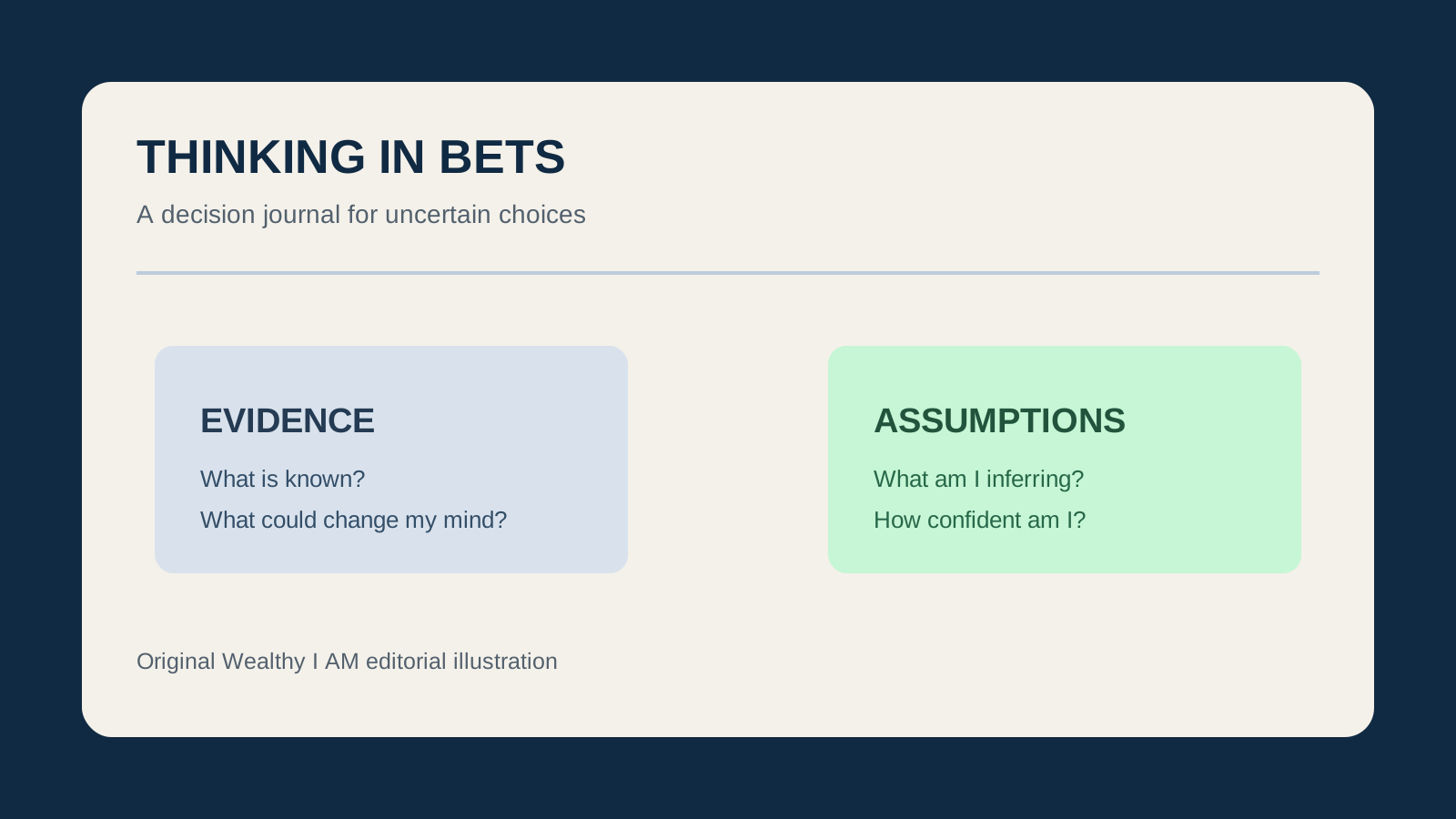
- Evidence: What will I observe over a week before deciding whether to continue?
For example, a hypothetical reader might study bookkeeping, draft a sales proposal, or review spending. None guarantees more money; the examples make the link between protected time and value visible enough to evaluate.
Limitations and risks
Early rising is not a universal measure of commitment. People differ in work schedules, sleep needs, health, family responsibilities, and living conditions. Anyone with a sleep disorder, medical concern, or persistent fatigue should consult an appropriate health professional rather than treating a book’s routine as treatment.
The public description’s reference to neuroscience should not become a claim that a particular schedule is scientifically proven for every reader. Specific research or health assertions require the underlying study and current expert guidance.
Designing a beautiful routine can also become a substitute for doing difficult work. A morning habit cannot compensate for inadequate income, unaffordable housing, debt terms, discrimination, illness, or an unsuitable business idea. It is one scheduling tool, not a complete financial plan.
Financial-education disclaimer: This article is general educational information, not financial, tax, legal, insurance, investment, or medical advice. Circumstances vary. Check current local guidance and seek qualified advice before making consequential decisions.
Conclusion: protect useful time, not a fashionable hour
The public framing of The 5 AM Club is an invitation to use the beginning of the day for focused work, renewal, learning, creativity, and protection from distraction. Its strongest practical lesson is not that everyone should wake at 5:00 a.m. It is that time becomes more useful when deliberately assigned to something that matters.
Test that idea without turning it into a guarantee or an identity. Choose a sustainable time, one meaningful task, and a short review period. If the experiment improves your ability to do valuable work while preserving sleep and health, keep the principle and adapt the clock. If it does not, change the routine—not yourself.
Sources and scope
- Google Books, The 5 AM Club public book description and bibliographic record: https://books.google.com/books/about/The_5_AM_Club.html?id=-GWBDwAAQBAJ
- Penguin Random House, Robin Sharma author page: https://www.penguinrandomhouse.com/authors/144686/robin-sharma/
These sources support the book’s identity, author context, and public description of early rising, exercise, self-renewal, personal growth, creativity, focused thought, digital distraction, and the narrative framing. They do not verify a complete chapter-by-chapter account, specific quotations, detailed research claims, or every routine described in the full book. The experiment, examples, and framework are editorial applications and are not attributed to Sharma.