Quick answer
The 5 AM Club: Own Your Morning. Elevate Your Life. presents an early-morning routine as a way to protect time for exercise, reflection, learning, creativity, and focused work. Its wealth relevance is indirect: an intentional start may help preserve attention for skills, decisions, and work that support a career or business. It is not an investing strategy, a guarantee of productivity, or proof that one wake-up time creates wealth.
This source-bounded overview takes about six minutes to read. It relies on the verified bibliographic record and public description in Google Books, plus the author record at Penguin Random House. Those sources support the book identity and broad themes, but do not establish every chapter, quotation, research finding, character detail, or promised outcome in the full text.
Who this is for: Readers who feel that urgent messages and other people’s schedules consume the time intended for health, learning, or high-value work.
What the book is arguing
The public description frames the book around a revolutionary morning routine, an early-rising habit, and protected daybreak hours for exercise, self-renewal, personal growth, creativity, and calm. The presentation uses a narrative involving two struggling strangers and an eccentric mentor, but the available sources do not justify treating that narrative as a documented personal story or evidence that the routine works for everyone.
The useful underlying question is not simply, “Can you wake at 5:00?” It is, “Can you create a dependable period for important work before the day becomes reactive?” A clock time is a scheduling choice; protected attention is the transferable principle.
Four source-bounded lessons
1. Treat your first meaningful hour as an asset
The public framing treats early hours as valuable because they can be reserved for activities easily displaced later. In practical terms, this is an allocation problem: time is limited, and unplanned demands often claim the most convenient space.
Wealth connection: A protected block can support learning a marketable skill, preparing a business offer, reviewing finances, or producing work that requires concentration. None of those activities guarantees higher income. They create a more reliable opportunity to do work whose value may compound.
Editorial application: For one week, identify one high-value activity and reserve a 30- to 60-minute block before usual interruptions. Measure completion, not a dramatic financial result. If mornings are unsuitable, use another protected period.
2. Use a routine to reduce repeated decisions
The description presents a step-by-step morning method and a practice intended to make early rising easier. A routine can reduce the choices required before meaningful work begins: where to go, what to open, and what task comes first.
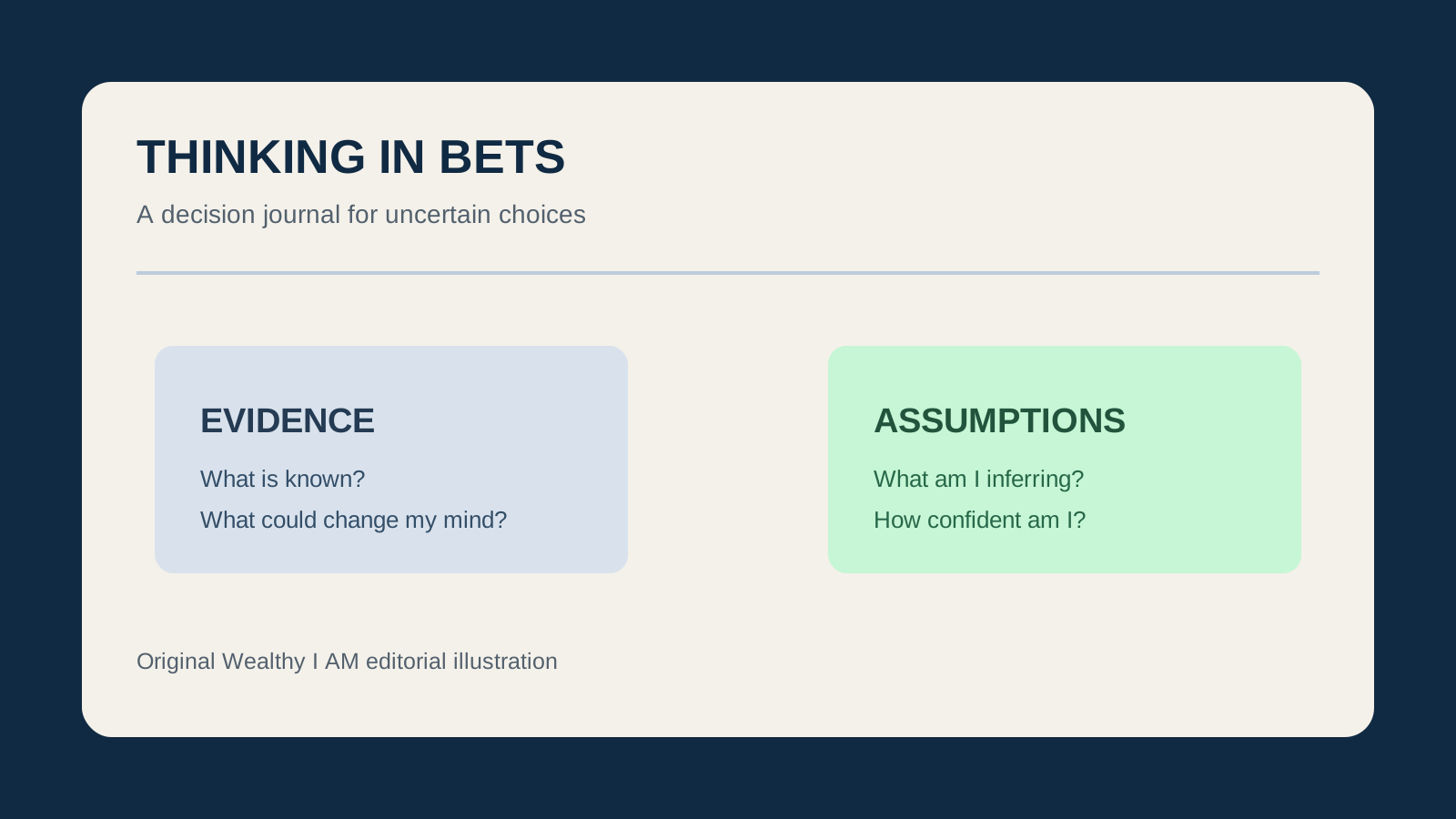
Plain-language mechanism: A routine is a pre-decided sequence. It does not create motivation by magic; it makes the desired action easier to start and repeat.
Editorial application: Prepare water and clothing, choose the task the night before, silence nonessential alerts, and define a stopping point. Treat this as an experiment, not a moral test. Revise it when evidence shows that the sequence is too demanding or poorly matched to your life.
3. Put health before output
The source description includes exercise, personal renewal, and a best-health promise. Those are broad source claims, not independently verified medical findings. A productivity routine should not be built by sacrificing sleep, recovery, or necessary care.
Wealth connection: Health problems can disrupt work and finances, but a morning alarm is not a health intervention and cannot substitute for medical guidance. The goal should be sustainable capacity, not impressive exhaustion.
Editorial application: Set a sleep-protective version of the experiment. Move bedtime earlier only if realistic; otherwise choose a later protected block. Stop or modify the routine if it causes persistent sleep loss, unsafe commuting, impaired concentration, or worsening health. Shift workers, caregivers, people living with disability, and others may need a different schedule.
4. Defend attention from digital distraction
The public description says the book offers tactics for protecting gifts, talents, and dreams from digital distraction and trivial diversions. The source does not establish a complete technology-management system, so the safe takeaway is narrower: make the valuable task easier to access than the distracting one.
Editorial application: Put the phone out of reach, close unrelated tabs, and use a written task with a visible definition of done. Check messages during a planned window afterward. This small environmental change lets you observe whether interruptions affect your work.
A practical protected-hour experiment
Use this seven-step process for two weeks. It is a Wealthy I AM application of the public themes, not a verified reproduction of the author’s complete method.
- Name the outcome. Choose a concrete result, such as completing a lesson, drafting a sales page, reconciling accounts, or exercising safely. Avoid “get rich” as the immediate goal.
- Select the time. Start with a realistic 30 minutes. It may be 5 AM, but it can also be lunch, an evening block, or a quiet weekend period.
- Prepare the environment. Put required materials in place and remove one predictable interruption.
- Define the first action. “Study investing” is vague; “read the next section and write three questions” is observable.
- Protect sleep and health. Do not extend the experiment by borrowing chronically from recovery.
- Record evidence. Track whether the block happened, what was completed, energy afterward, and any meaningful obstacle. Do not turn a short trial into an income forecast.
- Review and adapt. Keep, shorten, move, or stop the routine based on evidence. A schedule that fits actual responsibilities is more useful than an ideal schedule you cannot sustain.
For a business owner, this might protect time for customer research, pricing analysis, or process improvement. For an employee, it might support a certification or portfolio project. For a household, it might be a calm time to review cash flow and upcoming obligations. These are applications, not claims that Sharma specifically prescribes each example.
What the book does not prove
An early start is not automatically a productive start. The available public description does not establish that waking at 5 AM is universally superior, that a neuroscience-based practice works for every reader, or that the routine produces a particular income, health, happiness, influence, or wealth result. Promotional language should remain attributed to the source rather than presented as independent evidence.
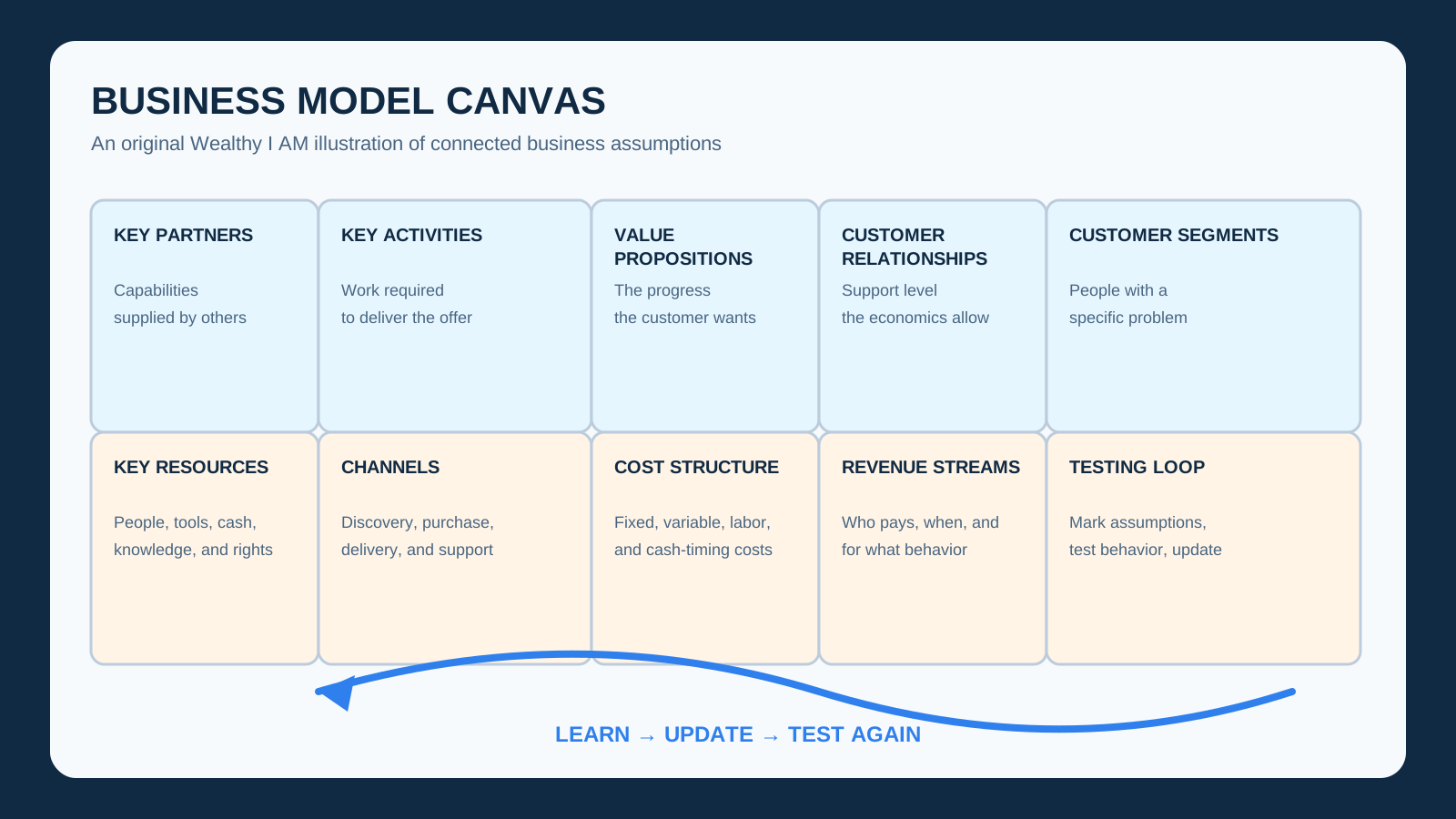
The routine has trade-offs. A person may have a late-shift job, caregiving duties, a different natural sleep pattern, a health condition, or an unsafe environment that makes early rising inappropriate. A protected hour can also be misallocated: more time does not repair a weak business model, poor investment judgment, excessive debt, or a lack of demand for an offer.
Financial, business, and health-education disclaimer: This article is general educational information, not individualized financial, investment, tax, legal, accounting, employment, business, medical, or mental-health advice. Do not change sleep, exercise, medication, investing, borrowing, or business practices solely because of a book summary. Consider your circumstances, verify consequential claims with authoritative sources, and consult qualified professionals where appropriate. No productivity, revenue, profit, health, or wealth outcome is guaranteed.
Conclusion: protect the work that matters
The transferable lesson from The 5 AM Club is not that everyone should obey one alarm. Important work needs intentional protection before urgency takes over. A realistic block for learning, health, reflection, or focused creation can support capabilities from which financial progress sometimes follows, but only when it fits the person’s circumstances, responsibilities, resources, and goals.
Tonight, choose one valuable task, reserve 30 minutes at a sustainable time, and prepare the first action. Review what happened after a week. Keep the principle if it helps; change the clock if it does not.
Sources and scope
- Google Books, bibliographic record and public description for The 5 AM Club: https://books.google.com/books/about/The_5_AM_Club.html?id=-GWBDwAAQBAJ
- Penguin Random House, author record for Robin Sharma: https://www.penguinrandomhouse.com/authors/144686/robin-sharma/
The inventory record and these public sources support the title, author, 2018 publication context, and broad themes involving an early-rising routine, exercise, self-renewal, personal growth, creativity, focused time, and digital distraction. They do not establish complete-book coverage, exact formulas, all narrative details, quotations, scientific proof, or guaranteed outcomes. The experiment and examples above are editorial applications.