A product can win enthusiastic praise from early users and still fail to become a durable business. The difficult transition is moving from a promising first audience to pragmatic customers who need a complete, dependable solution before they will buy.
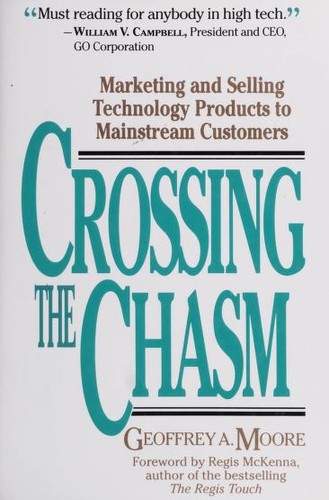
Geoffrey A. Moore’s Crossing the Chasm: Marketing and Selling High-Tech Products to Mainstream Customers examines that transition in technology markets. Open Library identifies the book, author, and 1991 HarperBusiness edition. Its description supports the broad problem of a gap between early adopters and mainstream buyers, along with a whole-product approach to addressing that gap. This article uses those verified broad themes to build a practical application for founders and operators. It does not claim to reproduce every chapter, example, or prescription in the book.
At a glance: This is a practical interpretation with six editorially synthesized lessons and a four-week test. It is most useful for founders, product leaders, and operators who have early traction but are unsure what mainstream adoption would require. Reading time: about 7 minutes.
The short version: enthusiasm is not the same as a market
Early adopters may tolerate unfinished features and uncertainty because they care about new technology or want an advantage before others. Mainstream customers usually need references from comparable organizations, implementation help, predictable support, security information, procurement documents, and a low-risk path to a useful result.
That difference creates a false signal. A startup can point to strong early engagement and assume that a larger market is waiting. But the first customers may have bought possibility, while the next group is buying reliability and reduced operational risk. The useful question is not, “How do we get more attention?” It is, “What must be true for a specific mainstream customer to adopt this solution with confidence?”
What the book’s broad framework contributes
The source description supports two source-level ideas: technology businesses face an adoption gap, and a whole-product approach helps address it. A whole product is not only the core software or device. It includes the surrounding services, integrations, training, documentation, support, assurances, and buying process needed for the customer to achieve the promised outcome.
The following sections are a Wealthy I AM interpretation and operating checklist, not the book’s exact numbered framework. A practical synthesis can be useful without pretending that a limited public description proves every detail of the full text.
Lesson 1: Choose a narrow beachhead before chasing a broad market
A target such as “small businesses” or “healthcare” is usually too vague to guide sales. Different customers have different problems, budgets, regulations, workflows, and definitions of success. A narrow beachhead is a specific group with a shared urgent problem that your current product can solve better than alternatives.
For example, “independent dental practices with two to five locations struggling to reconcile appointment cancellations” is more actionable than “healthcare businesses.” The narrower description helps you decide what to improve, what evidence to collect, and who should join a pilot.
Try this: write one sentence containing the customer type, urgent problem, current workaround, and desired outcome. Reject any segment where you cannot identify a reachable decision-maker and a reason to act now. This does not guarantee success; a segment may be too small, costly to serve, or unwilling to pay. It makes the hypothesis testable before a broad launch.
Lesson 2: Sell an outcome, not a feature list
Early users may understand technical novelty. Mainstream buyers often need a business case. They want to know what changes in their work, what resources adoption consumes, and how the result will be measured.
A feature is something the product does. An outcome is the customer-relevant result, such as fewer manual errors, faster processing, better visibility, or lower avoidable cost. Unless you have evidence, do not promise a specific improvement or guaranteed financial return.
Try this: create a one-page outcome brief with four parts: the current process and its friction; the intended change; evidence a customer can inspect during a pilot; and the work, limitations, and conditions required for implementation. A message that hides setup time, integration work, or training may win a contract and lose trust later.
Lesson 3: Build the whole product around the adoption barrier
A technically capable core product can remain commercially weak if customers cannot deploy it. Missing pieces might include an integration, migration plan, administrator training, service-level explanation, security review, billing process, or support path.
Identify the smallest set of surrounding elements that removes the main barrier for the chosen segment. A regulated customer may need documented controls and an approval workflow. A small retailer may need simple setup and responsive support more than an elaborate dashboard.
Try this: interview three current or prospective customers about the steps between signing a contract and realizing value. Ask who must approve it, what data must move, which tools it must connect to, what could go wrong, and who owns the result. Rank repeated obstacles by customer impact and implementation effort.
Lesson 4: Use references that match the next customer
A famous early customer is not automatically persuasive to a pragmatic buyer. The strongest reference may be an organization with a similar workflow, size, risk profile, or implementation environment.
This is a practical implication of the adoption gap, not a rule that every buyer behaves identically. A prospective customer is estimating whether the solution will work in its setting. Comparable evidence lowers uncertainty. A case study should explain the starting problem, implementation conditions, result actually observed, and what remains unresolved.
Do not turn a pilot into an invented success story. Label early evidence as early evidence. If a result is anecdotal, say so. If a number comes from a customer’s measurement, identify it as customer-reported rather than universal proof.
Lesson 5: Make the sales process fit the buyer’s risk
Procurement, information security, finance, legal, operations, and an executive sponsor may all influence a decision. If your process assumes one enthusiastic champion can do everything, deals may stall after the demo.
Provide clear pricing assumptions, implementation responsibilities, data-handling information, support boundaries, renewal terms, and a pilot exit condition. A signed contract is not the same as collected cash, and a pilot is not recurring revenue. Track the time and cost required to win and serve each segment. A market that looks large may be unattractive if acquisition, customization, support, and payment delays consume the economics.
Lesson 6: Protect the business while you cross the gap
The transition to mainstream customers may require sales staff, integrations, stronger support, or discounts before revenue becomes dependable. These choices can be sensible, but they increase fixed costs and execution risk.
Track qualified opportunities, conversion by segment, time to first value, implementation effort, retention evidence, support load, gross margin, and cash runway. “New accounts” is less informative if many never activate or require unpriced custom work.
Try this: create conservative, base, and expansion scenarios for six months. Label assumptions for qualified customers, conversion, implementation cost, payment timing, staffing, and churn. Identify the decision that would be paused if the conservative case occurred. This is planning, not a forecast or promise.
A practical four-week test
Week 1 — Define the segment: document one customer group, its urgent problem, existing alternative, buying committee, and adoption barriers.
Week 2 — Map the whole product: list everything needed from purchase to first useful outcome, marking each item ready, manual, missing, or dependent on a third party.
Week 3 — Run an evidence-based pilot: agree in advance on starting conditions, responsibilities, evaluation period, and success measures. Keep failure affordable and do not change the definition after seeing results.
Week 4 — Decide what to repeat: compare customer evidence. Which problem recurred? Which implementation step consumed time? Which result was valuable enough to support continued payment? If unclear, narrow the segment or improve the product before scaling acquisition.
What this approach does not solve
Positioning cannot make an unwanted product valuable. A large market estimate can still be irrelevant if the problem is weak, the buying process is inaccessible, or competitors offer a simpler solution. Technology and regulations change, and early customers may not represent later buyers.
The book was published in 1991, and the research used here does not establish how every recommendation applies to current software, platforms, artificial intelligence, or regulated industries. Treat the book as a source of ideas to test, not a timeless guarantee. Current customer research, applicable law, security requirements, accounting records, and competitive evidence need separate verification.
Financial and business safety note
This is general educational information, not individualized financial, tax, legal, accounting, or investment advice. Starting or expanding a business can lead to financial loss, debt, employment obligations, and legal exposure. Do not borrow, hire, sign a long contract, or make an investment solely because a book or this article suggests a strategy. Review cash needs, contracts, privacy and security duties, taxes, insurance, and regulatory requirements with qualified professionals when material. Protect customer data and do not use a pilot to avoid required safeguards.
Conclusion: cross with evidence, not excitement
Crossing the Chasm offers a useful lens for a familiar problem: early enthusiasm can hide the work required for dependable mainstream adoption. Choose a reachable segment, define a concrete outcome, complete the surrounding product, collect comparable evidence, fit the buying process to customer risk, and watch the economics.
Your next step can be simple: interview three prospective customers from one narrow segment and map every obstacle between purchase and first value. If the same obstacle appears repeatedly, you have a product question worth testing. If no urgent pattern appears, that is valuable information too. Learn before you scale.
Sources and evidence
The book identity and broad framework discussed above were checked against these public records. The practical applications in this article are original Wealthy I AM interpretation.