The Millionaire Next Door is a personal finance book about a simple but powerful idea: many wealthy people do not look rich at all. They often live in normal neighborhoods, buy carefully, and save a lot. The book argues that wealth is not the same thing as income. Income is money you bring in. Wealth is money you keep and grow.
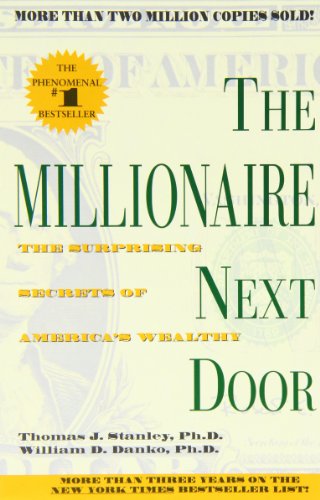
Thomas J. Stanley and William D. Danko built the book around research on American millionaires. Their big message is easy to understand: if you spend less than you earn, avoid show-off spending, and invest steadily, your money can grow quietly over time.
What the book is about
The book looks at how rich people actually behave. It challenges a common picture of wealth. We often imagine mansions, fancy cars, and big watches. Stanley and Danko say many wealthy people are much more plain than that. They care more about net worth than appearances.
They also compare two groups with simple labels. UAWs are “Under Accumulators of Wealth” — people who earn money but keep too little of it. PAWs are “Prodigious Accumulators of Wealth” — people who build wealth much better than their income alone would suggest.
Main ideas
- Spend less than you earn. This is the core of the book. If money goes out faster than it comes in, wealth cannot grow.
- Be careful with status spending. A big house, new car, or luxury brand can look impressive, but it may slow wealth building.
- Save and invest regularly. Small, steady investing often beats waiting for a “perfect” moment.
- Build real skills. The book points out that many wealthy people run businesses or work in roles where they control their own earnings.
- Teach kids money habits early. Children learn a lot from what parents do, not just what they say.
Simple explanations of key terms
Net worth
Net worth means what you own minus what you owe. If you own $200,000 and owe $80,000, your net worth is $120,000.
Frugal
Frugal means careful with money. It does not mean being cheap or never spending. It means spending with a purpose.
Asset
An asset is something that can help you build wealth, like savings, investments, or a business that makes money.
Liability
A liability is something you owe money on or something that costs you money without helping you build wealth. A car loan is a common example.
UAW and PAW
These are the book’s labels for low-wealth and high-wealth behaviors. Think of UAW as “money comes in, money goes out,” while PAW means “money comes in, some stays, and it grows.”
What it gets right
The book is strong because it separates looking rich from being wealthy. That idea still matters. Many people with high salaries have little savings because they spend too much. The book also gives a helpful reminder that building wealth is usually boring. It is not a magic trick. It is repeated good behavior.
Another strength is that it treats wealth as a habit, not a costume. You do not need to act rich to become financially strong. You need a plan, patience, and self-control.
What to be careful about
The book is useful, but it is not perfect. Some of its research is old, so today’s housing costs, taxes, job markets, and investing rules can be different. The book also leans hard toward frugality. Being careful with money is smart, but frugality alone is not enough. You still need decent income, good investing, and a life that works for you.
Also, rules of thumb are only rough guides. They can help you think, but they are not laws of nature. Your family size, city, health, and job can change what a good money plan looks like.
Bottom line
The Millionaire Next Door is a strong book for anyone who wants to understand how wealth is really built. Its main lesson is simple: rich-looking is not the same as rich. Quiet habits, careful spending, and steady saving can do more than flashy spending ever will.
If you want a book that makes you think differently about money, this one is still worth reading.
Sources
From insight to a working money system
A principle becomes useful when it changes a decision. Start by setting a “wealth floor”: an amount you want to keep building each month before discretionary spending begins. This can be a fixed dollar amount or a percentage of take-home pay. Put the transfer on autopilot, then make the rest of the budget fit the money that remains. The goal is not to make every month identical; it is to make progress dependable.
Next, create a short list of purchases that tend to expand with your income. Housing, transportation, dining, and subscriptions are common examples. Give each category a ceiling that protects your savings rate. If a major purchase is worthwhile, fund it deliberately rather than financing it impulsively. A pause between wanting something and buying it is a small but powerful form of financial control.
Finally, review your balance sheet and habits together. If net worth is rising but your life feels unnecessarily restricted, adjust spending toward your real priorities. If income is strong but net worth is flat, look for recurring leaks and automatic upgrades. A sustainable plan should make tomorrow stronger without making today miserable. That balance is how quiet wealth becomes a durable way of life.
Use the same discipline in your calendar. Schedule a monthly money review, an annual insurance check, and a quarterly net-worth snapshot. These small appointments keep wealth visible without letting it dominate your life. The goal is a calm system that keeps working when motivation is low.