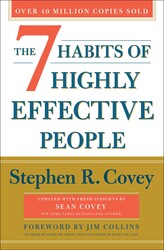
The 7 Habits of Highly Effective People by Stephen R. Covey is more than a productivity checklist. First published in 1989, it presents a principle-centered approach to personal change: build character, choose your response, define what matters, organize around priorities, communicate with respect, cooperate creatively, and renew the resources that make effectiveness sustainable.
For Wealthy I AM readers, the book matters because money and business results are downstream from behavior. A person may know what to do with a budget, a business plan, or an investment account and still struggle to follow through. Covey’s framework addresses that deeper layer. It helps turn intention into repeatable choices, relationships, and systems that can compound into greater professional value and financial freedom.
The private victory comes first
Covey organizes the first three habits around moving from dependence to independence. The change begins inside: taking responsibility for your choices, creating a clear picture of the person and life you want, and aligning daily actions with that picture. This is not about controlling every outcome. It is about directing your effort toward what you can influence.
That distinction is useful in wealth building. Markets, employers, customers, and the economy are partly outside your control. Your spending decisions, learning schedule, savings automation, preparation, and integrity are much more available to you. Effective people spend less energy complaining about the whole circle of concern and more energy expanding their circle of influence.
Seven practical lessons from the book
1. Be proactive: own the next response
Proactivity means recognizing the space between an event and your response. Instead of waiting for perfect conditions, choose the next responsible action. If debt feels overwhelming, the proactive move may be listing balances and interest rates. If a business is stalled, it may be speaking with a customer or clarifying one offer.
Practice: when you catch yourself saying “I have to,” rewrite it as “I choose to” or “I can.” Then identify one action within your control and complete it today.
2. Begin with the end in mind: define success before chasing it
Covey asks readers to imagine the desired destination before filling the calendar. For money, that means defining what wealth is supposed to provide: security, time with family, charitable giving, creative independence, or the ability to choose meaningful work. A vague desire to “make more” can produce endless consumption; a clear purpose can guide trade-offs.
Practice: write a one-paragraph personal wealth statement. Include the people you want to serve, the life you want to support, and the financial conditions that would make that life more resilient.
3. Put first things first: protect the important
Prioritization is the bridge between values and a real week. The important work is often not urgent: learning a valuable skill, nurturing a key relationship, reviewing finances, improving a product, or exercising. If these activities are left for “when there is time,” urgent requests will consume the schedule.
Practice: choose three weekly priorities tied to your wealth statement. Schedule them before filling the remaining space. Treat the appointments as commitments, not aspirations.
4. Think win-win: create value without extracting it
Win-win is not naïve optimism or a refusal to negotiate. It is the search for agreements where both sides receive genuine value. In business, that means understanding the customer’s desired outcome, pricing fairly, making promises you can keep, and building relationships that can continue.
Practice: before a sales conversation or negotiation, write down what a good result looks like for the other person. Improve your offer so that their success and your success reinforce each other.
5. Seek first to understand, then to be understood
Covey’s empathic communication lesson is especially valuable for leaders and entrepreneurs. Listening is not merely waiting for your turn to speak. It is diagnosing the other person’s concerns, context, and definition of success before presenting a solution.
Practice: in your next important conversation, ask two follow-up questions before giving advice. Reflect back what you heard and ask whether you understood correctly.
6. Synergize: use differences as an advantage
Synergy means that thoughtful cooperation can produce a better answer than either person could create alone. Different experiences may reveal risks, customers, or approaches that a familiar team overlooks. This is valuable when allocating capital, designing a product, or making a career decision.
Practice: invite a person with a genuinely different perspective to challenge one important assumption. Do not ask for agreement; ask what you are missing.
7. Sharpen the saw: renew the asset that does the work
The final habit is renewal across physical, mental, emotional, and spiritual dimensions. It is tempting to treat rest, learning, and relationships as luxuries after success arrives. Covey argues that renewal preserves the capacity to produce success in the first place.
Practice: create a weekly renewal block for exercise, reflection, focused learning, and connection. The exact routine should fit your life, but it should be protected from being consumed by low-value busyness.
A step-by-step plan for applying the habits
- Write your destination: describe the life and financial resilience you want to support.
- Separate control from concern: list current worries, then circle the actions you can influence this week.
- Choose three priorities: select one action for money, one for professional value, and one for health or relationships.
- Schedule before reacting: place those actions on the calendar before opening space for less important requests.
- Improve one relationship: listen for the other person’s goals and look for a fair exchange of value.
- Run a weekly review: ask what worked, what drifted, and which principle should guide the next week.
- Renew deliberately: protect sleep, movement, learning, and reflection so effectiveness can continue.
How these habits connect to wealth
Covey does not offer a stock tip or promise a specific income. His contribution is more foundational. Proactivity supports consistent saving and action. A clear end helps you resist status spending that does not serve your values. Prioritization protects high-value work. Win-win relationships build trust and repeat business. Listening improves decisions. Synergy broadens judgment. Renewal prevents burnout from destroying the very capacity you are trying to grow.
The framework also places character before technique. Financial tools matter, but they work better when paired with honesty, patience, responsibility, and the ability to delay a short-term reward for a larger purpose. These qualities can increase earning power and protect wealth because people trust those who consistently do what they say.
What to keep in perspective
Personal effectiveness is not a guarantee of wealth. Economic conditions, health, family responsibilities, discrimination, opportunity, and luck all matter. The habits should not be used to blame people for circumstances they did not create. They are best understood as practices for using available agency wisely, not as a claim that every outcome is under individual control.
Bottom line
The 7 Habits of Highly Effective People remains relevant because it starts with a durable question: what kind of person and contributor are you becoming? Define the life you want, act on what you can influence, prioritize what matters, build fair relationships, and renew your capacity. Those choices do not create overnight wealth. They create the character and consistency that make long-term wealth, leadership, and meaningful success more possible.
Sources & credit
- Simon & Schuster official publisher page — author, edition, publication information, and book framework.
- Amazon.com product page — matched 30th Anniversary Edition hardcover listing (ISBN-10 1982137134 / ISBN-13 9781982137137).
- Cover image source — official publisher image for the same matched edition; cover credit to the book’s rightsholder.